



The story of Spider-Man will forever be remembered for a single line, delivered to Peter as the dying words of Uncle Ben: “With great power comes great responsibility.”
He did not say that only because the statement is true. He said it because, by our very nature, power corrupts us.
That is why, in our Westminster system, we divide power in many ways. We separate the courts from the legislature, then split those powers even further between judges, ministers, and Parliament itself. We cannot allow power to be concentrated in one place. That road leads, almost without fail, to corruption.

The current Liberal government does not seem to be heeding Uncle Ben’s warning.
In the spring sitting of 2025, the government passed a total of five bills. This spring sitting, it passed 24. Of those, 21 were introduced by the ruling party–and 19 were passed into law.
As a matter of fact, all of these bills were passed after the government already had a majority. The spring sitting began on February 2, and by April 13, the government had formed its majority through multiple floor crossings. Since then, it has forced through several laws, many of them controversial.
In this case, many of the bills were contested by other parties because they bordered on authoritarianism: laws that could erode Canadians’ privacy, security, and basic rights. It is important to note these laws and assess how they could change Canada.
These are the bills I believe will shape Canada the most:
Bill C-9, for the first time in Canadian law, defines “hatred” and makes it a criminal offense to willfully promote hate through the use of symbols, including those tied to terrorist entities. That means the list of symbols deemed unacceptable will almost certainly grow.
This bill received serious scrutiny when the Bloc agreed to support it only if the Liberals removed the religious exemption. The law also makes it illegal to block access to places of worship, which has led many to ask whether protesting near places of worship could be treated as unlawful.
Josh Dehaas, a Toronto lawyer, recently joined David Leis on Leaders on the Frontier and criticized bill C-9 saying, “we already have intimidation laws on the books” and “these laws are not being enforced.”
The government seems to be unnecessarily expanding powers and pushing for laws using lack of enforcement as an excuse.
Bill C-22, the “lawful access” bill, has already drawn warnings from VPN services, including NordVPN and Windscribe VPN, which have said they may leave Canada if the bill becomes law.
This is one of the biggest expansions of government surveillance power Canada has seen in years. It would allow police and other public officers to demand subscriber information and request data from telecommunications and online service providers, including some based outside Canada that serve Canadians. It would also allow secrecy requirements in some cases. Meaning people will have no idea if the government is looking through their personal data.
Critics warn it could sharply weaken digital privacy, expand government access to personal data, and push privacy-focused companies out of Canada.
Supporters argue that giving law enforcement this power creates less friction when they are investigating serious and time-sensitive crimes. That may be true–but giving the state this kind of power will also erode privacy for Canadians.
So the question is simple: is mass surveillance a decent trade-off for online safety?
Bill C-20, the Build Canada Homes Act, would turn the federal affordable housing agency into a Crown corporation.
The bill gives the agency the power to own, develop, transfer, and finance property for development. On its face, that may not sound very controversial. However, in practice, the government has already used this kind of thinking to justify buying condos from Canadian developers who are unable to sell them.
Many are calling out the move, arguing that it is little more than a bailout for developers who should be left to take the loss in the free market.
The bigger question is whether the Liberals can use this as a long-term strategy to stop Canadians from taking a loss on inflated property values. If so, taxpayers could be forced to cover the difference when property owners cannot sell at the prices they expected.
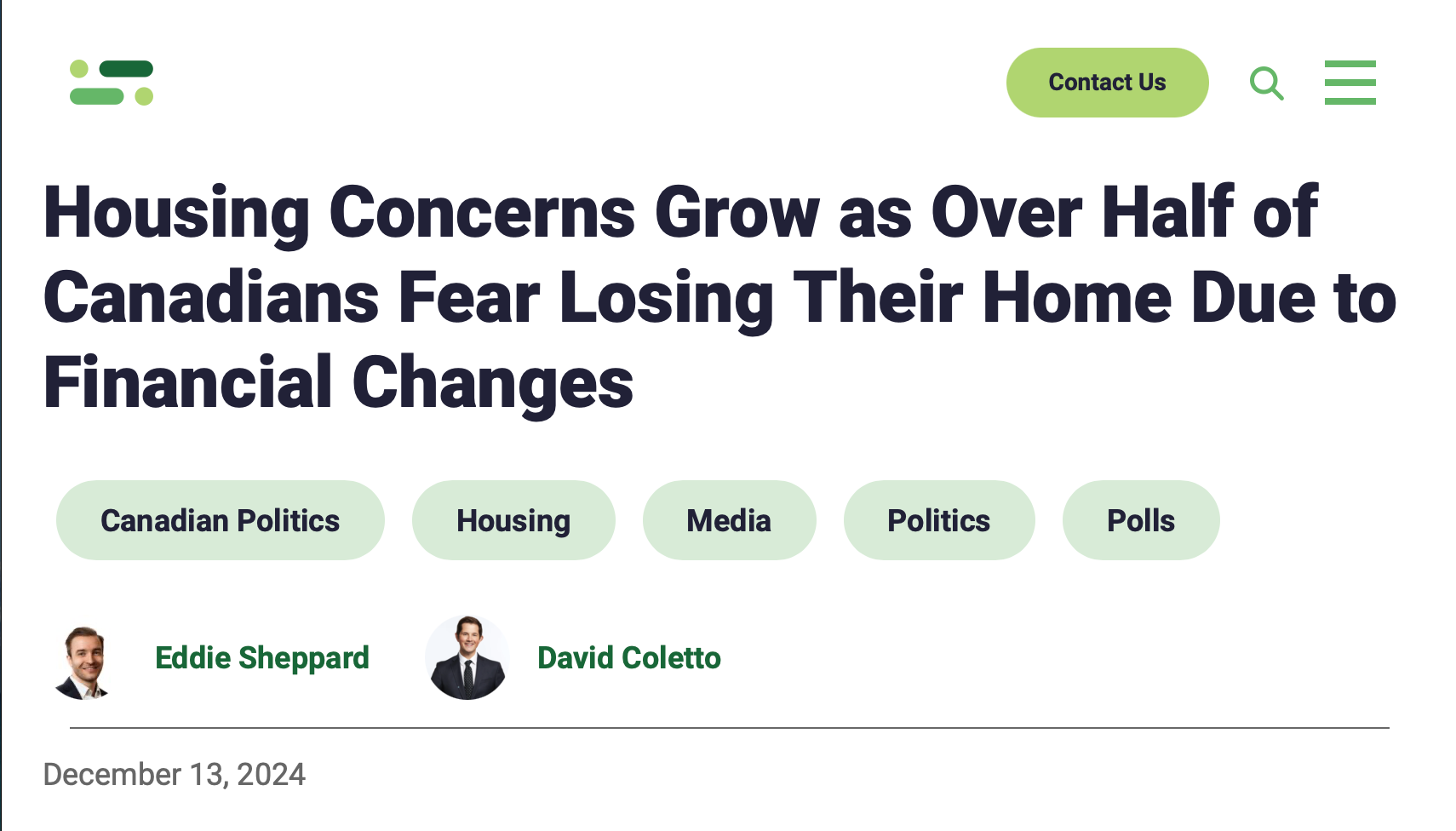
In 2024, Canada was ranked second highest in the world for house-price-to-income ratios. Nine in ten Canadians say they are concerned about the current state of housing. Three in five Canadians are worried about their ability to pay rent or their mortgage, and three in five are worried about losing their home or rental unit.
With Canada’s housing situation getting worse, Canadians may be tempted to support more government housing, but they will also be forced to pay the bill for it.
Bill C-16, the Protecting Victims Act, makes broad changes to Canada’s criminal justice system. It creates new offences for coercive control in intimate relationships, strengthens laws against child sexual exploitation and online abuse, expands protections for victims, and changes sentencing rules.
Supporters say it modernizes the Criminal Code and better protects victims. Critics argue that parts of the bill could weaken sentencing by giving judges more discretion instead of keeping mandatory minimum penalties for certain offences.
There is also concern that some reforms could end up putting the rights of offenders ahead of deterrence and public safety. Lately, judges have already been leaning toward lighter sentences and bail decisions. In too many cases, that has ended tragically. We see it written into law for some minority groups as well, like Gladue Reports for Indigenous people, for example. They can receive lighter sentences simply for their background. Equal under the law no longer seems to be a tenant in the Canadian courtrooms.
The Liberals no longer have anyone who can truly hold them accountable, thanks to their majority. The Senate is filled with senators recommended by Justin Trudeau. The circumstances now allow the government to move quickly and carry out its agenda with little meaningful resistance.
Hate has now been defined by law, turning a subjective feeling into something that can be weighed through circumstantial evidence and left largely to the judgment of a court. Churches are worried about how Bill C-9 could affect religious speech and their ability to preach Scripture in public.
With that in mind, the government will also have the ability to seek personal data from users on social media. An investigation into a hate crime would almost certainly be enough for an officer to justify such a request.
We also have bills coming that would force Canadians to use ID verification to access social media, framed as laws meant to protect children. In practice, that will likely mean some form of biometric scan or digital identity check just to use major online platforms.
Power is being gathered. Speech is being defined. Privacy is being weakened. Housing is being pulled deeper into the hands of the state. Criminal law is being reshaped.
And all of it is happening under a government that gained the power to move quickly, then wasted no time using it.
That is exactly why power must be divided, checked, and watched closely.
Uncle Ben was right.
Thank you Jonathan, brilliant analysis of what is really going on with these new bills.
It's a scary government that is ruling Canada. I hope and one day real soon Liberal voters will truly see what Carney is doing to Canada. It definitely is not the Canada I grew up in. I have never felt so under the telescope (by the Liberal government) in Canada - The home of the free.