


When does a word lose its meaning? Many would say when it loses its clear distinction. After all, if something stands for everything, it stands for nothing. Modern culture and post-modern thought have embraced this shift—the steady devaluing of words, the move from shared, objective truth to purely personal, subjective truth. The cost is plain: without a common understanding of reality, we lose the ability to record the present accurately for the future.
This brings us to the case of Cédric Grégoire, now known as Emma Grégoire. Between 2022 and 2023, this transgender woman allegedly approached young mothers in Saint-Paul-d’Abbotsford, near Granby, offering babysitting services. After gaining a mother’s trust, Grégoire was left alone with the children. In the winter of 2022, she allegedly sexually assaulted a four-year-old. A year later, in 2023, she assaulted a six-year-old, with police believing the abuse occurred over several weeks.
One might hope this would end with the suspect caught, evidence gathered, and justice served. In Canada, however, such sensitive cases rarely follow that path.
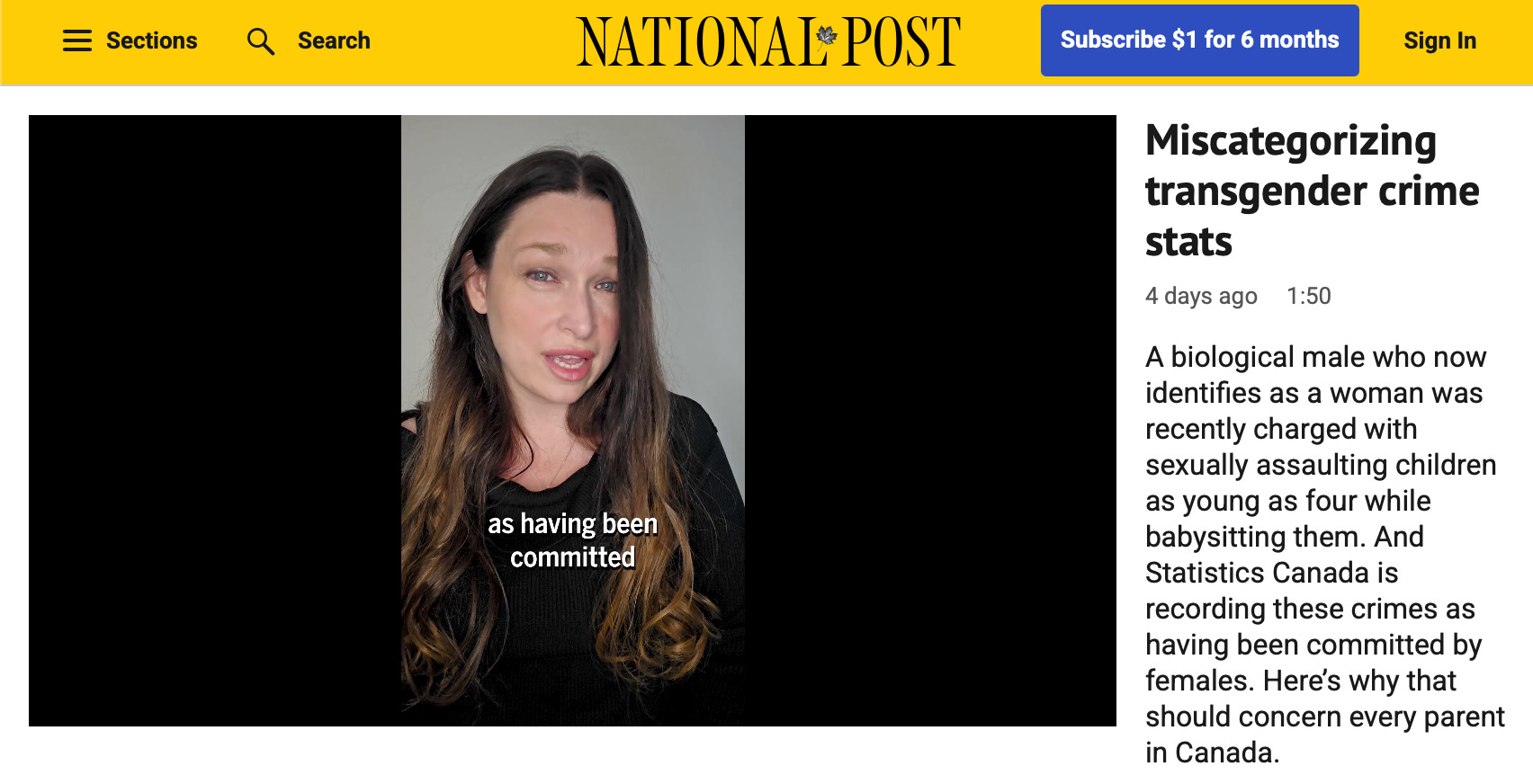
After these assaults on two young children—one just four years old—the National Post reported that Statistics Canada had recorded the crimes of this biological male, identifying as a woman, under female statistics rather than male ones.
When asked, StatCan told reporter Alexandra that they rely on data submitted by police through the Uniform Crime Reporting Survey (UCR). Under this system, police record the self-identified gender of suspects rather than their biological sex.
Police complete a CSC form (Charged/Suspect-Chargeable) for Statistics Canada. The form offers no separate category for transgender individuals, so those who have transitioned are recorded according to their identified gender.
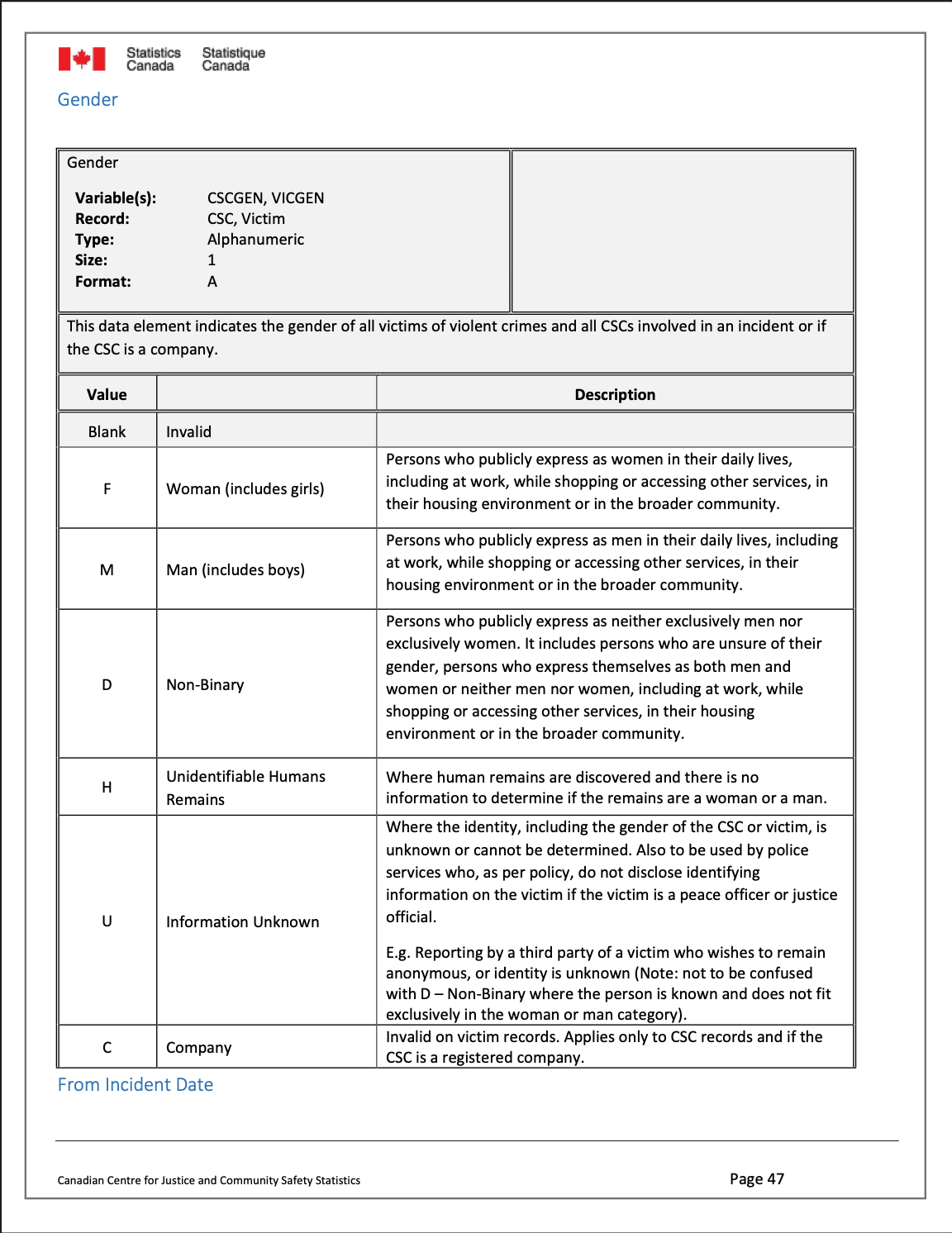
StatCan further explained that officers must follow this practice to comply with Bill C-16 and provincial human rights codes, which protect gender expression. Failing to respect a criminal’s gender identity could itself breach the law.
The result is that crimes committed by biological males identifying as women since around 2018 are added to female crime statistics. The Canadian government sees no issue with this. Better to avoid offending a child sex offender by inquiring about biological sex than to keep male and female crime data sound. Accuracy in national statistics, it seems, matters less than using the preferred pronoun of a criminal.
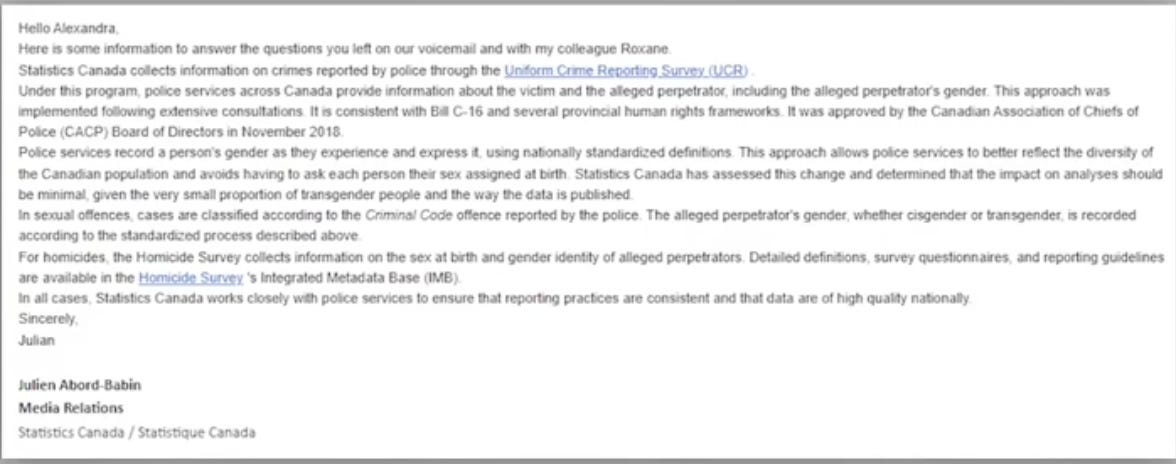
Three points from StatCan’s response stand out.
First: “This approach allows police services to better reflect the diversity of the Canadian population and avoids having to ask each person their sex assigned at birth.”
It would, apparently, be too inconvenient to ask one additional clarifying question. Asking only about biological sex and setting aside self-identified gender is, of course, unthinkable—even if separating the categories would actually let us track diversity more precisely.
Second: “Statistics Canada has assessed this change and determined that the impact on analyses should be minimal.”
Inaccuracy is acceptable, it seems, so long as the distortion remains small, particularly if the alternative might hurt a suspect’s feelings.
The third point is most revealing:
“For homicides, the Homicide Survey collects information on the sex at birth and gender identity of alleged perpetrators.”
Only for the most serious crimes does the agency see value in recording biological sex. Less serious offences do not warrant the same care.
It’s important to tackle the statistical irrelevance of accurately documenting male and female biology by highlighting that transgender people make up a small percentage of the country.
Transgender people made up just 0.33% of the population in May 2021 — about 100,815 individuals. Removing non-binary people drops that to roughly 59,460. Males make up 53% of those identifying as transgender, according to census data, so male-to-female transitions outnumber female-to-male ones.
Yet identification is rising sharply across generations. The share of transgender and non-binary people is three to seven times higher among Generation Z than among older groups. For those born in 1945 or earlier, the figure was 0.12%. It rose to 0.15% (1946–1965), 0.19% (1966–1980), 0.51% (1981–1996), and reached 0.79% for Gen Z.
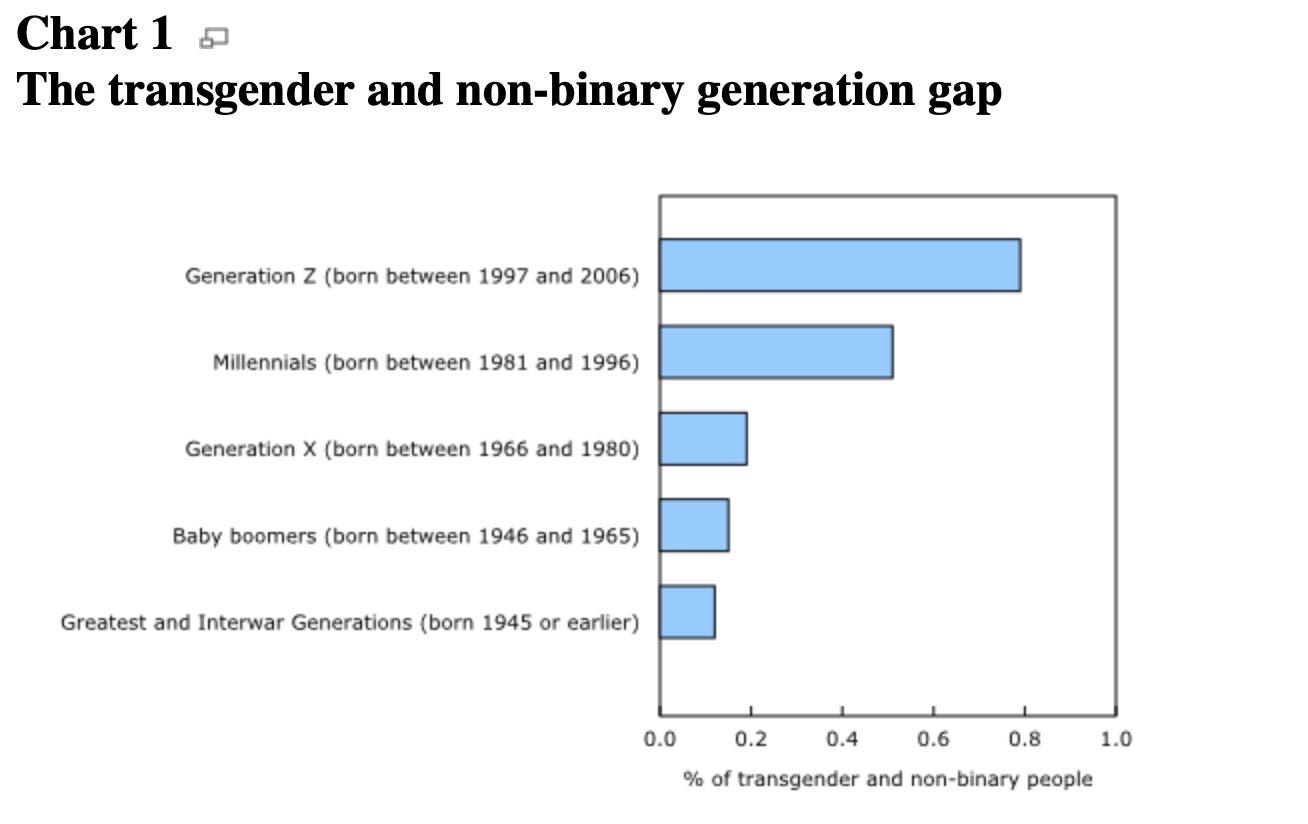
So, for whatever reason, every generation has had more people identifying as transgender, which will increase their percentage of the population over time. What percentage will become high enough for the Canadian government to consider giving them their own category?
In 2018, StatCan found 1 in 400 Canadians aged 15 and older identified as transgender. By 2021, it was 1 in 300 — a 33% increase in just three years. Non-profits such as Rainbow Railroad, which helps resettle LGBTQ refugees, add further to these numbers. The “tiny minority” argument will not hold forever.
The deeper problem lies in patterns of crime. Men commit the overwhelming majority of violent and sexual offences.
For the purposes of the article, I only pulled data from 2005-2018 because in 2018 the government began recording transgender women as female.
From 2005 to 2018—before the policy shift—men accounted for 99% of sexual assaults in StatCan data and women just 1%.
Biological women rarely commit such crimes. Adding even a small number of male offenders to the female column distorts the picture.
Why does this matter? Crime statistics shape public debate and government policy. A manufactured rise in “female” sexual assaults will likely prompt unnecessary programs, wasted tax dollars on studies of a problem that does not exist among biological women, and/or unfair social blame directed at women—much like the inflated “white” crime statistics in the United States have been used to demonize white men.
It was discovered in America that many non-white individuals had been classified as white in police databases around the country. This artificial inflation of white male crime has led to the demonization of white men in America.
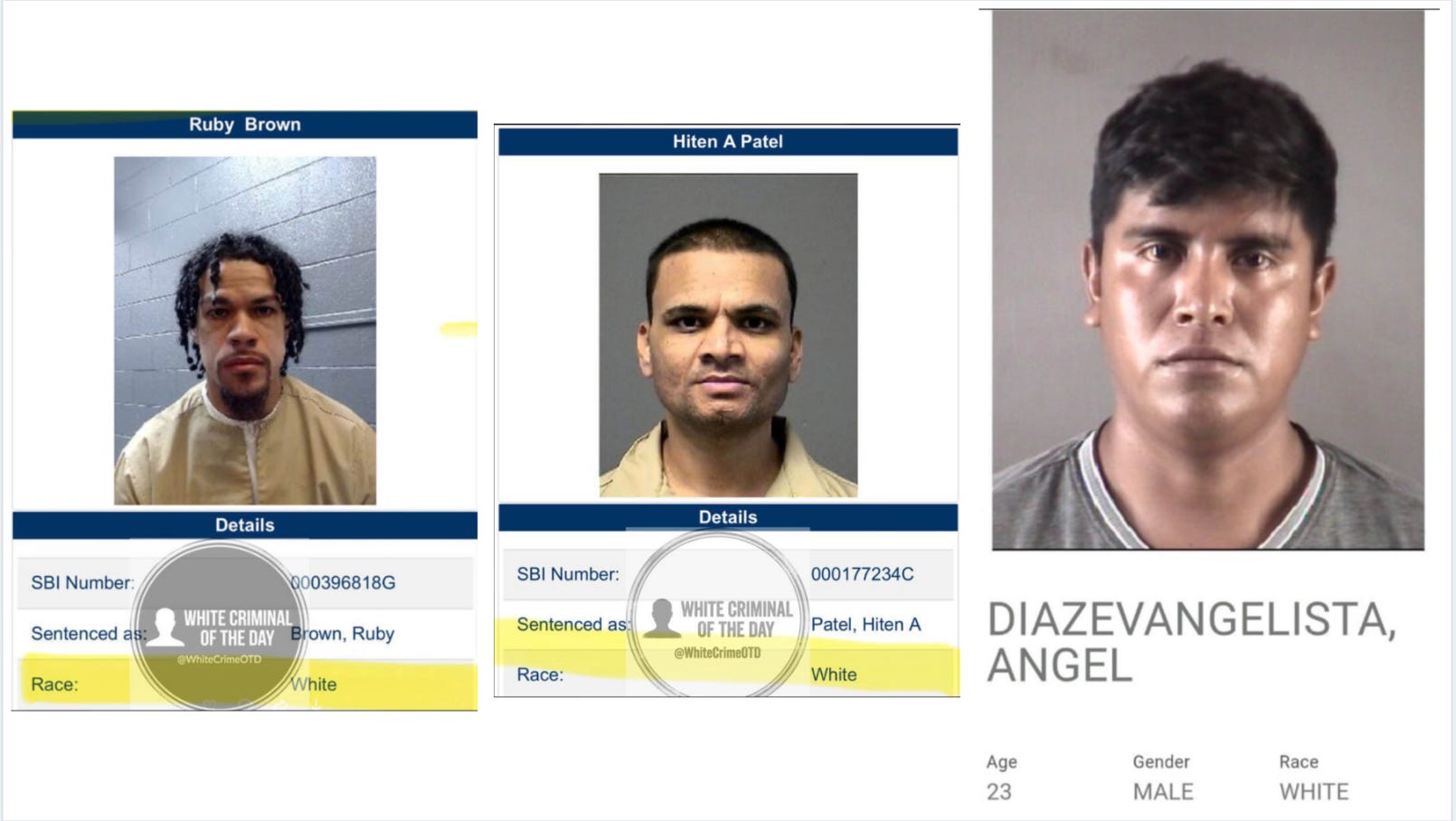
Consider Hiten Patel, for example. Despite a dark complexion, a common Gujarati surname, and a given name of Gujarati origin pointing clearly to Indian descent, he was classified as White in criminal records and added to White crime statistics.
These are just a few visible cases. How many more go unnoticed amid the push for ideology over truth?
Police and agencies are not the root problem. They follow the law. The real issue lies in Bill C-16 and provincial human rights codes, passed by politicians responding to public sentiment. What was sold as a harmless protection of personal identity has forced society to bend observable reality to the preferences of a few, which has distorted the reality of the entire nation.
The choice is clear: either we value truth and clear distinctions, or we accept comforting fictions that distort how we understand the world.