


The Trust Collapse
The crisis in the West is not that people stopped trusting institutions. It’s that the institutions continually give us reasons to stop.
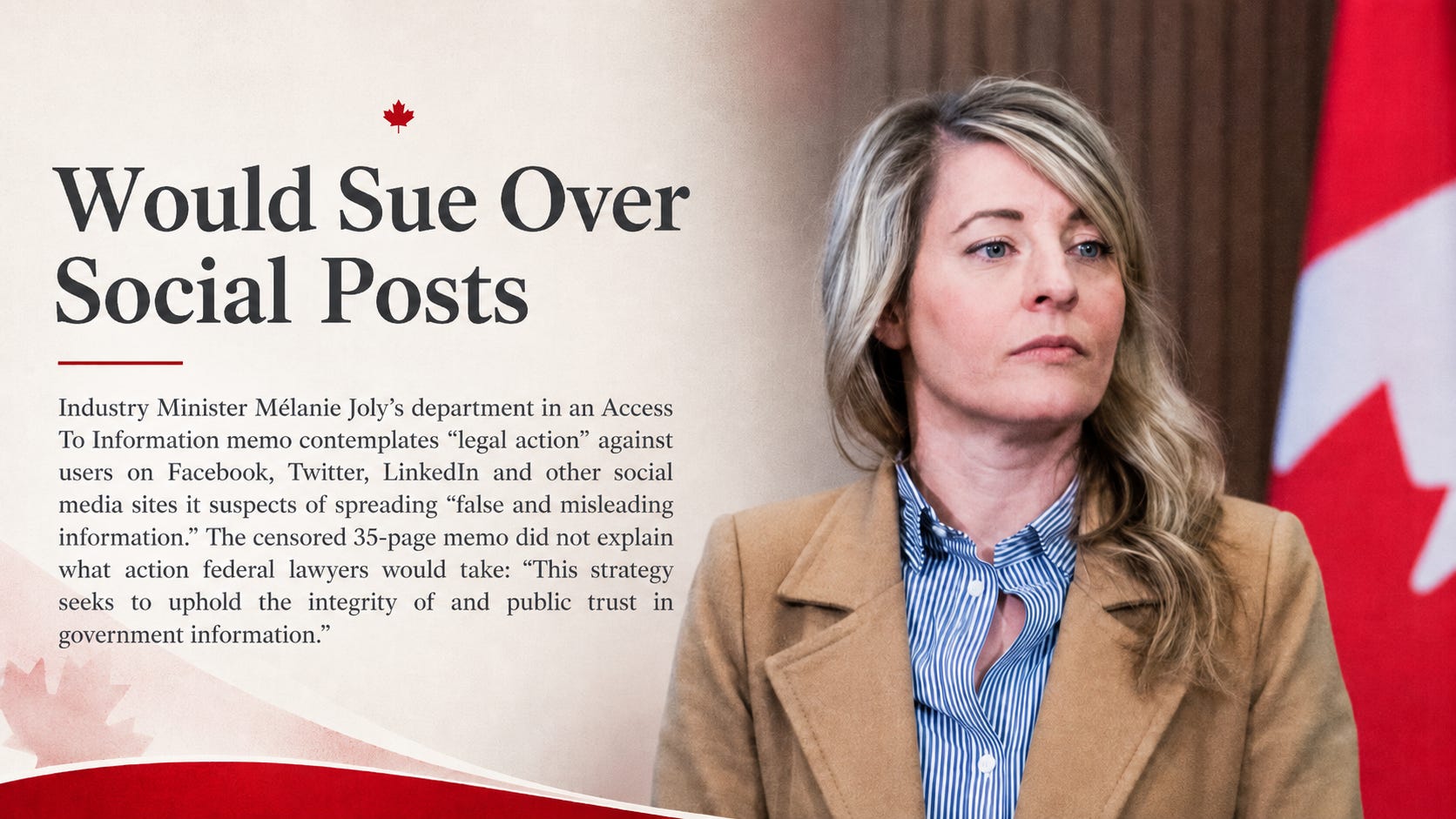
According to a recent access to information memo, the federal government of Canada is now contemplating “legal action” against users on Facebook, Twitter, LinkedIn, and other social media sites suspected of spreading “false and misleading information.” The censored 35-page document said, “This strategy seeks to uphold the integrity of—and public trust in—government information.”
So let’s be clear: a federal department was discreetly exploring legal action against Canadian citizens over online speech THEY deem false or misleading (making them the arbiters of truth) while hiding the details behind redactions and pretending this was about protecting public trust.
Across much of the democratic world, governments have spent years misleading the public, managing narratives, and burying mistakes. Then, when people speak up, they call it “misinformation,” like the public suddenly became irrational. And before anyone tries to tell you this is just partisan rhetoric, just look at the numbers, recent events, and the laws they passed because people stopped believing them.
Edelman’s Trust Barometer found that 69% of people globally worry that government officials, businesses, and journalists deliberately mislead them. Reuters found global trust in news at all time low of just 37%. With Canada sitting directly on this mark. Furthermore, Freedom House says global internet freedom declined for the 15th straight year in 2025.
Clearly, the public did not become irrational, it became experienced. People watched the same pattern repeat across COVID, inflation, housing, immigration, foreign interference, media subsidies, online speech laws, emergency powers, and economic decline.
The Control Response
So what did governments do in response? They reached for more control.
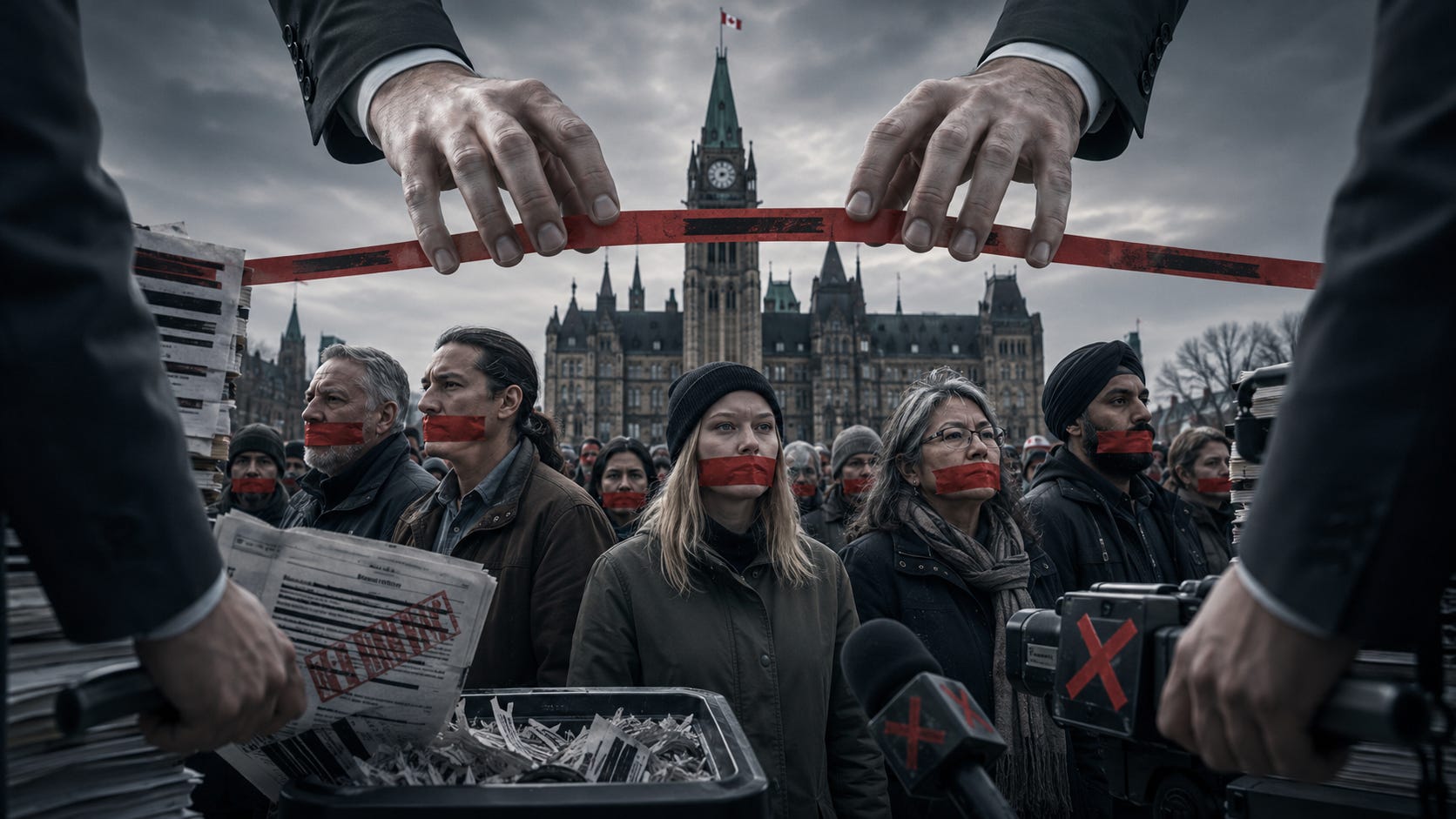
Canada is policing speech through several policy channels, but the Online Harms Act really takes the cake. It proposed new online-harm bureaucracies, financially motivated human-rights complaints, and criminal-law changes that attach life-imprisonment maximums to certain hate-related offences.
The U.K.’s Online Safety Act gives Ofcom power over social platforms and search engines, backed by fines up to £18 million or 10% of global revenue.
The EU’s Digital Services Act gives regulators power over the largest platforms, algorithms, content systems, advertising transparency, and “systemic risks,” with fines that reach into the billions.
Germany forces large platforms to remove content within 24 hours or face fines up to €50 million.
Ireland’s online-safety regime gives its media regulator power over online content, binding safety codes, investigations, and fines that can reach €20 million or 10% of turnover.
Australia banned social media for kids under 16, then moved to double fines for platforms that fail to enforce it to nearly $100 million.
The vocabulary is always soft: safety, trust, integrity, harm reduction, democracy, public health, child protection. But the machinery is hard: fines, investigations, takedown rules, platform pressure, speech codes, age checks, regulatory discretion, and state-approved categories of truth and harm.
Some of the goals may be legitimate. But the direction is unmistakable. The public is losing trust in the institutions that claim to protect truth, while those same institutions demand more power to control what people can say.
Now why would they do that? Well, here are a few reasons…
The Failures They Don’t Want to Own
They misplayed COVID worse than Bill Buckner in ’86.
For years, people who questioned the official COVID narrative were mocked, censored, deplatformed, smeared, suspended, or treated like threats to public safety. The lab-leak theory was treated like fringe nonsense until major U.S. agencies later assessed it as plausible. Social media companies restricted discussion of claims that later became legitimate debate. Mark Zuckerberg has since said the Biden White House pressured Facebook to censor COVID content, including humour and satire, and that he regrets how Meta handled that pressure.
Now Tulsi Gabbard has released declassified intelligence material accusing Fauci of helping fund dangerous gain-of-function research tied to Wuhan—the exact line of inquiry institutions spent years trying to bury.
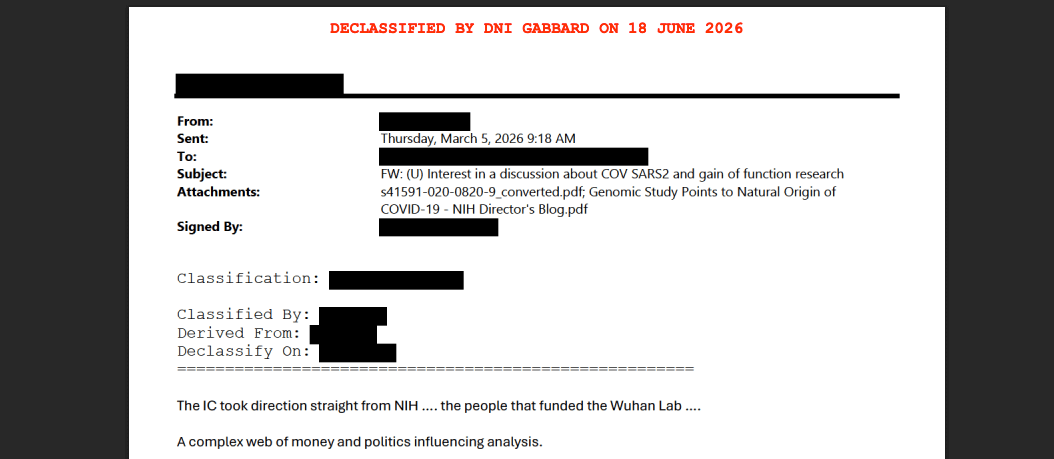
The point is not that every COVID skeptic was right. The point is that the institutions were wrong enough, often enough, while acting far too certain.
They overstated. They reversed. They smeared. They suppressed. Then they walked away from the wreckage and expected the public to forget.
They also normalized emergency power.
In Canada, the federal government invoked the Emergencies Act against the Freedom Convoy for the first time in the law’s history. Bank accounts were frozen. Financial information was shared. Protest activity was treated not simply as a public-order problem, but as a national emergency.
Years later, the Federal Court of Appeal confirmed the invocation was unreasonable, beyond the government’s authority, and infringed Charter protections for expression and against unreasonable search.
Let’s think about that… The government used extraordinary powers against citizens protesting government policy. The courts later said it exceeded its authority. And yet the lesson the political class appears to have learned is not restraint. It is better control.
They downplayed the failing economy.
Canada entered a recession after two consecutive quarters of contraction. The Bank of Canada cautioned people not to put too much weight on the GDP data. The political response was not humility. It was reframing.
At the same time, the USMCA—the foundation of Canada’s trade relationship with the United States and Mexico—has been pushed into uncertainty after the U.S. declined to extend the agreement in its current form.
So Canadians are watching the economy weaken, trade stability deteriorate, investment nosedive, and the cost of life explode, while officials tell them not to overreact to the numbers.
That is not leadership. That is narrative management.
The Policy Failures They Moralized
They ignored housing pressure.
For years, governments treated housing like a talking point instead of a system under strain. They pumped population growth, failed to build at the required pace, tolerated speculation, added costs, delayed approvals, and then acted shocked when homes became unreachable for ordinary families.
Then came the proposed $1.45-billion B.C. condo plan.
The idea was to convert unsold condo units into rent-to-own housing, with public money involved in a market where developers built too much of the wrong product at prices people could not afford.
Carney defended it as affordability, not a bailout. But ordinary people can see exactly what is happening. When families are drowning, they are told to show discipline. When developers are sitting on unsold inventory, the government shows up with financing, subsidies, and a softer name for a bailout.
That is not a free market. It’s simply protection for the connected.
They denied election interference.
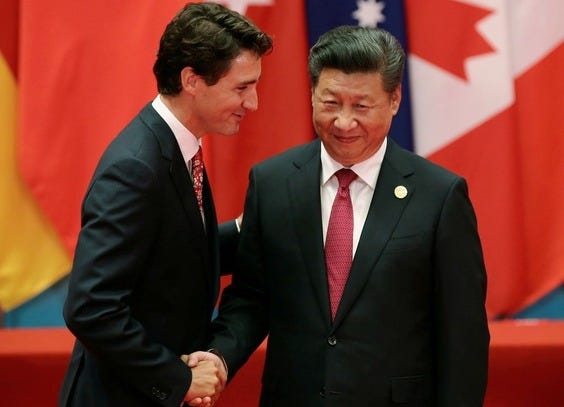
Canada spent years downplaying concerns about foreign interference until leaks, pressure, and public outrage forced the issue into the open. CSIS concluded China interfered in the 2019 and 2021 federal elections. The Hogue inquiry later found the interference did not change who formed government, but it also found Canada responded slowly and should have communicated more clearly with the public.
They moralized immigration concerns.
To be clear, immigration is not always bad. Just like rain is not always bad. But when too much rain falls too fast, cities flood.
Across the West, governments pushed migration beyond what housing, health care, schools, wages, infrastructure, and social trust could absorb. Then, when people objected, they were called racist, xenophobic, cruel, or extreme. But now those same governments are reversing course.
Canada is trying to reduce temporary residents to less than 5% of the population. The EU has moved toward tougher asylum rules and faster returns. The U.K. says foreign national offenders make up roughly 12% of the prison population in England and Wales and has moved to tighten deportation rules. However, for many of these countries, I feel the correction may already be a day late and a dollar short.
So the public was not crazy, the public was correct, and that is what the institutional class hates most.
The Narrative Machine
They protected legacy media.
Canada continues to pour public money into the media ecosystem while acting shocked that Canadians question whether the press is independent. CBC receives $1.4 billion in annual federal funding. The Canadian journalism labour tax credit was increased from 25% to 35%. Ottawa is now consulting on extending that credit to audio and audiovisual news production.
All in, the federal government spends more than $2 billion a year in taxpayer money propping up its legacy media machine, then acts shocked when people question whether the press is independent.
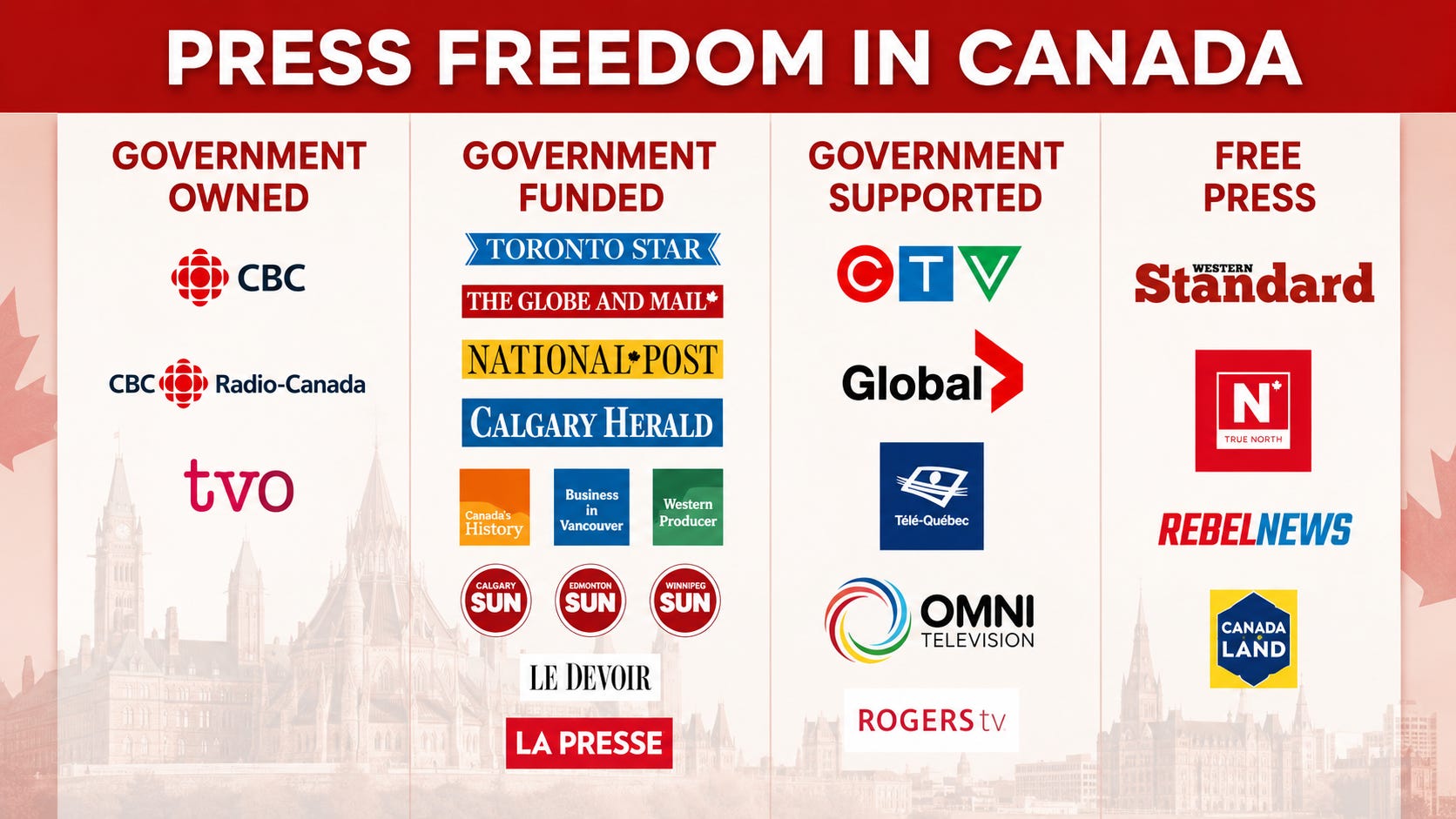
Of course people question it…
The industry depends on government funding, government tax credits, government-approved eligibility, regulatory protection, and government policy to survive. So effectively, the government funds the media, the media defends the narrative, the narrative protects the government, and anyone who notices is accused of spreading misinformation.
The trust collapse is not caused by bad information. It is caused by an abuse of authority.
People watched officials overstate certainty, bury mistakes, reverse positions, protect their own, and use emergency language or measures to justify overreaching power.
And the pattern is always the same.
The institution fails. It denies the failure. It attacks the people who notice. Then it passes punitive policy to control the backlash, giving more authority to the very institutions people no longer trust.
But you cannot censor your way back to legitimacy, you cannot punish people into believing you, and you cannot fix this problem by giving more power to the people who created it.
You can only fix it by taking power away from them.
Joly along with the entire Liberal Party Politburo are a massive embarrassment to Canada as well as an existential threat to freedom and democracy. These PRC owned-and-operated schills have outstayed they welcome.
I find that 1867 is the cause of all the problems in Canada. Your essay actually points to a government that suggests that democracy does not reconcile with facts on the ground in Canada. And yes, the origin is what we celebrate every July 1.
Let's do a quick review:
As a result of 1867 and other changes, the Maritimes have 5 times the Senate representation with half the population of present-day Alberta on a per capita basis, which is 10 times the representation that a largely Conservative Alberta resident has!!!!????
The Maritimes have almost double the per capita voting power in the House than does Alberta;
A resident of PEI has more than 3 times the voting power as an Alberta resident;
The East, in general, has more than double the House representation compared to the Conservative West;
The East has more than 3 times the Supreme Court representation than the West;
The anomalies you speak of are a result of a government with no boundaries. We no longer have a working democracy in Canada, and the finger points to 1867. This is 2026, NOT 1867.
Now, perhaps you can understand why a large and growing portion of the people of Alberta want freedom from this madness. 1867 will not be changed other than by Alberta choosing sovereignty. Alberta sovereignty vote YES in October.