



At least fourteen countries are implementing the same policy within months of each other. France approved a bill barring children under fifteen from social media. The United Kingdom announced a ban on under-sixteens. Canada introduced a digital safety bill to do the same. Behind them, Denmark, Greece, Germany, Malaysia, Poland, Slovenia, Spain, Turkey, and Austria have their own versions in motion. All of them following Australia, which led the charge with a world-first ban in December 2025.
Fourteen countries. Fourteen governments, legal systems, constitutions, and sets of voters, each with its own history and its own concerns. One policy, arriving in near unison.
This is not a commentary on the policy itself, and the policy is not the interesting part. Set the merits aside completely. Assume the ban is wise. The troubling question remains: why does it look the same everywhere at once? If these governments act on behalf of their own distinct peoples, how do they all reach for the identical policy at the identical moment?
What Self-Rule Should Produce
We are told these governments belong to their peoples. Ottawa answers to Canadians, Westminster to Britons, Paris to the French. Each nation, the story goes, has its own priorities and its own problems, and the people it elects are the instrument through which it governs itself. That is the premise of sovereignty. It is what we teach our schoolchildren was worth fighting for.
So stress test the premise. Suppose every one of these countries genuinely, on its own, decided that youth and the screen had become a problem worth solving. What would you expect to see?
Diversity of approach, for one. France, worried about screen time and a wave of school violence, might start by pulling phones out of classrooms. Britain, with its complex history around speech and the state, might lean on platform liability and leave the age question alone. Canada might reach for parental tools, or age checks, or another five years of studying the matter while a committee files reports. Different countries should produce different solutions, on their own timelines. Some bold, some timid, some doing nothing at all.
That is what self-rule produces. It is messy, slow, and local. And it is the mark of a people actually guiding its own affairs.
What Actually Happened
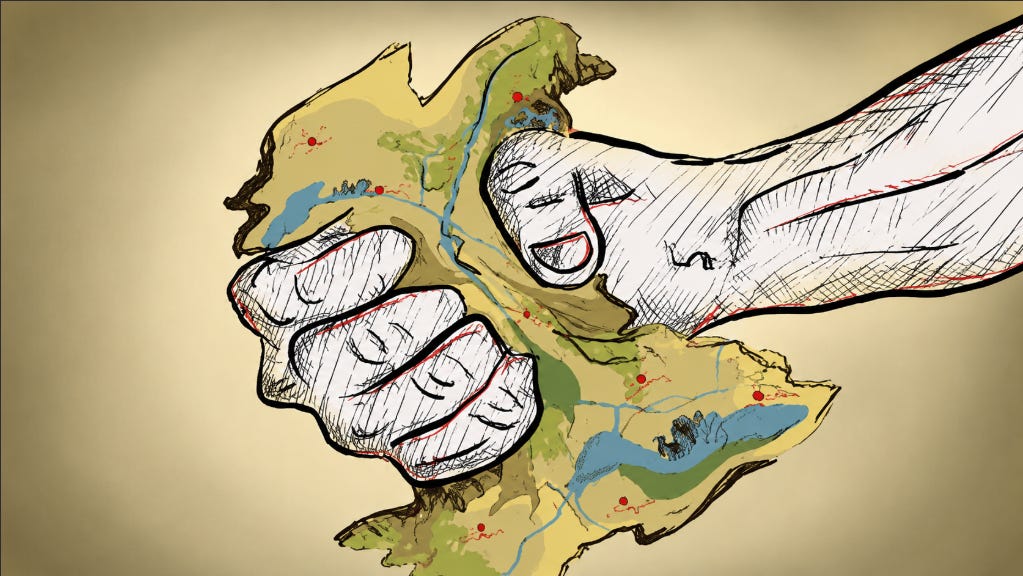
That is not what happened.
What unfolded instead: Australia passed a ban, and almost immediately France, Britain, and Canada were all reaching for the same one. The same age line, give or take a year. The same enforcement mechanism. The same framing about protecting children from harm. Then the smaller states fell in behind. It did not spread the way independent nations stumble toward a shared worry, each in its own way. It spread like a memo through a head office.
Some readers will rightly push back: the bans are not identical. France drew its line at fifteen, Australia and Britain at sixteen. Canada wrote in exemptions for platforms that can prove they meet certain government-set standards. Fair enough.
But these are the tweaks you’d expect a head office to let each branch make for the local market while selling the same product. The skeleton underneath is identical, however the face changes: an age threshold, mandatory verification through digital ID, and a phase-in sorted by the size of the platform. That is seems less like a coincidence of national priorities and more like one law, lightly localized, dropped into one country after another.
The Blueprint Carries Its Own Politics
The phase-in by size deserves more attention.
Sorting the ban by platform size sounds neutral. But every choice has consequences. Freeze the rules around the current giants, and the platforms below the line are left standing — and those platforms are not a random sample.
You can watch this unfold in Britain, in a question the ruling class will not answer: where does BlueSky land? Some outlets reported the platform looks set to escape the rules. Others listed it among those likely to be covered. The problem is not the speculation but that the government has not published its final list. Imagine passing a major tax and refusing to say who it applies to.
I am not asserting that left-leaning platforms like BlueSky will be exempt. We do not know — and the not knowing is itself the problem. But if such a platform falls outside the ban on account of its smaller size, follow the effect through. Clear out its larger competition and its growth is guaranteed. Every curious teenager left online gets funnelled toward a narrower slice of the world.
The point is that the same sorting rule has been copied from one country to the next, and nobody paused to ask who it favours. The trouble is not merely that these governments are all pushing a social-media ban. It is that they are reaching for identical machinery — only years after we watched a coordinated censorship campaign cross national lines in the name of curbing COVID misinformation. And it is worth remembering what those same authorities once classified as settled, unquestionable truth turned out, in the end, to be largely false.
How a Memo Becomes a Law
None of this requires a smoking room or a secret signature. It is duller and more troubling than that.
One progressive think tank writes the model law. It becomes the reference everyone cites at the global conference and in the white paper. The media defends it. The ministers nod along at the summit. “International best practice” becomes a thing you adopt rather than a thing you debate, and the national legislature is handed a draft to ratify rather than a problem to solve.
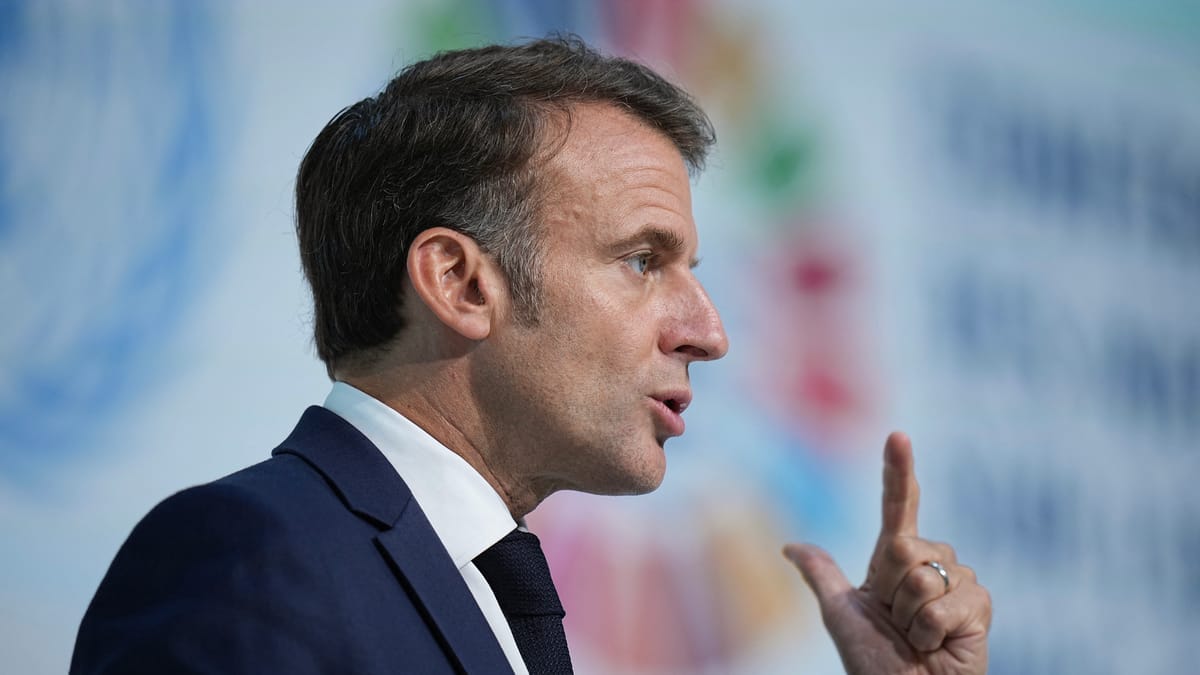
Listen to how the French president frames it. He has said he wants the rule pushed up to the level of the entire European Union — one standard for everyone, all at once. That is not the language of a man tailoring policy to France and its particular children. That is the language of a man rolling out a product line and looking for the widest distribution he can get. In that sentence the nation stops being the customer the policy is meant to serve. The nation becomes the channel through which the policy is shipped.
Represented, or Administered
We need to stop arguing about the worth of any single policy and start asking where all of them are coming from.
A country whose laws are written for its own people, by people loyal to that nation first, does not move in lockstep with thirteen others on the same question, at the same time, with the same strategy. The lockstep is the concerning part. It tells you the decisions are being made far from where your vote is cast.
No rational person would call that representation. It is much closer to administration. The official you thought you elected to serve your interests looks more and more like a branch manager implementing a rollout that was drawn up outside your border.
Your “leaders” are better understood as middle managers. They implement the policy hoping to climb the ladder, to inch closer to the halls of global governance — confident that if they serve upper management well enough, they will be promoted to head office before anyone downstairs works out what was done to them.
Good article.
Should point out that many of us noticed this in the 1990s into the early 2000s with corporate free trade (free trade deals between nations, Multilateral Agreement on Investment, World Trade Organization and others).
When governments in Canada push gender ideology and allow our education system to decline it is clear they do not “think of the children.” We all know who these laws are really meant to restrict.