



At this point in western civilization it would be easier to answer why people are socialists than why they aren’t. The younger generation has grown up with their heads filled with dreams and their minds captured by Disney fairytales and happily ever afters. Our inflated sense of optimism for the future is fueled by the echoing voices of teachers and parents telling us to dream big and shoot for the stars.
Sadly the reality of life is a very different story. Assets inflated beyond our reach, prices rising while incomes stay flat, sending dozens of resumes after over a decade of school only to hear the silence of our phones and empty email inboxes. At the same time we have unlimited access to social media feeds flooded with videos of others seemingly living much better lives than our own. Even if those depictions of their lives aren’t genuine, the feeling of being inadequate fuels the anxiety of a generation.
With most young people experiencing some version of this reality it’s no wonder they are turning to an economic system which seems to care for the “underclass”. However, the reality of this system is a very different from what we’re told.
The Return of Socialism: Why It’s Happening—and What It Leads To
Socialism and communism are making a serious comeback. You can see it in the rise of figures like Mamdani in New York, and now in Canada, where the NDP has elevated Avi Lewis—a figure who openly embraces ideas that go well beyond mild social democracy.
He’s proposing free buses, free internet and phone services, and government-run grocery stores. For young people who feel disenfranchised and hopeless, these changes seem like a ticket to a better society.
Therefore, younger people across Western countries are not just tolerating these ideas—they’re welcoming them. Before getting into why that is, it’s worth grounding the situation.
Support for Socialism Is Broad—Not Just Young
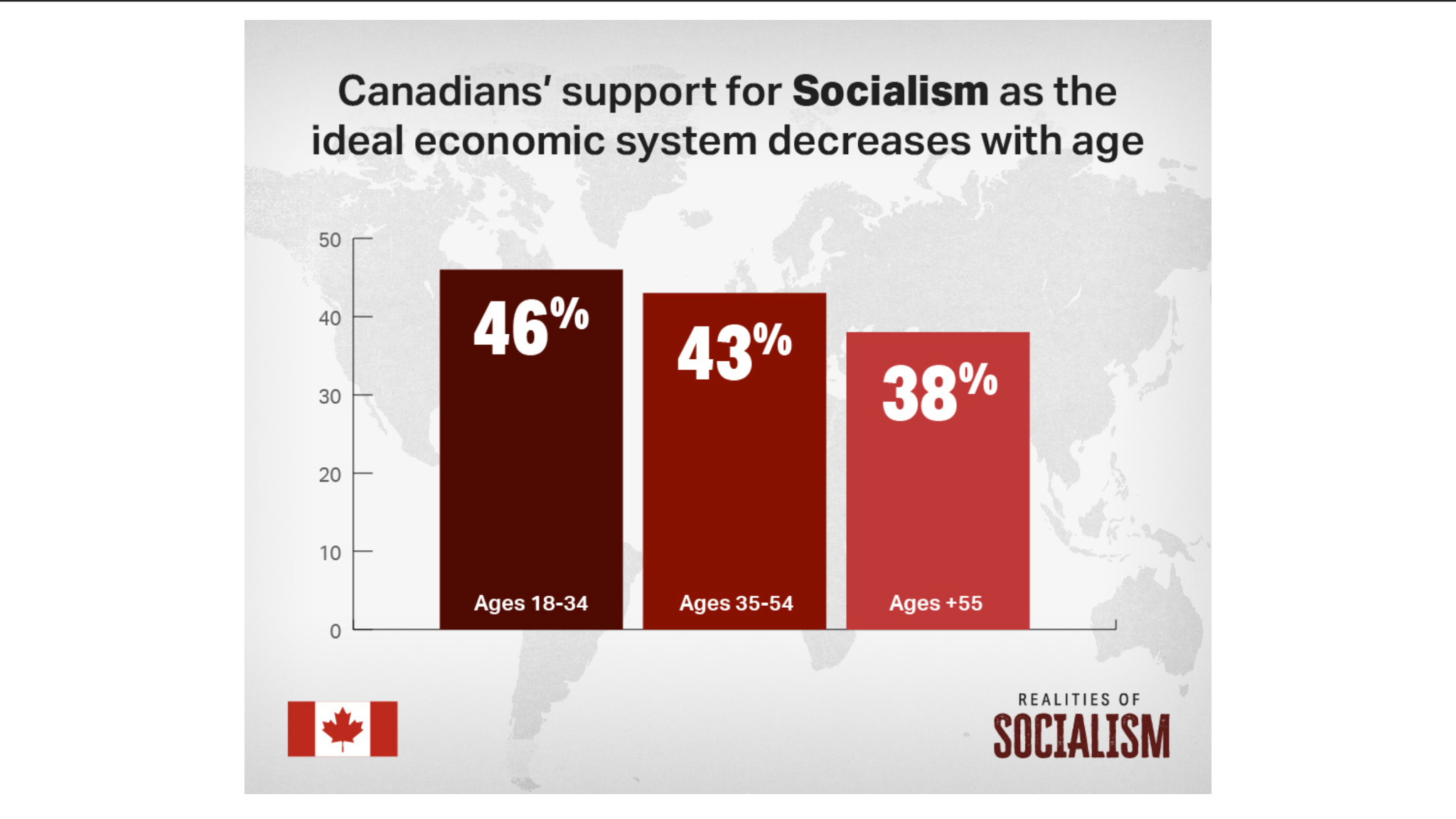
It’s true that younger people show the highest support for socialism. But the gap across age groups isn’t as wide as people think. A study by the Fraser Institute called: Perspectives on Capitalism and Socialism, polled people from Canada, the United States, Australia and the United Kingdom. They found that of people aged 18–34, 46% support socialism as the ideal system. People aged 35–54 support it 43% and ages 55+ support it 38%.
So yes, support is strongest among the young—but nearly 4 in 10 older Canadians feel the same way. That’s not fringe, that’s almost half. Among ages 18–24, support reaches about 50%, one in two. That number may soften with age, but for now, it’s real. I believe there are 3 very strong reasons why so many people find socialism so attractive.
People don’t know what Socialism is
The Fraser Institute study asked people across Canada, the U.S., Australia, and the U.K. what they think socialism means. It offered three definitions.
State ownership of the means of production
In plain terms: government control over industries and companies.
This had the lowest support—around 40%.Government providing more social services
This drew the highest support—roughly 55–65%.Guaranteed basic income (GBI)
Also popular, landing around 45–57%.
What first stands out makes support for socialism apparent: the more the definition sounds like receiving free or subsidized lives, the more people endorse it. The more it sounds like the government exercising control, the less they support it.
These definitions may sound different, but ultimately all three point in the same direction—greater state involvement in the economy. You can’t run large-scale programs without control over how they’re delivered. You can’t fund a guaranteed basic income without higher taxation.
So while people disagree on wording, the underlying shift is the same, expansion of the state. What’s also interesting is the definition people enjoyed the least is the most accurate definition, government control over industries and companies. This is likely because the language is direct. Many socialist would rather say “we will open free grocery stores” then, “we will seize grocery stores from private individuals and take your money through taxation to pay for the food inside of them.” The key to socialism is the twisting of language to hide the actual intentions.
People Assume They Won’t Pay
The second reason people support socialism also rests on a quiet assumption—that someone else will foot the bill. When asked how to pay for expanded government programs, the most popular answers were, by taxing the top 1% (66–72% support) and taxing the top 10% (53–59%).
However, support drops sharply when taxes apply broadly, when a General income tax increase is proposed only 31–39% support it, if a 20% value-added tax is proposed then only 16–29% support it.
People favour socialism when they believe they won’t have to pay for it. That’s why phrases like “eat the rich” are so popular, people are separated into groups of oppressor or oppressed, proletariat or bourgeoisie, working class or ruling class. Those on the bottom of the economic hierarchy are empowered to take from those on the top.
Many people believe taxing the rich will be how this growth in government will be realized, but in practice large welfare states are often funded by broad taxation.
In Canada, the average person pays over 42% of their income in taxes when you combine income tax, sales tax, payroll deductions, and other levies. That’s more than what many spend on food, housing, and clothing combined. Beyond direct taxes, there’s the silent almost invisible taxation, inflation. Often driven by government spending and money creation. It’s a quieter tax, but it hits everyone. It is usually the rich that are insulated from it because they are largely the holders of assets that increase in value as inflation increases.
The Economy Feels Broken
The third reason is the strongest driver. Life is expensive. Housing is out of reach for many. Wages haven’t kept pace. In 2024, Canada was ranked 2nd worst globally for house price-to-income ratio. 2 major cities in Canada, namely Vancouver and Toronto were among the top 20 most expensive real estate markets in the world.
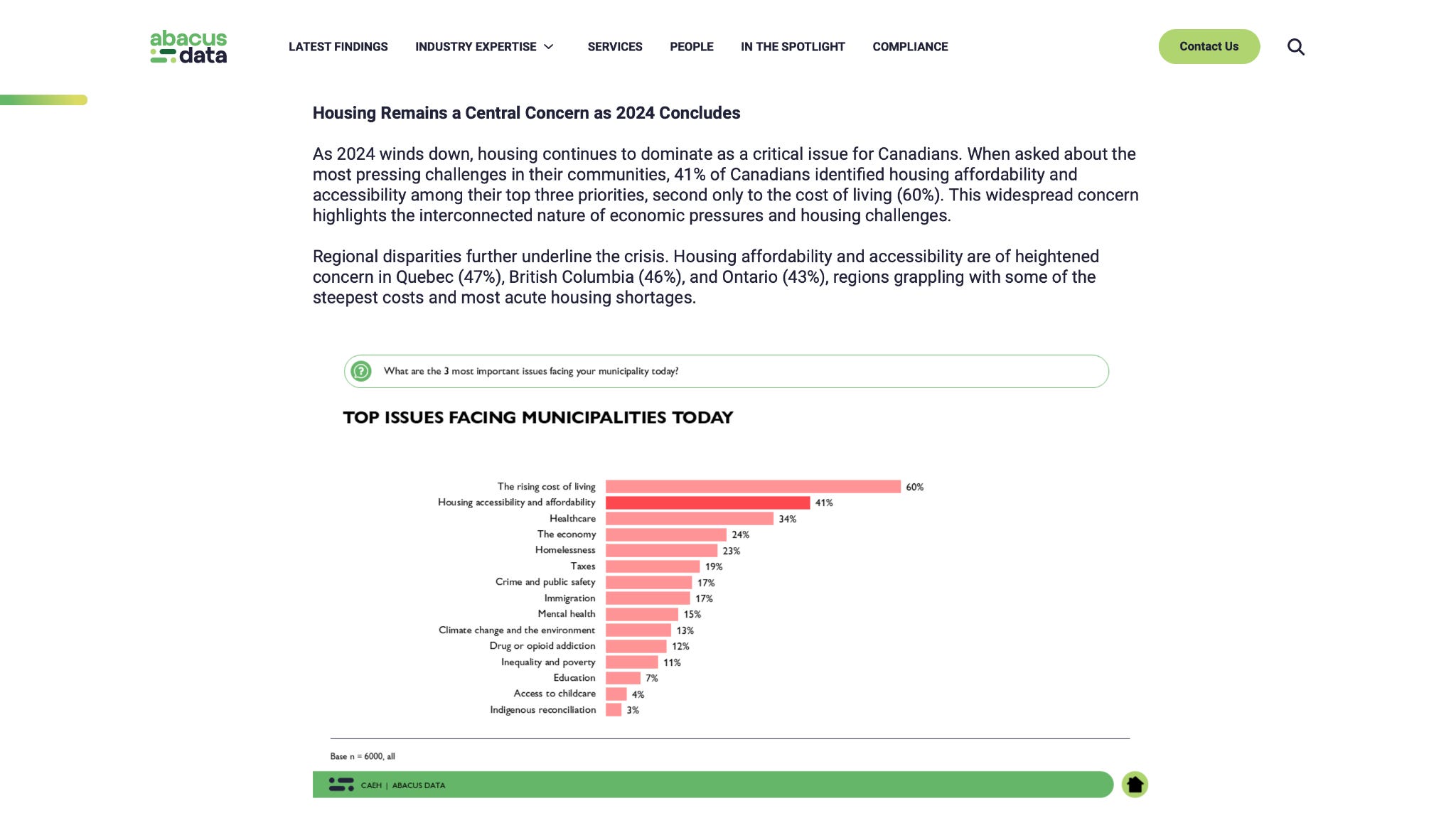
Abacus data conducted a national survey asking Canadians about their top concerns when it comes to the state of the country. 60% of Canadians cite cost of living as their number 1 concern, 41% point to housing affordability, Nearly 90% are worried about the current state of housing and that increases to 91% for Canadians 18-44.
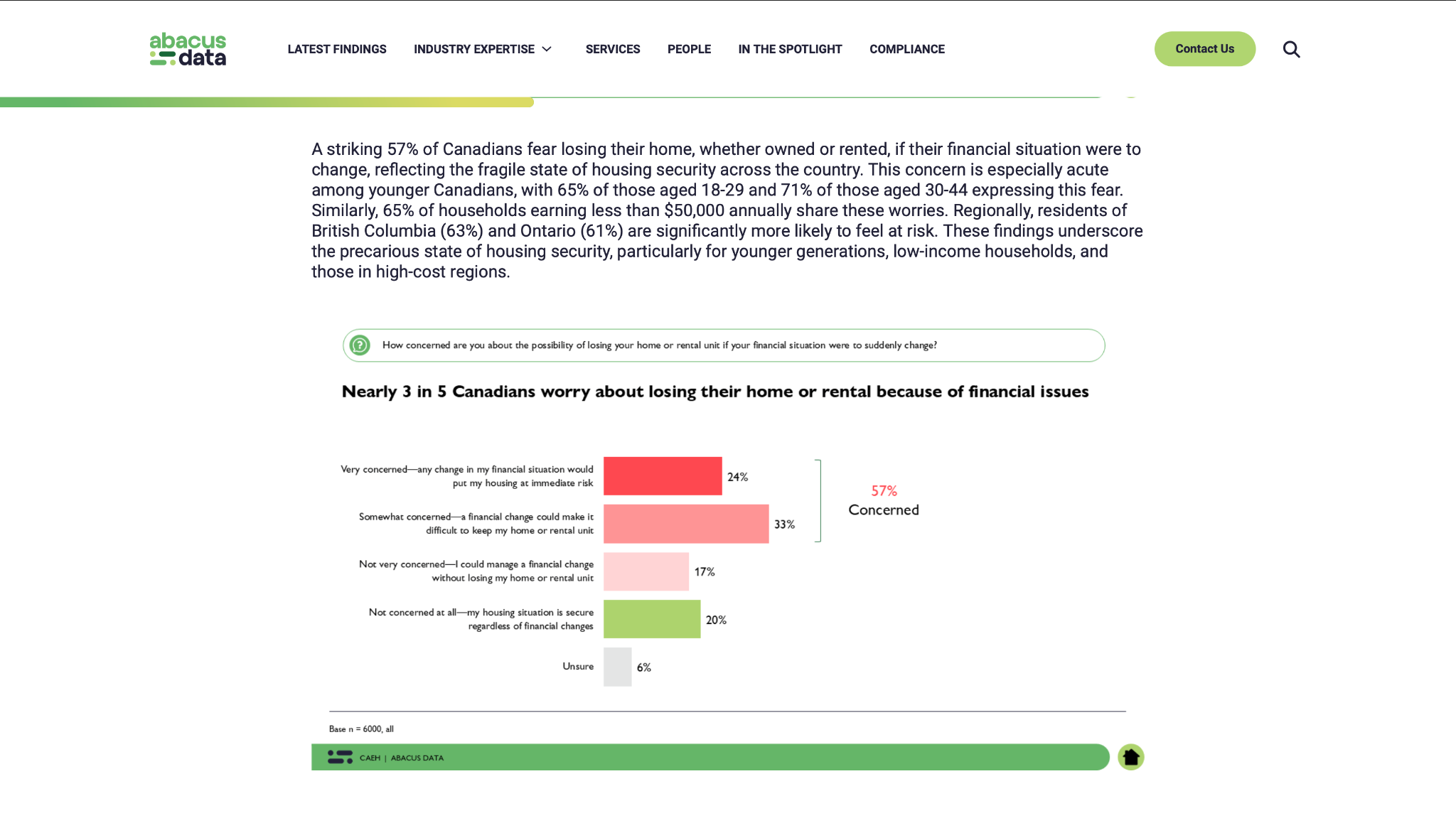
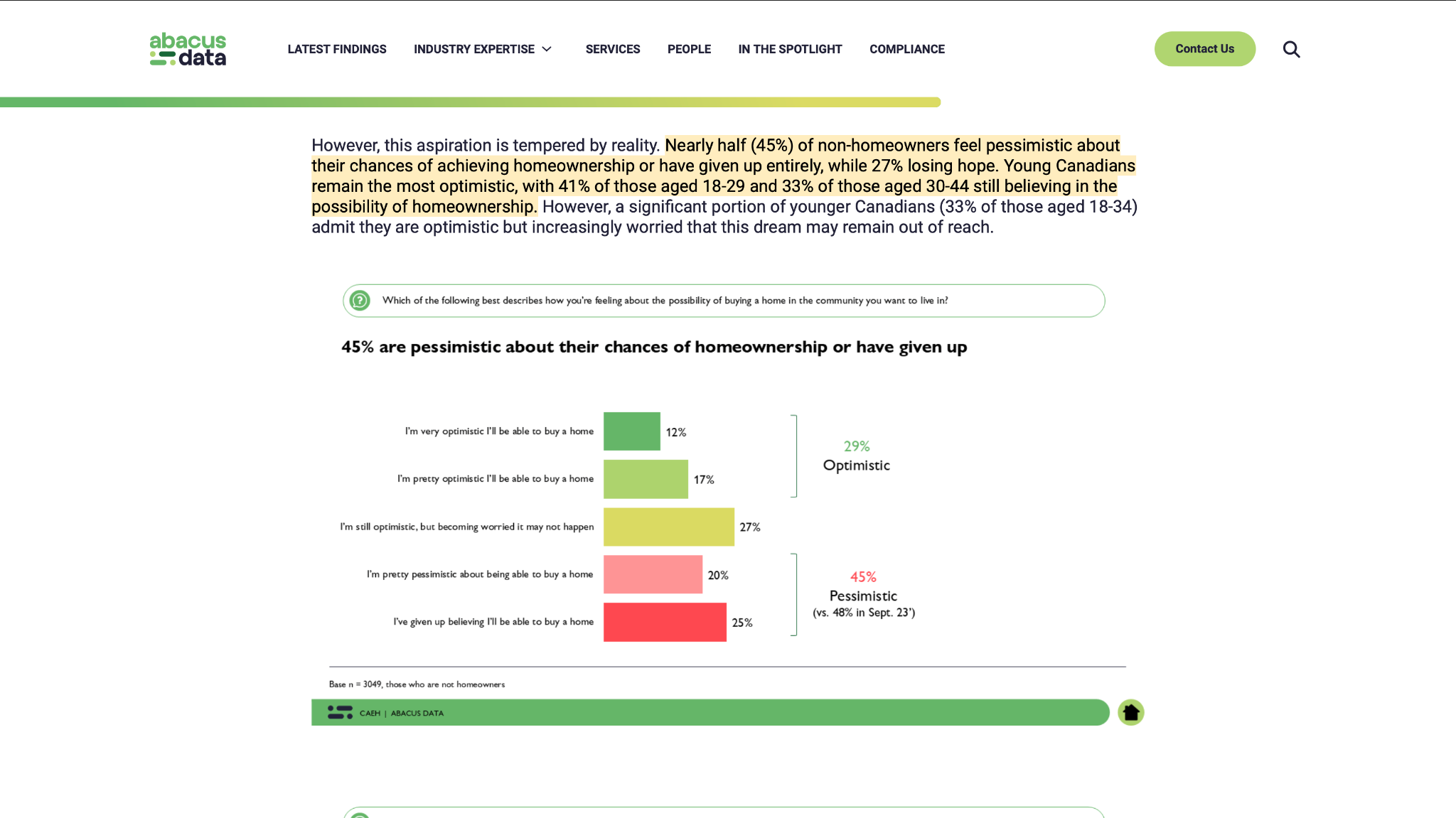
3 in 5 Canadians are both worried about their ability to pay for their mortgage or rent and fear losing their homes or rental because of financial issues. Among non-homeowners, almost half believe they’ll never own a home. That’s not a small frustration—it’s a structural problem that destroys the foundation of western society. Home ownership isn’t just an investment for families, it’s a tie to their nation and proof of a stake in your country.
When people feel locked out, they stop participating and start looking for another option. Many attribute the fall in living standards to the growth of capitalism and compare their lives to those living a better one. It’s harder to understand the inner workings of a mixed economy and the economic results of government versus private decisions. It is much easier to place blame on strangers whose struggles you will never have to understand and a system that is seemingly oppressing you.
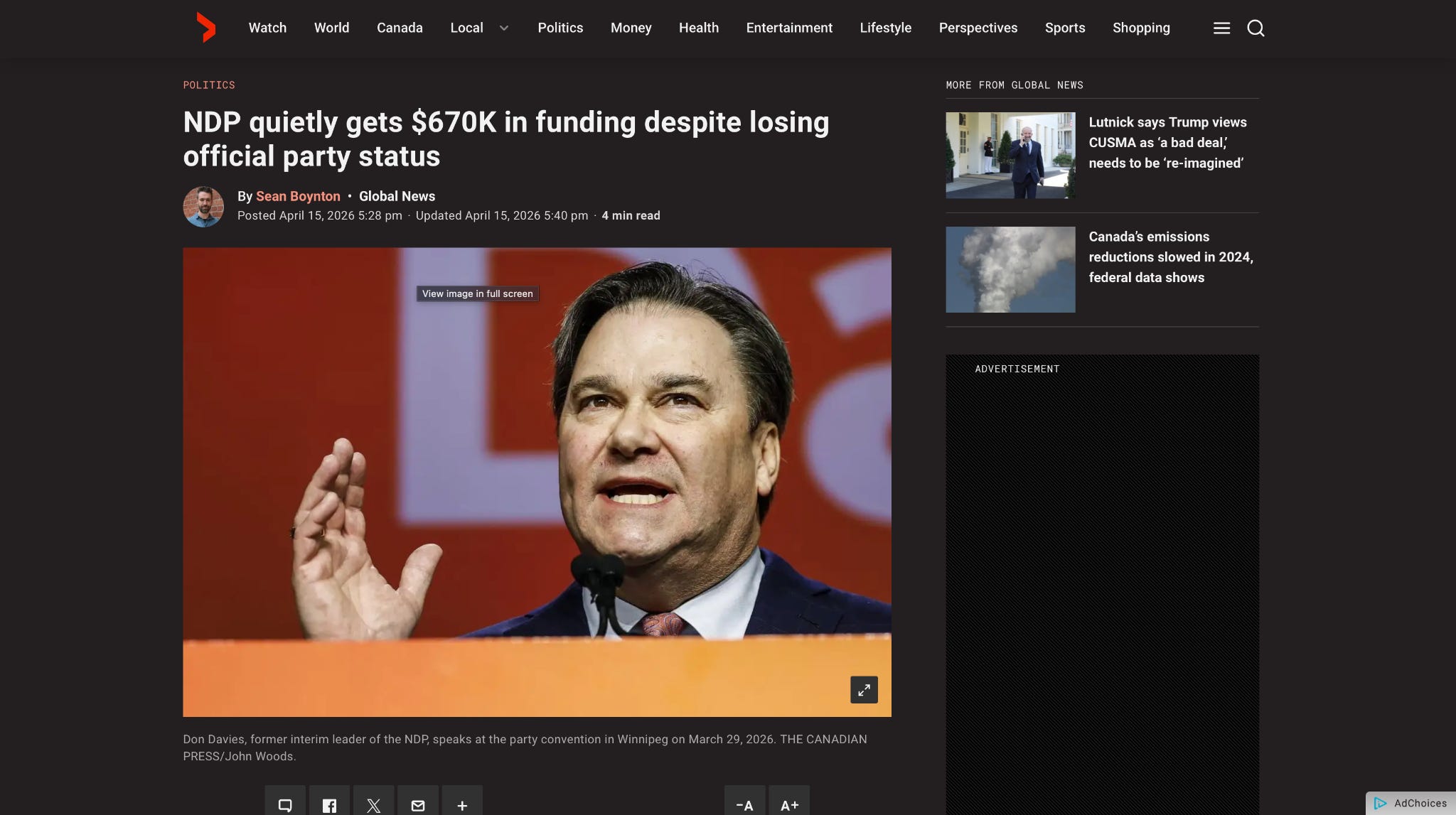
Many people believe the New Democratic Party has no legs to stand on after the last election where they couldn’t garner enough support to gain party status. However with the ever growing favour of socialism in western countries it would be wise to pay close attention to Avi Lewis’s platform, which contains the policies people want.
Despite their non-party status they’ve still continued to receive support from the government, they just got $670,000 in funding to carry out their parliamentary duties. The NDP were undeniably resourceful during the Trudeau era, their coalition allowed the Trudeau government to carry out their agenda. No good deed goes unpunished.
The NDP Platform
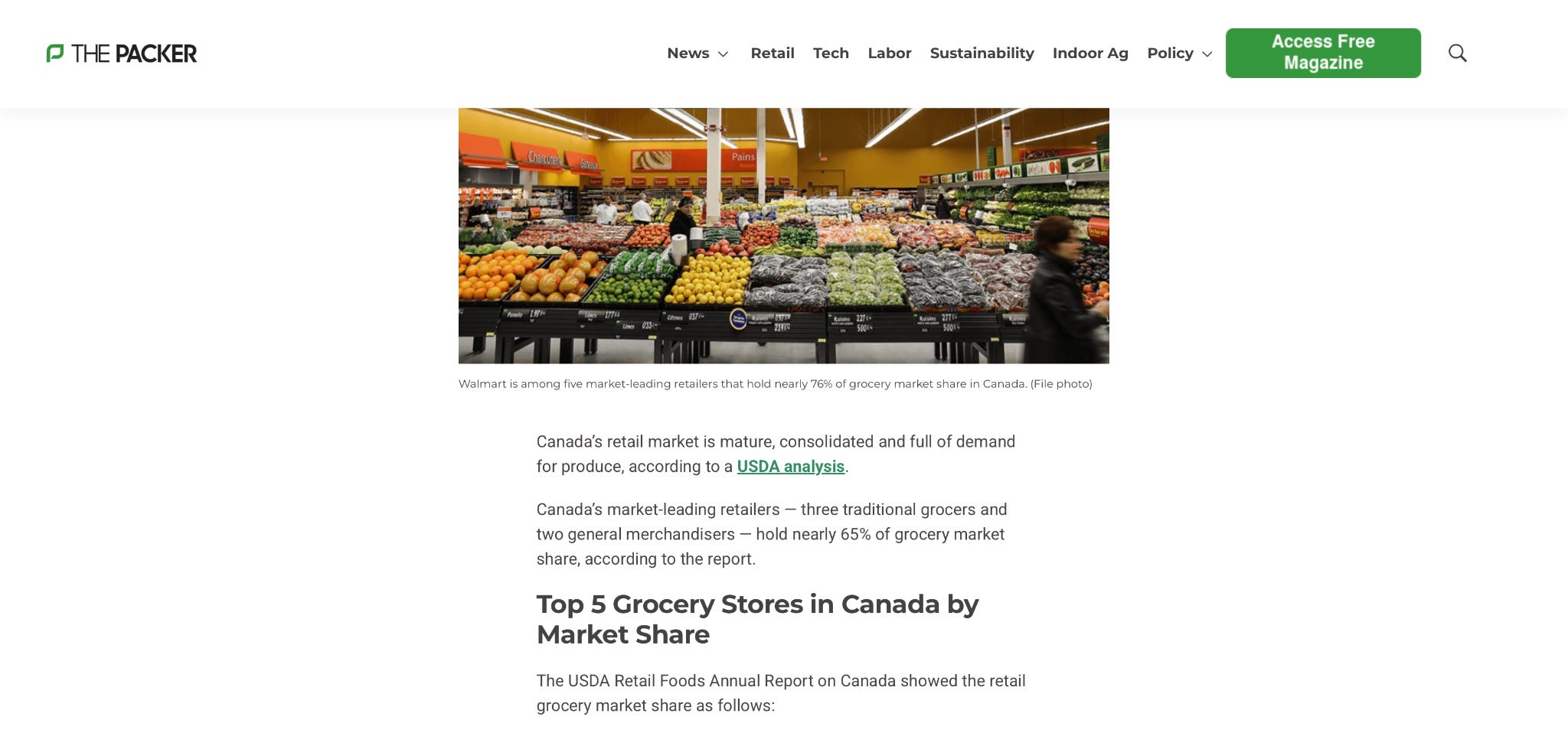
Canada’s grocery sector is concentrated. A handful of companies control a large share of the market essentially making them oligopolies. 5 companies control 65% of the grocery market share. With such a larger share of the market many Canadians are rightly concerned about price gauging. Avi Lewis correctly identifies the problem but, like many socialists, arrives at a destructive solutions. To account for these grocery giants advantage in the market he proposes to create yet another oligarch, that being the government. Suggesting that the government create, subsidize and run publicly owned grocery stores around the country.
The issue is that this doesn’t remove concentration—it shifts it. A state-backed competitor, funded by taxpayers, could easily dominate the market over time.
History offers caution here. Countries that nationalised food distribution—like Venezuela—saw shortages, long lines, and declining supply. Similar patterns appeared in Cuba and the Soviet Union. The intent was stability. The result was scarcity and loss of security. There are many stories of Venezuelans skipping work and keeping their kids home from school so they had time to line up at grocery stores for hours. We can learn from the past or suffer in the future.

Nationalised Telecommunications and Pharma
Lewis also proposes expanding public control into telecom and Vaccine production.
The concern here isn’t just efficiency—it’s control. When the state becomes the main provider, access can become political, not just economic. COVID was a demonstration of what could happen when you give the government too much power over these sectors.
The government gave false information about practices that could stop the spread of the virus. Then they forced people to take an untested vaccine and falsely advertised that it would reduce spread. They allowed classified documents from Canada’s highest security laboratory to be sent to China. What’s worse is the Liberal Government then fought the release of the documents outlining the incident. Then during the lockdowns, the government unlawfully shut off the bank accounts of truckers protesting—and even those supporting them. These are events we cannot dismiss when thinking of these policies.
Free Transit
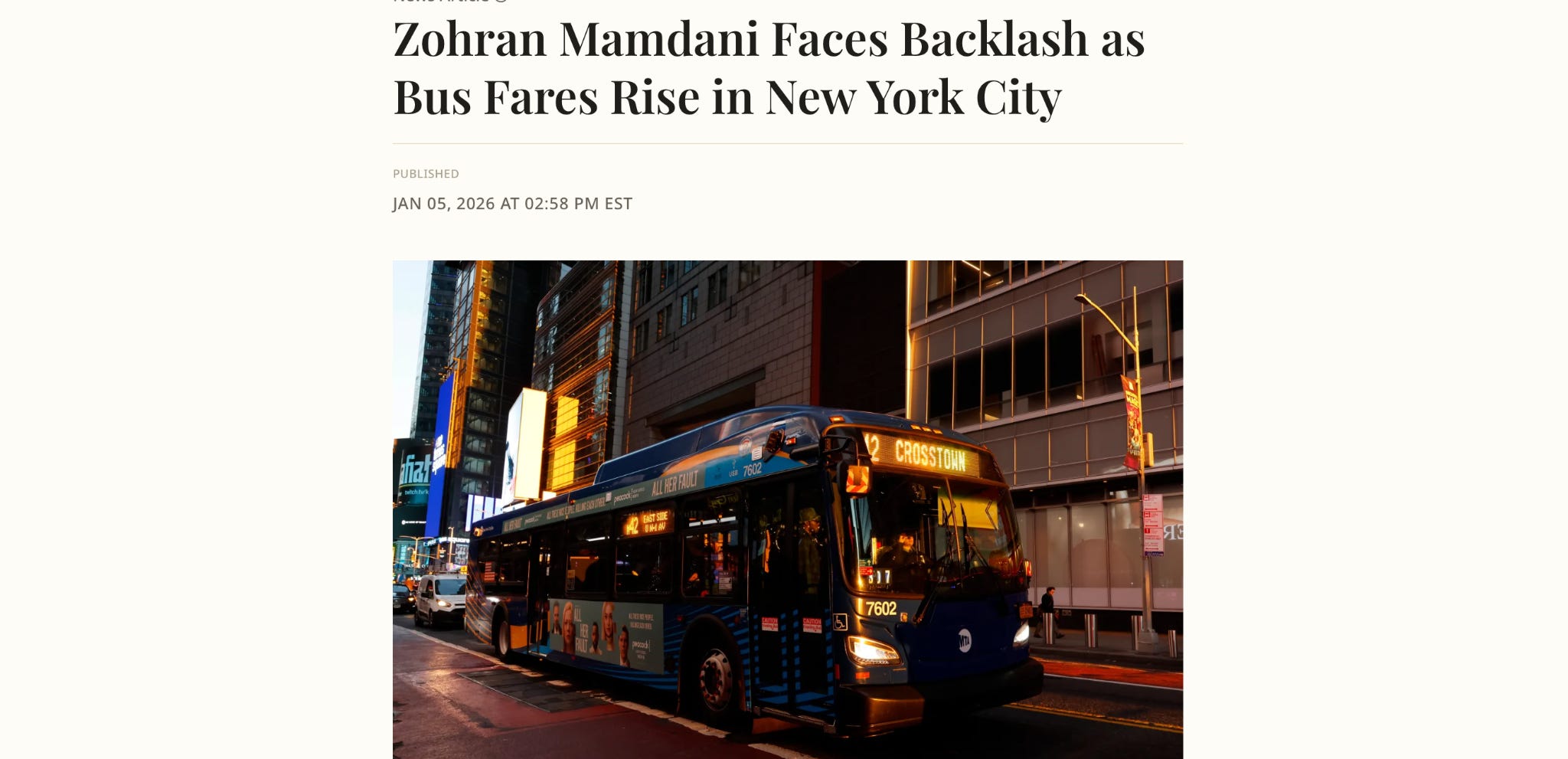
Similar to Mamdani in New York, Lewis is proposing “free and reliable transit”, as if anything given away for free could sustain utmost reliability over time. This policy is also unrealistic and didn’t play out well in New York. After Mamdani won the mayoral race he received backlash following the increase in bus fares in New York.
Free public transit sounds appealing, but it still has to be paid for by somebody. Lewis also proposes large-scale electrification, rail expansion, and infrastructure upgrades that would cost tens or hundreds of billions in taxpayer dollars. Never asking the question of how we will be able to pay for it. There’s a pattern in similar proposals: costs rise, and “free” becomes subsidised, then partially paid, then expensive again.
Ending Homelessness Through Public Housing
Another part of the plan includes building over a million public housing units within five years largely to reduce the rate of homelessness in the country. Other countries have tried large-scale social housing. As this likely will ease the rise of homelessness, not only will these homes never be owned by Canadians but there are many problems with this approach. The Netherlands, for example, has over 2.3 million of these units totaling 30% of their housing, but supply constraints and long wait times remain—often stretching years or even decades.
The average waiting time to get into a housing unit is now over 7 years, in some places that can increase to 12.5 or 19 years. At the same time, heavy public-sector involvement can shrink the private rental market, tightening supply further. The result is pressure on both systems. Social housing starts at helping the lower class but as it grows and the private housing shrinks middle income individuals become priced out of the rental market and are forced into social housing.
This creates a perpetual cycle of more reliance on government funded housing which puts a lot of stress on tax payers to fund. Eventually the private sector housing is set to disappear and be completely dominated by social housing.
Phasing Out Oil and Gas Expansion
Lewis proposes halting new fossil fuel projects and shifting toward renewables, this is a policy championed by the green movement. As we live in a petro society with the Iran war highlighting the delicacy of the market, it’s clear we need more energy, not less. The challenge is transition risk. Countries that reduced domestic energy production and refineries have faced supply issues and rising costs.
Germany’s recent experience is one example with a goal to phase out coal, they planned to close all 84 coal power plants. This led to an energy shortage because of the Iran war and has forced them to consider ramping up coal power to avoid an energy crisis.
Where This Leads
None of these ideas exist in isolation. They reflect a broader shift toward larger government, more central control, and greater reliance on public systems.
That shift is being driven by real problems—especially cost of living and housing.
But the proposed fixes carry their own risks:
Reduced supply and longer wait times
Higher taxes across the board
Greater state control over key sectors
Potential inefficiencies that compound over time
The rise of figures like Avi Lewis wasn’t random. It was predictable.
When people feel the system isn’t working, they look for something else.
The appeal of socialism today is rooted in frustration, not theory. That’s why it’s gaining ground. The question isn’t whether people want change—they clearly do. The question is whether these solutions fix the problems, or deepen them. If you’re concerned about where this is heading, the most useful thing you can do is understand the arguments—both for and against—and have the conversation clearly. Both sides agree on the problems we face, however the “solutions” proposed by one side will be devastating.
I suspect given this new Liberal majority and the rising sentiment that Mark Carney is a “center-right” Liberal, in the next election we will see a record rise in the support for Canada’s socialist party, the NDP. The perception of socialism and lack of historical context will undoubtedly drive Canada and many other western nations into the hands of socialists and communists, bringing us down the path of totalitarianism.
It seems to me that the ideologues wish to shift us from one system of overreach and control, to another. However, it is not for us to simply pass judgement. Bad ideas will only fall to better ones.
This was an amazing and brilliantly written article. So precise and detailed. Thank you for this. Anyone reading this should be able to understand not only the complexities of our countries issues, but the dangers of moving in the direction that we are currently in. You should be very proud of this article.
The Cloward-Piven Strategy at work in Kanadastan.