


The Problem No One Admits
There is an unspoken rule in politics: criticism is encouraged when aimed outward, but treated as betrayal when directed at your own side after a loss. The moment you do, analysis is treated as betrayal. Any suggestion that your side’s strategy might be flawed is met with questions of loyalty rather than argument, as if the party were a fragile lifeboat rather than a political vehicle meant to win power. That reflex is understandable, but it is also revealing. When a movement becomes more committed to managing disappointment than demanding victory, losing stops being a problem and turns into the norm.
After every Conservative defeat, the same ritual unfolds. The loss itself is quickly acknowledged, then immediately softened. Attention shifts away from the outcome and toward secondary metrics meant to dull the blow.
“A record share of the youth vote.”
”A strong showing compared to last time.”
”At least the Liberals didn’t get a majority.”
These are offered not as analysis, but as consolation.
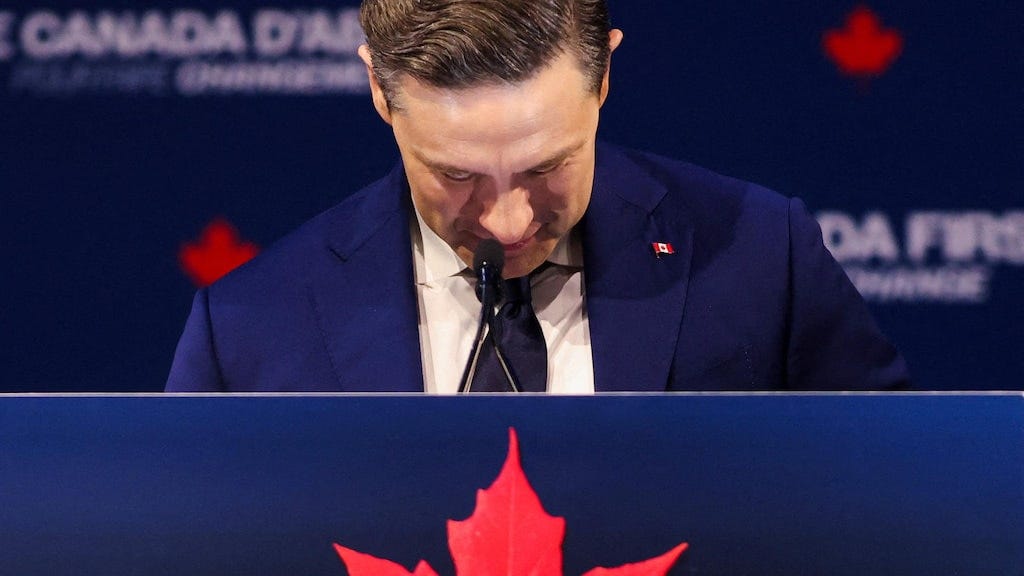
We saw this play out again recently after we pointed out that the Conservative Party was not interested in defeating the Liberal budget. The response was immediate.
“This was a chess move.”
”They need to give Carney the opportunity to fail.”
”They stopped something worse from happening.”
Each comment attempted to reframe inaction as strategy. None of them addressed the underlying critique. None of them asked whether this mindset has ever actually produced lasting power.
This is what coping looks like in politics. The insistence on reframing failure until it feels like progress. The goal quietly shifts from winning to not doing as badly as expected. Over time, that shift becomes normalized. Losing becomes tolerable, then familiar, then defensible.
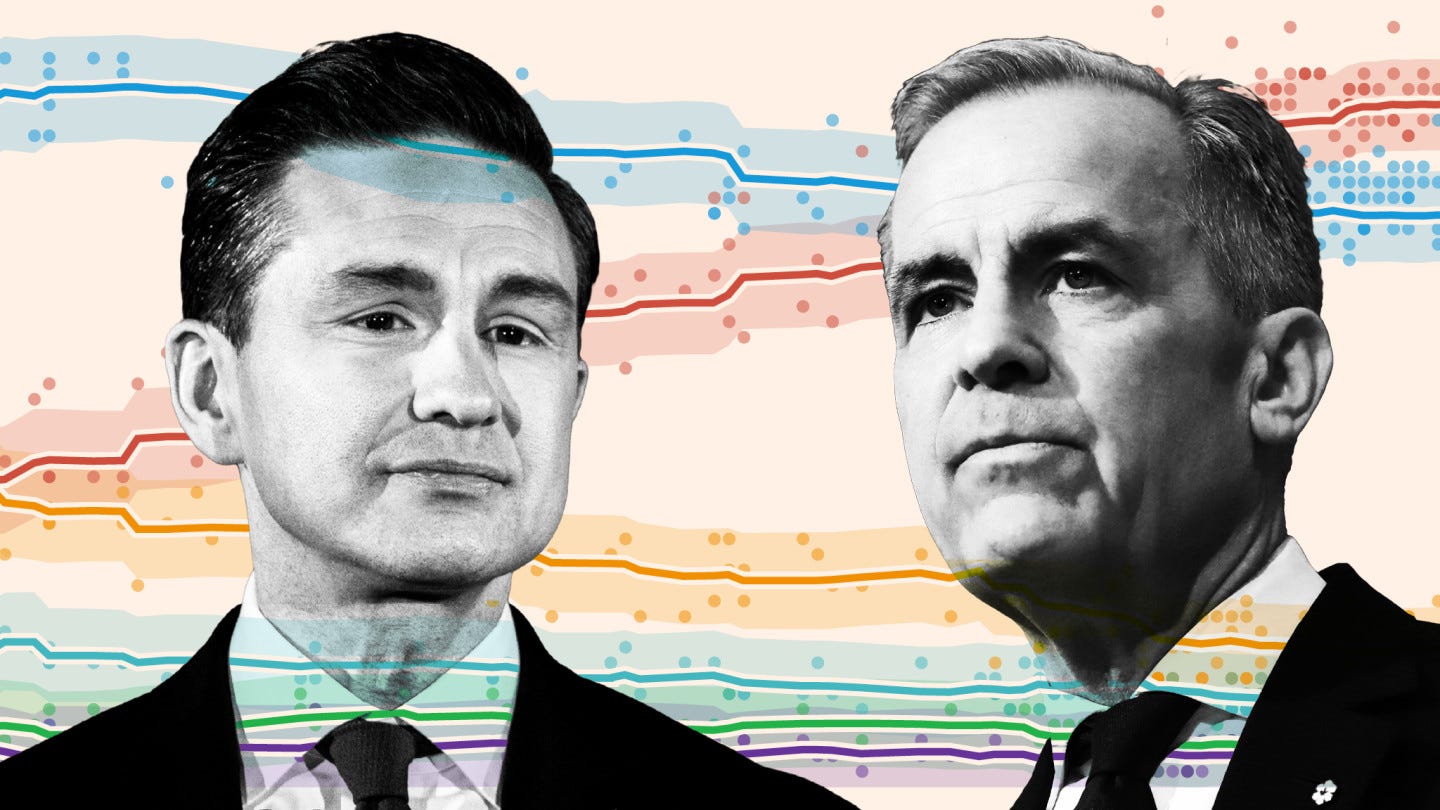
Elections are not performance reviews. They are not graded on a curve. They are closer to game seven of a championship series. You either win or you lose. No one remembers who had better possession time or who exceeded preseason expectations. They remember who held the trophy. Politics is no different. Power does not care about effort, intention, or narrative spin. It responds only to victory.
Imagine a coach walking into the final game of the season and explaining that the plan is to hope the other team fumbles. That is not strategy. It is resignation pretending to be preparation. Yet this is precisely how Conservative losses are explained. The party’s role is framed as waiting patiently for Liberal incompetence to become so unbearable that voters have no choice but to hand over the reins.
The problem is that this logic has a long track record—and it fails more often than it succeeds. When winning depends on your opponent collapsing rather than on your own vision compelling people forward, defeat is always just one “elbows up” campaign away. Coping narratives may soothe supporters after the fact, but they do nothing to change the conditions that produced the loss in the first place.
Playing Not to Lose Is Still Losing
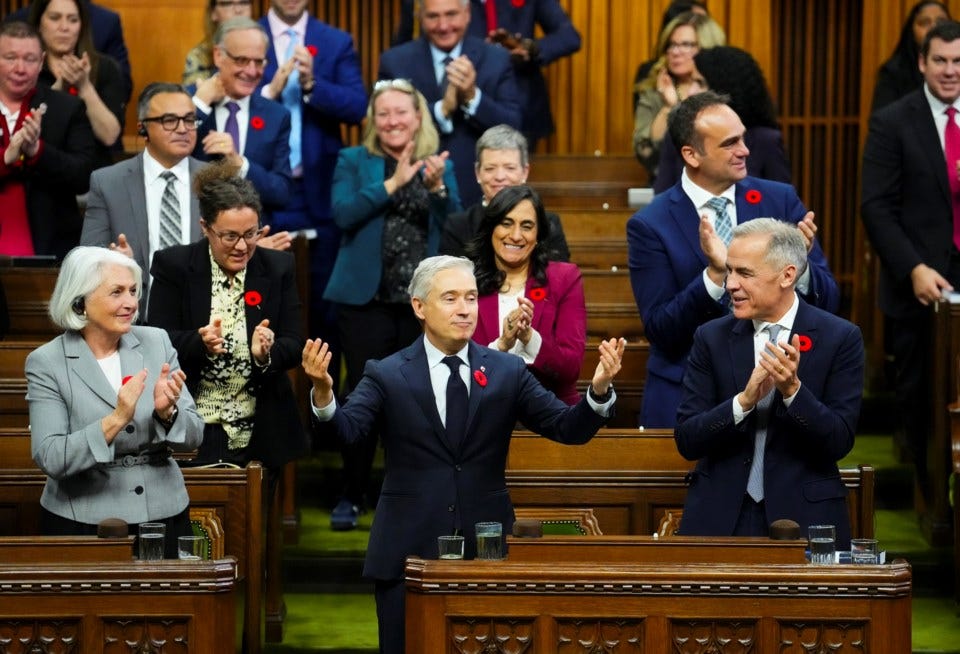
The clearest example of this mindset came with the Conservatives seemingly wanting to make sure Mark Carney’s deficit bill passed. The loyalist justification was that forcing an election before Christmas risked handing the Liberals a majority. That outcome was treated as the ultimate failure to be avoided at all costs. Whether or not that assessment was correct in the moment is almost beside the point. What matters is the logic behind it. The Conservative Party does not play to win. It plays to avoid the worst-case scenario.
That logic is now colliding with reality. Multiple Conservative MPs have since crossed the aisle, leaving the Liberals one seat away from a majority anyway. The very outcome this strategy was designed to prevent is now dangerously close to materializing—without an election, without a fight, and without the Conservatives forcing any meaningful confrontation. Caution did not buy security. It merely delayed the reckoning while weakening the party’s leverage.
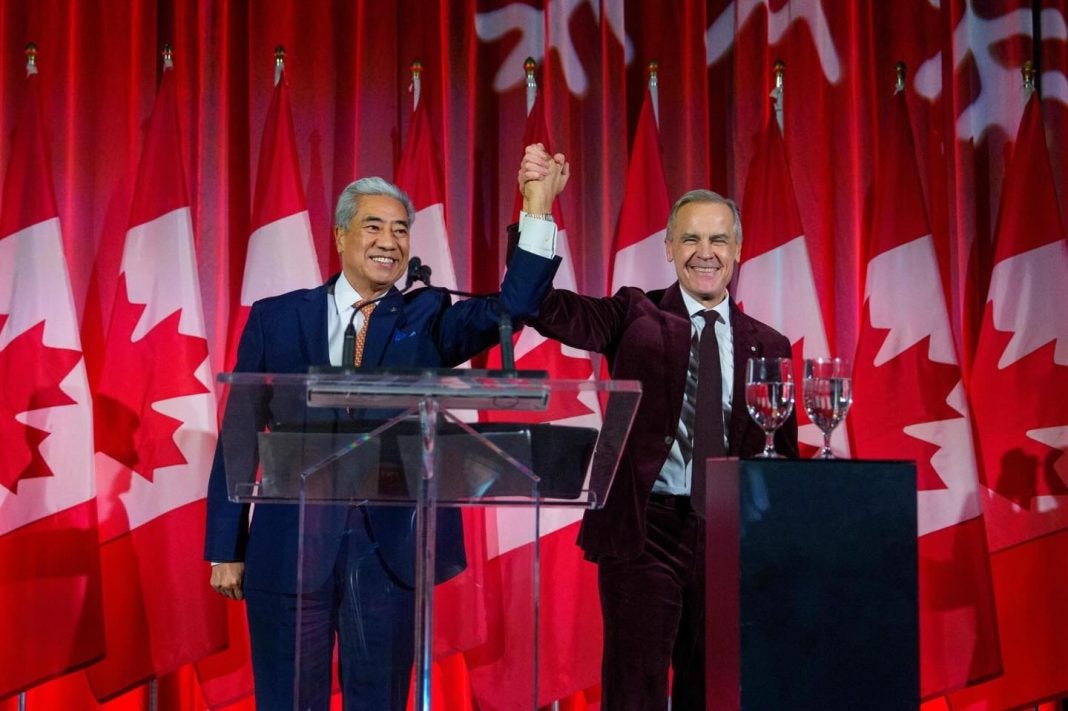
Risk aversion has quietly become the guiding principle. Every move is filtered through the same question: How do we minimize damage? Not How do we take ground? Not How do we force a reckoning? The result is a politics of permanent caution, where boldness is treated as recklessness and confrontation as self-inflicted harm. Over time, this instinct becomes strategy.
This is often defended as maturity or prudence. In practice, it is usually about cowardice and career survival. A party that expects to lose learns to manage loss carefully. It avoids risks that might end political careers, even when those risks are the only plausible path to victory. Losing narrowly feels safer than risking everything and failing spectacularly. But safe losses still leave you out of power—and now, increasingly, without even the ability to block the worst outcomes.
The deeper problem with playing not to lose is that it concedes ground in advance. It accepts that the Liberals set the terms and the Conservatives merely respond. Power, however, is not granted to the party that offends the fewest people. It is taken by the party that defines the conflict. When your strategy is built around avoiding attacks rather than landing them, you are already fighting on your opponent’s terms.
Playing not to lose may feel responsible. In practice, it has brought the party closer to the very outcome it claimed to be avoiding.
Canada Is Not a Two-Party System
One reason this pattern keeps repeating is that Canadians misunderstand their own political history. We like to talk as if we live in a competitive two-party system, where power swings back and forth based on performance. That isn’t how Canada actually works. Historically, Canadian federal politics has been defined by long governing Liberal dynasties punctuated by short, unstable Conservative interruptions.
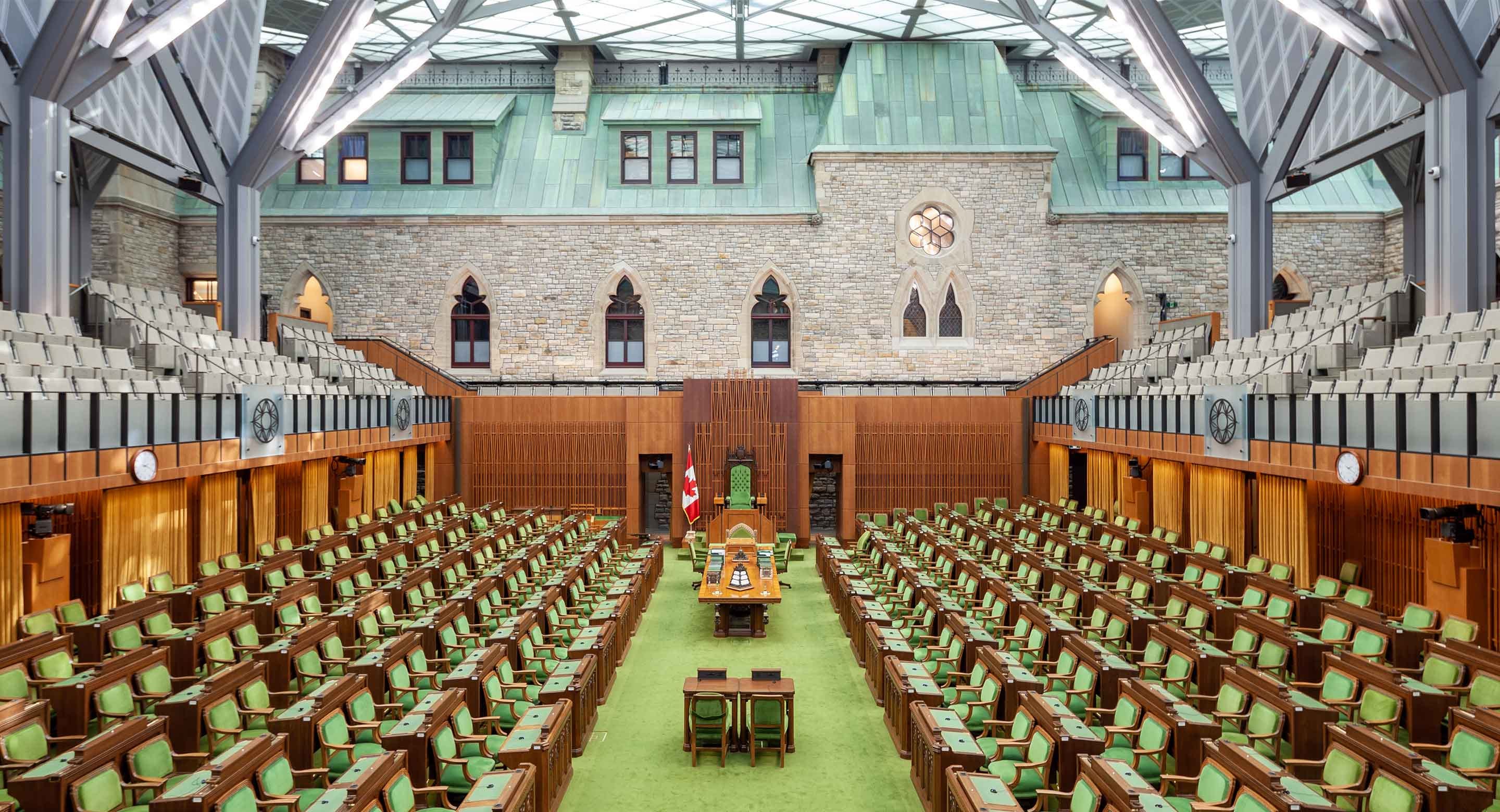
This isn’t a controversial claim. It’s a documented one. In Dynasties and Interludes, a detailed account of every federal election in Canadian history, the authors show that Liberal dominance is the rule, not the exception. From 1896 to 1911. Then again from 1935 to 1957. Then from 1963 to 1984. Then from 1993 to 2006. Long stretches of Liberal rule, broken only briefly by Conservative governments that arrive during moments of crisis and leave once stability returns.
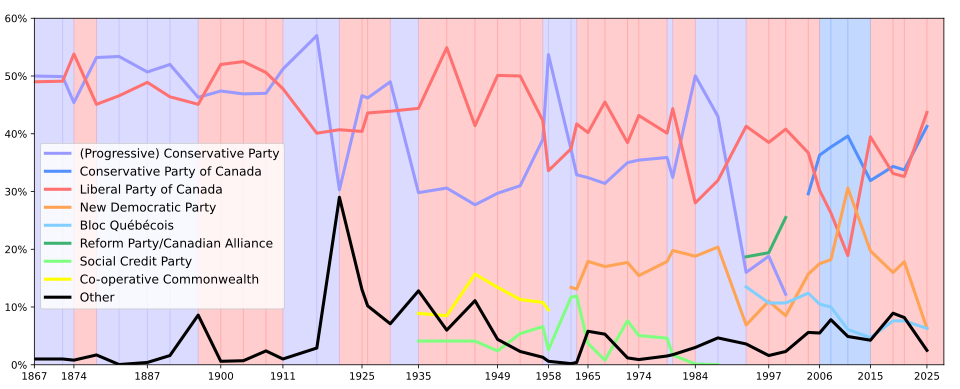
The pattern is striking because it is so consistent. Liberals govern until they overreach, mismanage, or fracture. A crisis follows. Conservatives are then ushered in not as visionaries, but as caretakers—tasked with restoring order, stabilizing finances, or cleaning up scandals. Once the emergency subsides, voters return the Liberals to power, often with renewed legitimacy. The interlude ends. The dynasty resumes.
This helps explain why Conservative strategy so often revolves around waiting. Waiting for Liberal exhaustion. Waiting for economic collapse. Waiting for public anger to reach a boiling point. The party does not position itself as an alternative governing philosophy so much as a temporary corrective. Its role is reactive by design.
When politics functions this way, playing not to lose becomes rational. If your historical role is to manage crises rather than define the future, then caution feels appropriate. But that same caution also ensures that Conservative governments remain brief and fragile. They enter power without a mandate for transformation and leave without having reshaped the political landscape.
The result is a cycle that reinforces itself. Liberal dominance breeds Conservative timidity. Conservative timidity reinforces Liberal dominance. Breaking that cycle requires more than patience or better timing. It requires a party willing to reject the role history has assigned it—and to govern as if it intends to stay.
Why Conservatives Fail
There is a very simple explanation for why this pattern occurs: Conservatives do not offer a compelling counter-vision of the country. They offer opposition, critique, and restraint—but rarely a clear picture of what Canada should become. That vacuum shapes everything else. A party without a future story cannot lead; it can only react.
Part of this is philosophical. Conservatism, by its nature, is oriented toward preservation. It seeks to protect institutions, traditions, and norms from rapid decay. There is nothing wrong with that. In stable societies, it is a necessary force. But preservation alone is not enough when the institutions being preserved are already hollowed out or captured. At that point, conserving the status quo is indistinguishable from managing decline.
Instead of articulating a positive vision, Conservatives default to negation. We are not the Liberals. We will be more responsible. We won’t go as far. These are not visions. They are relative positions, entirely dependent on the failures of the governing party. When your identity is defined by contrast rather than conviction, your success depends on your opponent collapsing first.
Without a counter-vision, Conservatives struggle to explain why they should hold power beyond being a temporary fix. They promise competence in a system that increasingly feels incompetent by design. And when the Liberals inevitably regain their footing, that limited mandate evaporates.
A party that cannot articulate a better future will always govern on borrowed time.
Why Conservatives Should Call Out the Conservative Party
The pushback to pieces like this usually sounds something like: If you’re critical of Conservatives, you’re just helping the liberals.
This is where it’s important to note that we’re not Conservatives in the tribal sense, and we never claimed to be. We were not drawn into politics by party loyalty or ideology. We were pulled in because politics started to encroach on everyday life—on work, speech, property, mobility, and basic civic trust.
Our concern is not left versus right. It is power centralization vs. decentralization. Any system that allows one party to dominate indefinitely will rot, regardless of what it calls itself. Canada is now dangerously close to that condition. The Liberal Party—which must be clearly distinguished from liberal ideals—has accumulated an extraordinary amount of institutional, cultural, and bureaucratic power. Corruption thrives in those conditions not because individuals are uniquely immoral, but because monopolized power removes consequence.
That is why Conservative complacency matters. When the only viable opposition refuses to act like it intends to govern decisively, it becomes complicit in the imbalance. Criticism, in that context, is not disloyalty. It is the bare minimum required to prevent stagnation from becoming permanence.
Many Conservatives agree with our content because we share an enemy, not a vision. That distinction matters. Mutual opposition to Liberal corruption does not automatically produce a coherent alternative. It only creates a temporary alliance of convenience. Without a clear strategy for dismantling captured institutions and restoring accountability, even well-intentioned Conservatives become caretakers of a broken system.
This is also why urgency shapes our tone. Canada is not in a normal political cycle. It is approaching a threshold beyond which reform becomes impossible. This is not the moment for incremental positioning or long-term brand management. It is the political equivalent of being down on points with a minute left in the fight. You don’t win by protecting your guard. You win by taking risks.
Calling this out is uncomfortable, but necessary. Silence would be easier but it doesn’t changes outcomes. And at this stage, outcomes are what matter most.
Pierre Poilievre and Fearing the Smear
Pierre Poilievre is not the problem. In many ways, he is the strongest leader the Conservatives have put forward in years. We supported him openly, not because we are party loyalists but because we believed the moment demanded it. That support, however, does not obligate silence when strategy fails.
The clearest missed opportunity came when Poilievre publicly challenged the RCMP leadership over its refusal to pursue criminal charges against the Trudeau cabinet despite a long list of scandals. For a brief moment, the frame was exactly where it needed to be: corruption, institutional failure, and selective enforcement of the law. It was a rare instance where the Conservatives set the terms of the debate instead of responding to them.


Then the predictable happened. Media outlets rushed to smear the accusation, not by addressing the substance, but by questioning motive and tone. Rather than forcing that reaction into the open, Poilievre backed off. The critique was softened. The moment passed. What could have been a sustained confrontation over corruption dissolved into another defensive retreat.
