


Good morning, it’s Thursday, December 4th. In today’s news, Statistics Canada admits nearly half a million non-citizens missing from the census, BC Conservative Party implodes: John Rustad ‘removed’ as party leader but he refuses to step down, China’s “pop-up” consulates are quietly spreading across Canada, Trump threatens to strike any country making illegal drugs for the US and much more.
First time reading the daily blend? Sign up here.

Statistics Canada Admits Nearly Half a Million Non-Citizens Missing From the Census
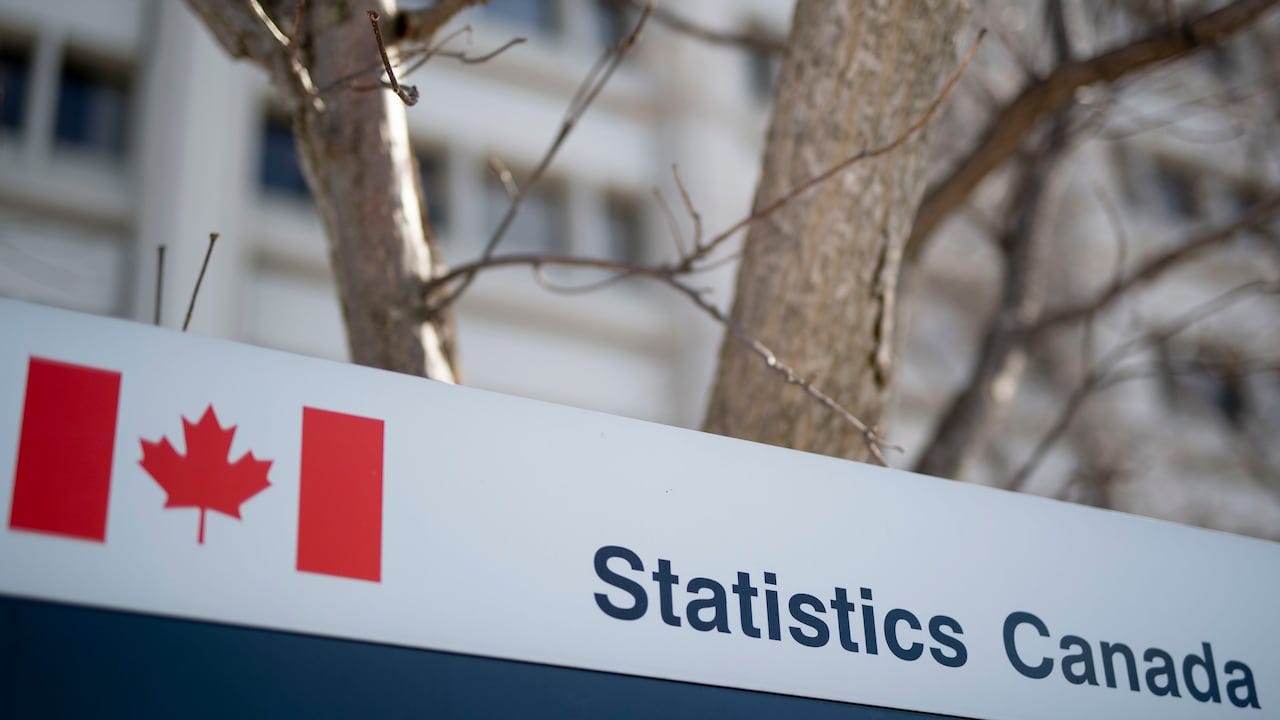
Canada can’t manage what it can’t measure — and our government can’t even count the number of people inside the country. This week, Statistics Canada admitted it likely missed 38 per cent of all non-citizens in the 2021 census. That’s not a rounding error. That’s several hundred thousand people who exist in the real world but not in the federal government’s books.
Non-permanent residents — foreign students, temporary workers, asylum seekers — are one of the fastest-growing populations in Canada. Yet the census counted just 924,000 of them. StatCan now concedes that roughly 576,000 more were expected to be here but couldn’t be reached by census-takers. That’s the population of Halifax simply… missing.
And even that number might be generous. CIBC economist Benjamin Tal warned last year that the census undercount could be closer to one million, once you factor in both the people the census simply didn’t find and the massive number of overstayers whose presence isn’t captured anywhere in the official statistics.
This is not a small administrative gap. It’s a core failure of state capacity. Government cannot forecast housing, healthcare, safety, education, or infrastructure if it has no idea how many people are actually here — or where they are.
The pattern isn’t new. StatCan missed 45 per cent of non-citizens in 2016 and 43 per cent in 2011. But what makes the 2021 undercount so alarming is that it occurred right before Canada’s non-citizen population exploded. Ottawa’s own figures now show more than 3 million non-permanent residents — a staggering 200 per cent increase since the census.
Meanwhile, agencies have told Parliament they’ve lost track of tens of thousands more:
• 47,175 foreign students are “non-compliant” with their visa requirements.
• 32,000 foreign nationals under deportation orders have simply disappeared from the system.
These aren’t small gaps. They are structural failures that shake public confidence in the integrity of the immigration system. When the state can’t find the people it admits — or the people it’s supposed to deport — it signals a country overwhelmed by its own policies.
The political class insists Canada’s immigration system is “world-class.” The numbers say something else: it’s opaque, uncontrolled, and increasingly impossible to manage. A country that can’t count who’s here cannot claim to be in control of its borders, its planning, or its future. Source.
BC Conservative Party Implodes: John Rustad ‘Removed’ as Party Leader—Refuses to Step Down

The Conservative Party of British Columbia is in open turmoil after announcing that party leader John Rustad has been “removed” from his position—an assertion Rustad flatly rejects.
Party Declares Rustad ‘Professionally Incapacitated’
On Dec. 3, the party’s Board of Directors issued a statement claiming a majority of the caucus had lost confidence in Rustad and deemed him “professionally incapacitated” under section 11.02 of the party constitution. They voted to certify him as unable to continue as leader and appointed Surrey–White Rock MLA Trevor Halford as interim leader following a caucus vote.
A letter posted publicly by lawyer Bruce Hallsor indicates that 20 of the party’s 39 MLAs want Rustad removed.
Rustad Disputes Legitimacy of His Removal
Rustad immediately responded that no legitimate constitutional mechanism exists to remove him, insisting he remains the leader. He emphasized that he passed a leadership review in September—winning 70.6% support across 78 of 93 ridings—and noted that leaders can only be removed if they resign, fail a review, die, or are truly incapacitated.
Rustad dismissed the board’s “professional incapacitation” claim as political theatre, calling it “creative terminology” with no constitutional basis.
Months of Internal Conflict
The dispute caps off months of internal strife within the BC Conservatives:
Five MLAs have left or been removed since March.
MLA Elenore Sturko was expelled in September without explanation.
MLA Amelia Boultbee quit in October, accusing Rustad of lacking integrity over the leadership review process.
Three other MLAs—Dallas Brodie, Tara Armstrong, and Jordan Kealy—left earlier in the year amid disputes over comments about residential schools and party direction.
Brodie and Armstrong went on to form a new party, OneBC, in June.
Leadership tensions intensified when party president Aisha Estey and six executives formally asked Rustad to resign in October, blaming him for internal chaos and falling poll numbers. Rustad refused.
Rustad also generated controversy after firing communications staffer Lindsay Shepherd for comments she made about the National Day for Truth and Reconciliation.
Rustad’s Background
Rustad, previously ejected from the BC Liberals in 2021 over reposting climate-skeptic content, became leader of the BC Conservatives in 2022.
Under his leadership, the party experienced a historic surge, becoming the Official Opposition with 44 seats after last year’s election. With recent departures, they now hold 39 seats.
Rustad has positioned himself as an unapologetic conservative, focused on:
scrapping carbon pricing
expanding resource development
tough-on-crime policies
rolling back harm-reduction drug strategies
Current Landscape
While the board and a majority of caucus have declared Rustad removed, Rustad maintains he is still the legitimate leader. The party is now effectively split between the board and half the caucus, who want Rustad gone, and Rustad and his supporters, who say the removal attempt is unconstitutional.
The internal battle comes as the governing NDP holds 47 seats, slightly ahead of the Conservatives’ diminished 39.
China’s “Pop-Up” Consulates Are Quietly Spreading Across Canada and Knocking on Doors

Canada has reached the point where foreign officials can show up in our towns — even at our homes — and gather information under the guise of “consular services,” and our federal leaders pretend not to notice. A new investigation shows that China has spent the last decade quietly running more than 100 “pop-up” consular missions across 22 cities in 11 provinces. None of them took place in federal consulates. All of them were held in low-profile rooms: hotel halls, cultural centres, clubhouses, even private homes.
This isn’t normal diplomacy. It’s a shadow network built to stretch the reach of the Chinese Communist Party across Canada’s rural and regional hubs — far from the spotlight of Toronto and Vancouver, where scrutiny is heavier and the United Front already runs deep. Researchers now say these missions likely breach international law and have been used for influence work, data harvesting, and soft intimidation of diaspora communities.
Beijing’s real play isn’t hard to see. This pattern lines up with a century-old CCP strategy that Mao Zedong once called “encircling the cities from the countryside,” a method that builds strength in small centres before pushing upward to central power. In Canada, that means gaining sway over provincial capitals — Halifax, Charlottetown, Winnipeg — and using local groups and elites as levers to push back against any federal policy that runs against Beijing’s interests.
And the work is already under way. Chinese diplomats have been seen moving through regional towns, partnering with trusted local groups, and knocking on doors — literally — to process passports, collect personal data, and tighten ties with those they hope to influence. In some places, the same cultural centres host these missions year after year. In others, officials with diplomatic immunity enter private homes. No one in Ottawa seems to mind.
While countries like the United States have cracked down on similar “overseas police” schemes, Canada stands out as an outlier — not because the operations are smaller, but because they are larger, more spread out, and more entrenched.
And here’s the part no one wants to say aloud: this is hybrid warfare. Not the kind fought with ships or jets, but the quiet kind fought with networks, pressure, and information. A slow tightening of reach and influence.
If a foreign power can walk into our towns and gather data on our soil without oversight, then we aren’t a sovereign country — we’re a soft target. Canada’s leaders may want “re-engagement” with Beijing. But you cannot re-engage while looking the other way. You can only surrender. Source.

Trump Threatens to Strike Any Country Making Illegal Drugs for the US

President Trump warned that any country producing drugs for the US—including Venezuela and potentially Colombia—could face military action. Speaking at the White House, he said land strikes in Venezuela would “start very soon,” claiming US intelligence knows the traffickers’ routes and locations.
Trump’s warning underscores a major escalation in US counter-narcotics operations, following a series of boat attacks on vessels allegedly smuggling drugs into the country. The administration points to a sharp rise in fentanyl and cocaine flows as the driving factor behind these repeated strikes. Experts estimate that US overdoses from fentanyl have reached record highs, with over 110,000 deaths in 2024, underpinning Trump’s rhetoric that military action is necessary to “drive those numbers down so low.”
The president also noted that Colombia is producing cocaine at undisclosed but “significant” levels, suggesting future operations could extend beyond Venezuela, raising the prospect of a broader regional conflict. More
Nearly 25% of British Columbians Facing Food Insecurity Amid Record Food Bank Demand

Nearly one-quarter of all British Columbians—about 1.3 million people—experienced food insecurity this year, as food bank usage hit the highest levels ever recorded. Food bank visits are up 79% since 2019, and in March alone 113,606 people sought help—a 44% jump since the pandemic began.
Children made up 31% of all clients, despite representing only 16% of the population, and 23% of users are employed adults, double the share from 2019. Immigrants, refugees, racial minorities, disabled individuals, and students remain heavily overrepresented.
Food banks themselves are collapsing under the strain: 11% had to turn people away, 66% gave out less food than usual, and 40% reported literally running out of food on high-demand days. The charitable sector behind them is facing an “existential crisis,” with rural food banks hit hardest.
The surge mirrors the national trend—Canada recorded more than 2 million food bank visits in a single month in 2024—driven by soaring living costs, stagnant wages, and the average household spending $800 more on groceries this year. Without intervention, food banks warn they are nearing a breaking point. More
Ceasefire Violation: Israel Launches Airstrike in Southern Gaza Killing Five After Militant Attack Wounded Five Israeli Soldiers - More
Trump Administration Pauses All Immigration Applications from 19 Non-European Countries, Citing Concerns Over National Security and Public Safety - More
Canada Pledges Another $200+ Million for Ukraine at NATO Meeting - That brings Ottawa’s broader assistance tally to about $22-billion, including $6.5-billion in military aid since February, 2022. More
EU Agrees to Stop Russian Gas Imports by Late 2027, Phase Out Russian Oil - More
Survey: 20 Percent of Canadians Do Not Have Family Doctor - The survey also found that many Canadians who do have a family doctor report it is difficult to get an appointment, waiting at least a week or more to be seen. More

CEO: Ottawa Knew Algoma Steel’s Layoff Plan When $400M Loan Was Given

Algoma Steel has laid off 1,000 workers as it accelerates its transition from blast-furnace to Electric Arc Furnace steelmaking, a process requiring fewer employees. The company says US tariffs on steel made the old method unviable, and both the federal and Ontario governments were aware of the restructuring when they provided a combined $500 million in loans to support the transition.
The move has drawn criticism from Conservatives, who argue the government gave taxpayer money with no job guarantees, while Ottawa insists the funds help Algoma pivot, maintain competitiveness, and secure future contracts in housing and defence. More
This feels like a blatant bait-and-switch: Ottawa gave half a billion dollars in public funds while workers lose their livelihoods. Canadians should be furious—their money is being used to subsidize layoffs, not protect jobs, all while the government pats itself on the back for “helping the company pivot.” This is exactly the kind of corporate welfare that leaves ordinary Canadians paying the price for political mismanagement and failed trade policies.
The Assembly of First Nations Chiefs Voted Unanimously to Press Ottawa to Withdraw Last Week’s Pipeline Agreement with Alberta to the BC Coast - More
ICE Ordering Fleet of 20 Armoured Vehicles From Canadian Firm - The near $10-million order was made with Roshel, a Brampton-based defence contractor. More
Ontario Spent a Record $112 Million on Taxpayer-Funded Advertising - The province’s auditor said 38 percent of the campaigns were meant to leave people with a “positive impression” of Premier Doug Ford’s government and came ahead of the snap election. More

Computers Made From Human Brain Tissue Are Coming—Are We Ready?

Scientists are experimenting with “organoid intelligence,” using lab-grown human brain cells as living computers. So far, these systems can play simple games like Pong or recognize basic speech—but they are far from conscious or anything like AI. The field is booming thanks to venture capital, advances in organoids, and progress in brain–computer interfaces, with startups already offering remote access and desktop biocomputers.
While current uses are modest—drug testing, toxicity studies, and simple modeling—the technology hints at a future where biological tissue could supplement or even transform computing. This raises deep ethical and societal questions: what counts as intelligence, and could networks of human cells ever deserve moral consideration? Organoid intelligence could redefine computing, blur the line between biology and machines, and force us to rethink the ethics of mixing living tissue with technology—possibly sooner than we expect. More
Complex Life Started Nearly a Billion Years Earlier Than We Thought - The team found that the transition toward complexity began nearly 2.9 billion years ago, almost a billion years earlier than some prior estimates. More

Kyle Tucker Spotted at Blue Jays’ Spring Training Ahead of Crucial Winter Meetings

The Toronto Blue Jays are making a serious push to return to the World Series, reportedly courting top free-agent outfielder Kyle Tucker, who visited their spring training facility this week. Tucker, a three-time All-Star and 2022 World Series champion with the Astros, posted a strong 2025 season with the Cubs, hitting .266 with 22 home runs and a .377 OBP.
Already bolstering their roster, the Jays signed ace Dylan Cease to a franchise-record $210M deal and added KBO star Cody Ponce. Adding Tucker could give Toronto the final piece they need to complement stars like George Springer and Vladimir Guerrero Jr., turning heartbreak from last year’s Game 7 loss into a championship-caliber lineup. MLB’s Winter Meetings next week may seal the deal. More
The Los Angeles Clippers Have Released 12-Time NBA All-Star Chris Paul Following a Dreadful Start to the Season - More
California Doctor Who Gave Ketamine to Matthew Perry Sentenced to 30 Months in Prison - More
Puerto Rican Star Bad Bunny Was the World’s Most-Streamed Artist on Spotify in 2025 with Over 19.8 Billion Streams, Dethroning Taylor Swift - More
British Sports Presenter Laura Woods Collapses on Live TV During England–Ghana Broadcast - More

US Authorities Found Nearly 1,600 Pounds of Meth Hidden in Blackberry Shipments
Drunk Raccoon Passes Out in Bathroom After Ransacking Liquor Store
It’ National Santa’s List Day: December 4th celebrates the day Santa sorts his naughty and nice lists and encourages kids to start their holiday wish lists. The tradition traces back to St. Nicholas, born in 280 A.D. in modern-day Turkey, whose legend evolved into the Santa Claus we know today—with the North Pole, elves, reindeer, and gift-giving traditions.
I haven't had a family doctor for over a decade. Exercise, eating healthy are what doctors never prescribe. I don't take harmaceuticals. And I Don't have the long list of side effects. My relatives in their 80s and nineties who got there on one or 2 vaccines or mostly none in their lifetime are still active. Defies reason how they survived without the you shall not criticize vaccine schedule.