



Good morning, it’s Friday, December 19th. In today’s news, Canada enters USMCA while strategically exposed, DEI created a lost generation, $300,000 was given to a decolonization protest blocking a Canadian pipeline, US passes a record breaking $901 billion defence bill, and much more.
First time reading the daily blend? Sign up here.

Canada Enters USMCA Renewal Talks Divided, Strategically Exposed, and Buried in Tariffs
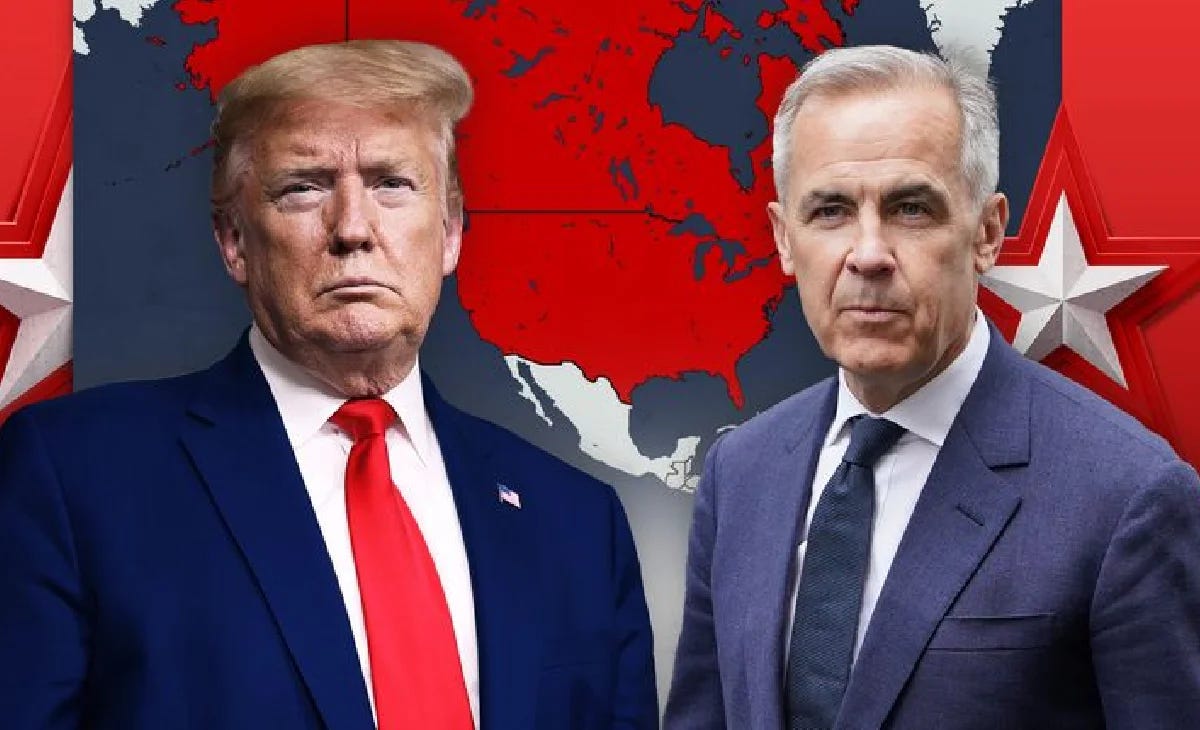
The United States–Mexico–Canada Agreement—the deal that replaced NAFTA in 2020—is heading toward a high-stakes moment. On July 1, 2026, the agreement hits its mandatory review, which requires all three countries to agree to extend it for another 16 years. If they don’t, the deal starts to unravel. And right now, Canada is walking into that review from a position of utter weakness.
Talks between the US and Canada have stalled. Tariffs are piling up. And Washington is making it clear that renewal will come with strings attached—strings Canada doesn’t seem prepared to cut or negotiate around effectively.
The US has been blunt about its priorities. At the top of the list is Canada’s supply-management system for dairy—a tightly controlled regime of quotas and tariffs designed to protect domestic producers. Canada already made concessions on dairy access during the original USMCA negotiations in 2018, but US officials argue Ottawa hasn’t lived up to the spirit—or the letter—of the deal. American dairy exports, they say, are still being boxed out. US Trade Representative Jamieson Greer has made it clear: no fix on dairy, no easy renewal.
Then there’s Canada’s Online Streaming Act. Washington sees it as a direct hit on US tech and media companies—Netflix, YouTube, Spotify—by forcing Canadian content requirements that distort the market. Add in the Online News Act, which compels digital platforms to subsidize Canadian publishers, and the message from the US is consistent: Canada is using regulation to tilt the playing field against American firms.
Other irritants keep stacking up. Provincial procurement rules in Ontario, Quebec, and BC that favour local companies. Provincial bans on US alcohol in response to trade disputes. Each move might play well domestically, but collectively they’ve inflamed tensions without delivering leverage. From Washington’s perspective, Canada looks less like a negotiating partner and more like a jurisdiction lashing out piecemeal.
President Trump has been happy to exploit that weakness. He’s openly used the threat of USMCA withdrawal—and escalating tariffs—as leverage, tying trade access to structural concessions. This isn’t subtle. It’s power politics. And Canada is on the wrong side of the power imbalance.
Ottawa’s response hasn’t helped. Prime Minister Mark Carney has admitted that a sector-by-sector deal to ease tariffs is “unlikely” ahead of the full USMCA review, with talks effectively frozen since late October 2025. One of the key turning points was an Ontario government ad campaign in the US attacking American protectionism and invoking Ronald Reagan—just as negotiations were nearing progress. The move was defended by Premier Doug Ford as clever and inexpensive—out of curiosity, does $75 million sound ‘inexpensive’ to you? The US ambassador called it unprecedented interference. President Trump responded by pulling the plug on talks altogether.
Carney has tried to calm things by scrapping the Digital Services Tax and easing some retaliatory tariffs, but the broader problem remains: Canada is negotiating as a collection of disconnected actors rather than a unified country with a coherent strategy.
Carney insists supply management is “never on the table.” That may be politically popular, but it also locks Canada into a standoff with few off-ramps—especially when no credible alternative strategy has been offered to blunt the economic fallout.
With the USMCA review still months away and negotiations frozen, businesses are stuck in limbo. Investment decisions are delayed. Costs rise. Consumers eventually pay. Canada’s competitive edge erodes while uncertainty becomes the norm.
Yet watch how this gets framed. Much of the media casts Trump as the cartoon villain—the bully at the gate—while positioning Carney as the principled underdog standing up for Canada. It’s a comforting narrative. However, it also lowers the bar. Any partial concession can be spun as a win. Any damage can be blamed on American aggression.
But trade wars don’t care about narratives. They care about leverage, coordination, and outcomes. And right now, Canada is running short on all three.
The Lost Generation

There is a quiet story about the past decade that rarely gets told, mostly because the people living it learned early that saying it out loud came with consequences.
It begins around 2014. That was the moment when diversity, equity, and inclusion stopped being a loose moral aspiration and became an institutional system. Not a slogan, not a training module, but a set of incentives that reshaped hiring, promotion, and prestige across media, academia, and the creative industries. The change was not evenly distributed. Older men already holding power were largely untouched. The cost fell on those still trying to enter the room.
For white male millennials, this meant arriving just as the rules changed. In journalism, hiring quietly shifted from “best candidate” to demographic balancing, with newsroom leaders openly admitting they could not justify hiring another white man, regardless of qualifications. Internships and fellowships followed the same logic. Over time, many simply stopped applying, having absorbed the message that these institutions were no longer meant for them.
Academia followed a similar path. Universities layered diversity statements into faculty hiring, used identity-coded research areas as filters, and relied on cluster hires to steer outcomes without stating quotas outright. The result was predictable. Applicant pools remained mixed, but offers tilted sharply away from white men at the junior level, even as senior departments remained dominated by older faculty who would not retire for decades. The optics of imbalance justified remedies that compounded it.
Hollywood was blunter. Writers’ rooms and fellowships circulated internal directives prioritizing “women and diverse” candidates. Entry-level roles—the gateway to a career—were effectively closed, while established names remained protected. A generation of capable writers watched the ladder pulled up one rung above them, told to keep grinding in a system that no longer had a place for them.
The common feature across industries was silence. Those affected rarely spoke publicly. Careers were fragile, and everyone understood that questioning the framework marked you as a problem. So people adapted. They learned the language, performed “allyship,” or exited entirely into spaces with lower barriers—podcasting, Substack, crypto—fields not because they were prestigious, but because they were open.
What replaced merit was not fairness, but managed optics. Institutions congratulated themselves for progress while quietly denying that anything had changed. Decline in trust, quality, and legitimacy was treated as unrelated.
The damage is not just economic. It is psychological. Many of the men caught in this shift delayed families, abandoned vocations, or internalized failure that was never purely theirs. They were told the world was becoming more just, even as it grew less honest.
Society cannot remain healthy when entire cohorts learn that effort is secondary to category—and that noticing this fact is itself forbidden. Source.
$300,000 for a Decolonization Protest Blocking a Canadian Pipeline

Canada has entered a strange phase where some protests trigger emergency powers, while others are quietly subsidized—so long as they align with the right ideology. The latest example comes from British Columbia, where the Vancouver Foundation quietly awarded $300,000 to a group operating an illegal forest blockade against a major energy project, rebranded as a “Decolonial Dog Sanctuary.”
On paper, the grant funds a “land-based re-occupation” rooted in hereditary authority rather than “colonial agreements.” In practice, it bankrolls an activist encampment deliberately placed in the planned right-of-way of the Prince Rupert Gas Transmission pipeline. The sanctuary’s own materials are explicit. This is not a side project or symbolic protest. It is a physical blockade. The slogan says it plainly: puppies, not pipelines.
The site, known as Wilp Aasosxw, consists of makeshift structures, a converted bus, and dozens of dogs used as both moral shield and media device. Its overseer has openly stated that preventing construction is the goal, declaring the pipeline will only proceed “over my dead body.” The sanctuary’s promotional videos go further, describing the project as “Land Defence + Dog Sanctuary” built directly in the path of development.
What makes this case harder to ignore is not the protest itself—Canada has seen plenty of those—but who is paying for it, and what it is blocking. The PRGT pipeline is co-owned by the Nisga’a Nation and has formal backing from Gitxsan Hereditary Chiefs. It was recently added to the Carney government’s list of major nation-building projects and is tied to the Ksi Lisims LNG terminal, promoted as one of the world’s lowest-emission LNG operations.
In other words, this is not a case of Indigenous communities versus industry. It is a case of activists claiming hereditary authority to obstruct a project that has already secured Indigenous ownership, consent, and economic partnership. That distinction matters, yet it is routinely blurred—often deliberately.
The grant also raises uncomfortable questions about accountability. The sanctuary’s operator has acknowledged limited experience with animal care, while portraying aggressive dogs as spiritual participants in a healing process. The blockade itself mirrors earlier efforts like the Tiny House Warriors, whose members were later convicted for damaging equipment and assaulting workers during pipeline evictions.
None of this fits the tidy moral narrative that Canada’s philanthropic and activist class prefers. A charitable foundation has funded an illegal blockade against a project endorsed by Indigenous governments, backed by environmental metrics Ottawa itself praises. This is not reconciliation. It is institutional confusion—where ideology outruns law, consent, and common sense.
Canada cannot build anything if every approved project can be vetoed by whoever deploys the most emotive language and the cutest props. At some point, protest stops being dissent and becomes sabotage—especially when it’s underwritten by tax-advantaged money. Source.

US Passes Record Breaking $901 Billion Defence Bill
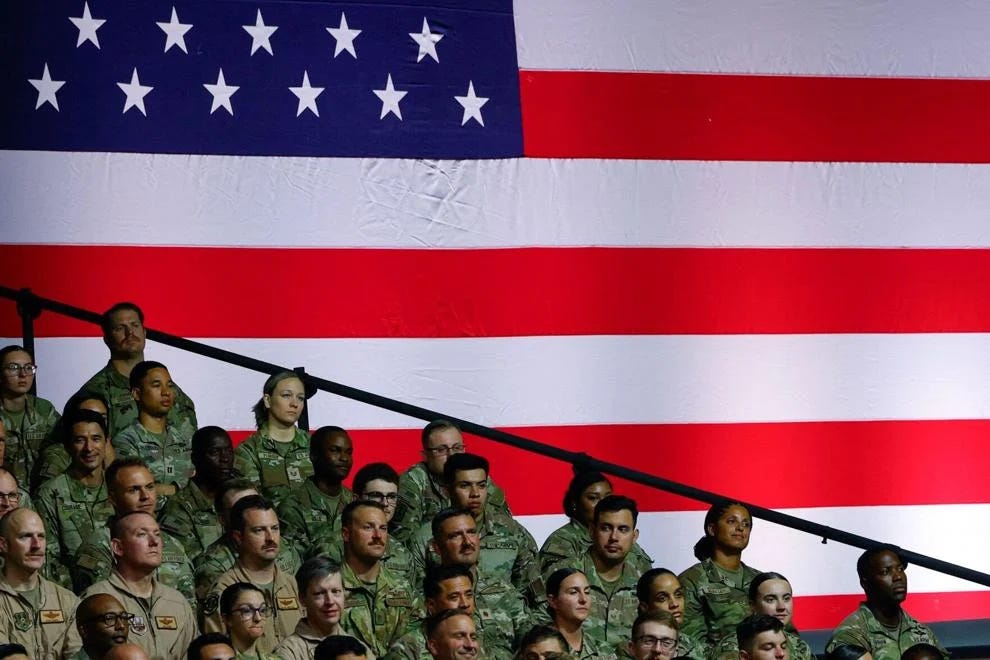
The US Congress has passed a massive $901 billion defense bill for fiscal year 2026, authorizing record military spending. The package includes troop pay raises, equipment purchases, and strategic investments aimed at countering China and Russia. Under this umbrella, key allocations include:
$1.5 billion in new security assistance for the Philippines to strengthen defenses in the Indo-Pacific region.
Over $25 billion for munitions procurement, covering missiles, torpedoes, and artillery rounds to restore the U.S. arsenal.
$800 million in weapons support for Ukraine over the next two years.
$175 million for Baltic states’ defense—supporting Latvia, Lithuania, and Estonia.
Maintaining at least 76,000 US troops in Europe, while barring the US commander from removing NATO leadership.
A record $11.1 billion arms package for Taiwan, including HIMARS rockets, anti-tank missiles, howitzers, and drones—the largest US weapons deal for the island to date.
The bill also contains some controversial provisions, including a ban on transgender women participating in women’s athletic programs at military academies, and the omission of funding to rename the Department of Defense the “Department of War,” despite former President Trump’s interest. More
Federal Government Launches Early Version of Digital IDs in Canada

The federal government has quietly launched two early-access digital ID and wallet apps—GC Issue and Verify and GC Wallet—allowing Canadians to store and verify digital versions of licenses, permits, and temporary visas. While the apps are currently voluntary and being piloted with small groups through Transport Canada and Immigration, Refugees and Citizenship Canada, critics warn this incremental rollout is a familiar first step toward a mandatory national digital ID.
The Canadian Digital Service has already spent roughly $6.4 million on digital ID research since 2019, raising concerns about privacy, intrusive tracking, and the erosion of personal freedoms. Opposition parties, including the Conservatives, argue that what begins as “optional” often becomes unavoidable, and that the government is quietly laying the groundwork for widespread, compulsory surveillance. More
Ottawa, Ontario Sign Agreement to Speed Up Major Projects Approvals, Including Ring of Fire - The two sides have agreed to a “one project, one review” approach to streamline environmental assessments for major projects, reducing duplication, speeding construction, and maintaining environmental and Indigenous protections. More
Retired NASCAR Driver Greg Biffle and Family Among 7 Killed in North Carolina Plane Crash - More
“Money Today or Blood Tomorrow”: EU Leaders Face Pressure on Ukraine Aid as Zelenskyy Demands Russian Assets - As EU leaders consider a massive loan to Ukraine, Zelenskyy is pressing for Russian assets to be transferred immediately, while Belgium calls for safeguards against potential Russian retaliation. More
Report: China and Russia are Pulling Ahead of NATO in Arctic Drone Defence Capabilities - The report also notes that the Russian fleet is expected to grow by an 'order of magnitude' in coming years. More
US House Passes Bill Criminalizing Transgender-Related Treatments for Minors - More
French Doctor Who Poisoned 30 Patients and Killed 12 is Jailed for Life - Frederic Pechier worked as an anaesthetist and poisoned child and adult patients, reportedly in an attempt to discredit co-workers. What a psycho. More
ACLU Sues ICE and Homeland Security, Alleging Bystander Intimidation - More

Trump Signs Executive Order To Reclassify Marijuana—Removing It From Schedule I
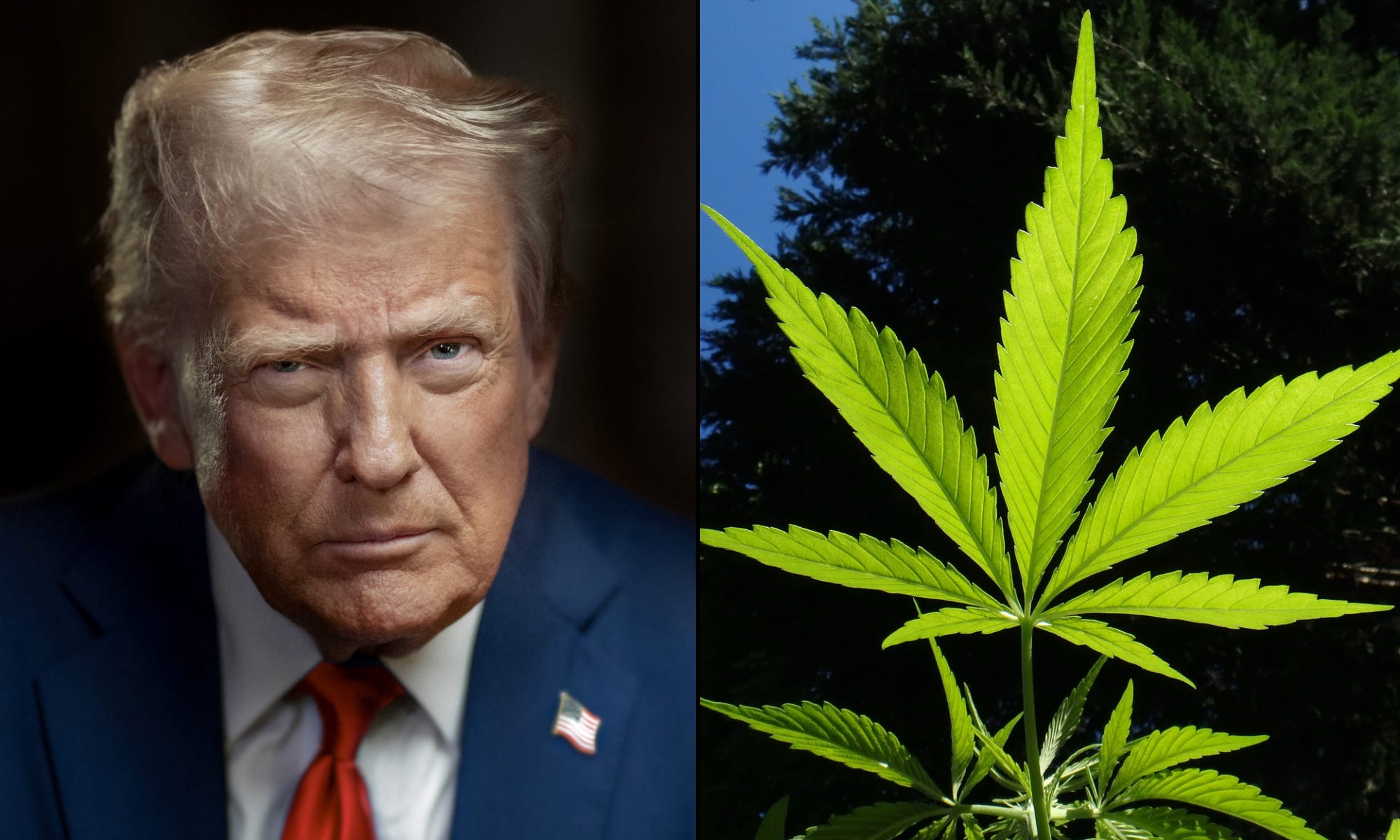
President Donald Trump has signed an executive order to reschedule marijuana from Schedule I to Schedule III of the Controlled Substances Act, recognizing its medical value while maintaining federal prohibition on recreational use. The move allows state-licensed cannabis businesses to claim federal tax deductions previously blocked under IRS rules and removes certain research barriers, enabling expanded medical and scientific studies.
The order also directs Congress to reconsider hemp definitions, potentially allowing Medicare coverage for full-spectrum CBD. While hailed as a major step for medical access, critics note the change does not legalize recreational use and may face political opposition. More
Flight Centre Survey Shows Canadian Travel to the US Down 40 Percent Year-Over-Year - More
Activist Investor Elliott Takes $1B Stake in Lululemon, Demands New CEO - Vancouver-based Lululemon announced that chief executive officer Calvin McDonald, who has led the company since 2018, will step down at the end of January. More
Trump Media to Merge With Nuclear Fusion Company TAE in $6 Billion Deal - The merger aims to create one of the world’s first publicly traded fusion companies and support America’s technology and energy dominance ambitions. More

Max Space Unveils Plans for a Commercial Space Station

Max Space plans to launch Thunderbird Station, a commercial space station featuring a single expandable module that grows to 350 cubic meters in orbit—about one-third the volume of the ISS—and supports four people continuously. The station includes two docking ports for visiting vehicles and a morphic interior structure, allowing crews to reconfigure the soft-goods interior for habitation, research, or large-scale in-orbit manufacturing.
Designed for a single Falcon 9 launch, Thunderbird Station avoids the multiple-launch or heavy-lift requirements of other commercial stations. A prototype, Mission Evolution, will launch in 2027 to test the module’s micrometeoroid protection, orbital debris shielding, and life-support systems, with potential applications for lunar and Mars habitats. More
Cheese Has Been Linked to Lower Dementia Risk in 25-Year Study - More
Swearing Actually Seems to Make Humans Physically Stronger - A study found participants held chair push-ups significantly longer when repeating swear words versus neutral words, showing that cursing can boost physical performance by overcoming mental barriers. More

A Moment We’ve All Been Waiting for: Anthony Joshua vs Jake Paul Headlines Miami Tonight

Anthony Joshua has made the 245 lb limit for his eight-round, 10oz-glove fight against Jake Paul, tipping the scales at 243.4 lbs—nearly two stone heavier than Paul, who weighed 216 lbs. The bout takes place at Florida’s Kaseya Center in a slightly larger 22×22-foot ring. Joshua returns for the first time since his knockout loss to Daniel Dubois in September 2024, while Paul, with a 12-1 record, has been sparring with top heavyweights like former world champion Lawrence Okolie.
Experts overwhelmingly favour Joshua, given his size, experience, and skill, with some oddsmakers placing him at roughly 85–90% to win, though the YouTuber insists he could pull off a historic upset. The fight will likely hinge on the first two or three rounds, where Paul will need to survive Joshua’s power and experience to have any realistic chance.
The event’s main card begins at 8 pm ET, tonight! More
50-Year-Old Retired NASCAR Hall of Famer Jimmie Johnson to Make 2026 Daytona 500 Comeback in Legacy Motor Club’s No. 84 - More
The Weeknd Strikes a $1 Billion Catalogue Partnership Deal While Retaining Full Ownership of His Music - More
World’s Tallest Teen: Canada’s 7’9” Basketball Sensation Olivier Rioux Scores His First Two College Points with Emphatic Dunk - More

New Study Finds: 1 in 3 Britons Now Rely on AI for Emotional Support, Companionship, and Social Interaction
A Group Called 'Robins of the Alleys' Has Claimed Responsibility for a Theft at a Montreal Ggrocery Store, Where Individuals Dressed as Santa and Elves Stole $3,000 Worth of Food
Japanese Woman Ties the Knot with an AI Groom Created by ChatGPT—We’ve Passed the Point of No Return