


Good morning, it’s Thursday, December 18th. In today’s news, Canada’s top General says we’re ready for war, 6 federal bills are turning Canada into a police state, holiday displays in public schools are becoming political, Bondi Beach shooter has been linked to ISIS, and much more.
First time reading the daily blend? Sign up here.

Canada’s Top General Says We’re Ready for War—The Deeper Problem Is Whether Anyone Believes In the Country

Canada’s Chief of the Defence Staff, Gen. Jennie Carignan, says the Canadian Armed Forces are ready if conflict breaks out. In an interview with the National Post, she described a military adapting to a far more dangerous world—one marked by near-peer conflict, contested airspace, drones, missile defence, and the erosion of geographic insulation.
At one level, her assessment is reasonable. Canada can deploy forces today. NATO commitments are being met. Latvia will not be scaled back. Investments in air defence, NORAD modernization, Arctic radar, long-range precision strike, and counter-drone capabilities are finally underway after decades of neglect.
But readiness “as-is” should not be confused with preparedness for sustained, high-intensity conflict. Beneath Carignan’s steady tone lies a more fragile reality. Canada divested core capabilities for decades and is now racing to rebuild them in a compressed timeframe. Air defence systems no longer exist at scale. Munitions stockpiles are thin. Domestic defence industrial capacity is limited. Arctic infrastructure remains sparse relative to the territory being defended. Personnel shortages persist, and reserves lack the depth required for true mobilization.
These are not abstract problems. Ukraine has shown how quickly modern warfare burns through equipment, manpower, and logistics. Canada is not positioned to absorb prolonged strain without relying heavily on allies—particularly the United States.
Carignan opposes mandatory service, arguing that Canada’s military performs best as a volunteer force. In isolation, that position makes sense. Volunteers tend to be more committed, cohesive, and effective than conscripts. But this raises a deeper question her interview does not address: why would voluntary service scale in the first place?
For more than a decade, Canada’s political and institutional leadership has framed national identity as either nonexistent or morally suspect. Young Canadians have been taught—explicitly and implicitly—that the country is defined more by historical wrongdoing than shared purpose, that its traditions are liabilities, and that national pride is something to be unlearned. In that environment, asking citizens to risk their lives for the state becomes psychologically incoherent.This is where optimism collides with sociology. Armies draw from society. Voluntary sacrifice requires legitimacy, continuity, and belief. When those are eroded, recruitment falters and cohesion weakens. Ironically, it is this erosion of meaning that makes conscription more likely in a true emergency, not less.
Canada’s military leadership is trying to rebuild hardware and capability under pressure. But without rebuilding the idea of the country itself, readiness will remain technical rather than real. Source.
Death by Policy: How 6 Federal Bills Are Turning Canada Into a Police State
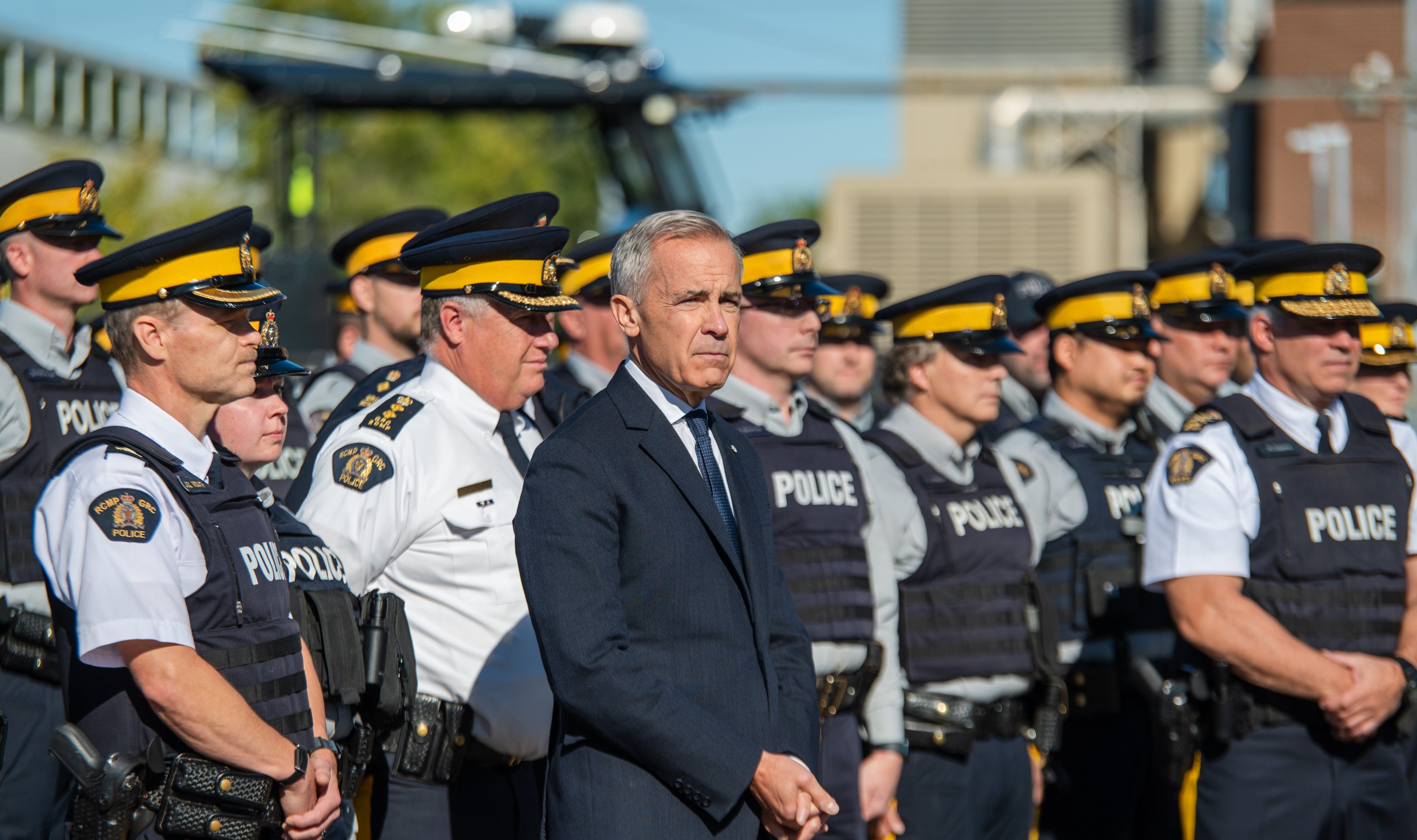
Canada is not losing its freedoms in a dramatic overnight crackdown. It’s losing them quietly, inch-by-inch, through a stack of laws that on their own sound reasonable—but together fundamentally transform the relationship between citizens, the state, and the internet. This is how modern democracies slide into managed speech and permanent surveillance: not through one shocking law, but through many small ones that never quite trigger mass resistance.
It started with the Online Streaming Act (Bill C-11), which pulled streaming platforms and even user-generated content under the authority of the CRTC. For the first time, individual Canadians—creators, podcasters, small businesses, advocacy groups—were effectively treated as broadcasters subject to government rules on what counts as “Canadian” content and what should be promoted or buried online. By mandating “discoverability” and funding for state-approved content, the government undermined net neutrality and gave regulators power over what Canadians see, hear, and share.
Then came the Online News Act (Bill C-18), sold as a way to support journalism. In reality, it broke the digital news ecosystem. Meta blocked Canadian news entirely, slashing traffic to independent outlets, while Google negotiated a $100-million annual payment scheme that funnels money primarily to legacy media. The result: fewer independent voices, more centralized media, and a press corps increasingly reliant on government-sanctioned funding rather than public trust.
The now-defunct but far from dead Online Harms Act (Bill C-63) revealed the next step. Under the emotionally unassailable banner of “protecting children,” the bill proposed a powerful new Digital Safety Commission with the authority to force platforms to remove lawful speech, demand user data, conduct warrantless searches, and levy massive fines—without meaningful parliamentary oversight. Even more alarming, it would have empowered human rights tribunals and judges to punish Canadians for non-criminal speech, including pre-emptive restrictions based on what someone might say in the future.
Still before Parliament is the Strong Borders Act (Bill C-2)—a misnamed piece of legislation that dramatically expands warrantless access to subscriber data and metadata, not just for police but for a wide range of government officials. It compels online service providers to hand over private information without judicial approval, allows Canada Post to open mail without a warrant, and even criminalizes large cash transactions. This is surveillance infrastructure, not border control.
Alongside it sits the Critical Cyber Systems Protection Act (Bill C-8), which gives cabinet the power to declare virtually any service “vital” and then order telecom providers to cut specific people or products off from networks entirely. Under vague language about “interference” or “manipulation,” the government could exert control over vast swaths of digital infrastructure—with no clarity on whether dissent, mislabelled “disinformation,” could trigger enforcement.
Finally, the Combatting Hate Act (Bill C-9) lowers the bar for hate-speech prosecutions by removing the requirement for attorney-general approval and dramatically increasing penalties. It opens the door to more Canadians being investigated, charged, or silenced over speech—especially online speech that is permanent, searchable, and easily misinterpreted. Religious expression, political activism, and protest all become legal risks in a system that increasingly mirrors the UK’s aggressive policing of online opinion.
Individually, each of these bills can be defended with comforting rhetoric. Together, they amount to something far more dangerous: a government-managed digital environment where speech is monitored, visibility is regulated, privacy is conditional, and dissent carries growing personal risk. This is the “boiling frog” model of control—slow enough that people adapt, until one day they realize the water is already too hot.
Canada still has a choice. But the window is closing. The erosion of freedom doesn’t announce itself as tyranny—it arrives disguised as safety, fairness, and modernization. And by the time people finally notice, the clicks have already added up.
The Politics of Holiday Displays in an Ontario Elementary School

A public elementary school in Whitby has once again found itself at the centre of a debate many Canadian institutions would rather avoid: how inclusion is applied in practice, and whether it is being enforced evenly.
At Pringle Creek Public School, Christmas has been folded into a generic “winter” theme. The school’s main December display featured snowflakes, a decorated tree, and a character from Disney’s Frozen. A cookie sale followed the same pattern, marketed without any reference to Christmas itself. Taken alone, this would not raise eyebrows. Schools routinely opt for secular seasonal language.
The concern arises when this restraint appears selective.
Throughout the year, Pringle Creek has openly and explicitly recognized other religious and cultural holidays. Diwali was clearly named and promoted on the school’s social media, accompanied by themed displays. Islamic holidays have been acknowledged with student activities, including videos of children dancing to Arabic-language Eid songs. Hanukkah and Kwanzaa were referenced as part of “December celebrations.” Lunar New Year received multiple posts.
Christian holidays, by contrast, have been consistently reframed as seasonal or aesthetic events. Easter was presented as a spring-themed STEM activity focused on basket design. Displays featured eggs, flowers, and the Easter bunny, with no reference to the holiday’s religious meaning. Christmas, similarly, was reduced to winter imagery—present, but unnamed.
Multiple community members have now raised concerns about what they describe as an ongoing pattern: the dilution of Christian holidays alongside the full recognition of others. One parent contacted the school’s principal directly to ask why Christian observances were treated differently. The principal acknowledged the concern but maintained that the school is committed to “equity and inclusion,” stating that many cultures and faith-based celebrations are respected.
That explanation, however, does not address the core question. Equity does not mean avoiding the majority tradition while naming minority ones. Inclusion does not require erasure. In a pluralistic society, neutrality should be applied evenly—or not at all.
Public schools are not churches, nor should they be. But they are cultural institutions, embedded in communities with histories, traditions, and shared reference points. When some holidays are allowed to exist as what they are, while others are quietly stripped of their identity, the result is not neutrality. It is asymmetry.
True inclusion is not about subtraction. It is about consistency—and the confidence to acknowledge the full reality of the society schools serve. Source.

Hanukkah Massacre: Gunman Awakes, Charged with 15 Murders, ISIS Links Confirmed

In the wake of the Bondi Beach shooting on December 14, 2025, which left 15 dead during a Hanukkah celebration, surviving gunman 24-year-old Naveed Akram has regained consciousness after being in a coma. Critically wounded during the police confrontation, Akram is expected to be questioned by New South Wales authorities within hours about his motives.
While still in hospital, Akram was formally charged with 59 offenses, including 15 counts of murder and terrorism, highlighting the attack’s extremism. Investigations have revealed strong ties between Akram, his father Sajid Akram—killed in the shootout—and ISIS-linked groups. Authorities discovered homemade Islamic State flags and improvised explosives in a vehicle registered to Naveed, and the pair had recently traveled to a region in the Philippines known for Islamic State-aligned activity.
Naveed had been under surveillance by Australian intelligence since 2019 for connections to a Sydney-based ISIS cell and his following of radical cleric Wisam Haddad. Prosecutors described the assault as clearly Islamist-inspired, a point echoed by Prime Minister Anthony Albanese, who labeled the attack as “driven by ISIS-inspired extremist ideology” that devastated the community. More
Quebec Liberal Leader Pablo Rodriguez Resigns

Quebec Liberal Leader Pablo Rodriguez announced his resignation today, just six months after winning the party’s leadership race, following a loss of confidence amid multiple controversies. The resignations comes as Quebec’s anti-corruption police, UPAC, investigate allegations of cash-for-votes during his campaign, including claims of $100 payments to party members and a $10,000 fundraising irregularity. Rodriguez, a former federal MP and Trudeau cabinet minister, had initially vowed to stay in office and contest the next provincial election, but mounting party turmoil—including disputes with parliamentary leader Marwah Rizqy and the suspension of MLA Sona Lakhoyan Olivier over ethics investigations—eroded support.
Rodriguez is expected to announce his decision publicly today, while Rizqy confirmed she does not intend to seek the leadership. The allegations, though some remain unverified, have sparked calls for accountability and cast uncertainty over the Quebec Liberals ahead of next year’s provincial vote. More
Canada Seeks US Military Support for $400M Space Command and Control System to Integrate Allied and Commercial Satellite Data for North American Defense - The project is intended to gather and integrate space data from Canadian, allied, and commercial sources, boosting operational capabilities and continental defense. More
Police Launch Homicide Investigation Into MIT Professor Shot and Killed at Home in Boston - More
Driver Who Rammed Crowd at Liverpool Soccer Parade Sentenced to Over 21 Years - Paul Doyle, 54, a former Royal Marine, injured 134 people when he drove his car into fans celebrating the team’s Premier League victory in May. More
Rob Reiner’s Son Nick Faces Two Counts of First-Degree Murder—Death Penalty May be Sought - More
UK Threatens Legal Action Unless Russian Roman Abramovich Hands Over the $3 Billion From His Chelsea Football Club Sale to Ukraine - I’m not defending Abramovich, but this is de facto expropriation without due process, and it’s kind of insane — ‘You can keep your money, but only if you give it to a cause the government approves of.’ More
Canada Ranked 12th ‘Freest’ Country Amid Global Decline in Human Freedom - Switzerland topped the list for another year, while the US landed in 15th. More

Warner Bros. Discovery Rejects Paramount’s $108 Billion Hostile Bid, Citing “Significant Risks”

Warner Bros. Discovery has officially rejected David Ellison’s $30-per-share hostile bid, calling it “inferior” to the Netflix merger and highlighting “significant risks and costs” to shareholders. Paramount now faces pressure to either raise its offer or persuade shareholders to tender their shares, potentially sparking a new bidding war. The WBD board cited concerns over Ellison’s financing, including Middle Eastern sovereign funds and the revocable nature of his trust, as well as regulatory and legal uncertainties. Netflix, meanwhile, reaffirmed its deal as the “right partnership at the right time,” emphasizing the combination’s value for consumers, creators, and shareholders. Ellison has indicated willingness to increase his bid, leaving the next move in this high-stakes Hollywood showdown uncertain. More
California Threatens Tesla with 30-Day Suspension of Sales Llicense for Deceptive Self-Driving Claims - More
PayPal Plans to Open Industrial Bank to Serve Small US Businesses - PayPal also plans to offer interest-bearing savings accounts to its customers. More

This New AI Is Cracking the Hidden Laws of Nature

Researchers at Duke University have developed an AI system that uncovers simple, understandable rules governing even the most complex systems, from pendulums and electrical circuits to climate patterns and neural networks. Inspired by the work of dynamicists like Newton and building on Koopman’s mathematical ideas, the AI analyzes time-series data to identify the core variables controlling a system, producing compact equations that reliably predict long-term behavior.
Unlike traditional models that require thousands of equations, this approach compresses complexity while remaining interpretable, helping scientists detect stable states, spot instability, and reason where conventional physics falls short. The framework points toward a future where AI acts as a “machine scientist,” guiding experiments and accelerating discoveries across both natural and engineered systems. More
’Immense’ Collection of Dinosaur Footprints Found in Italy Shows That ‘Herds Moved in Synchrony‘ - More

42-0: Terence Crawford Retires from Boxing —‘Nothing Else Left to Prove’
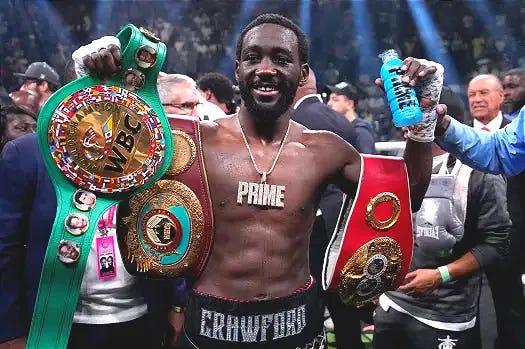
Five-division champion Terence Crawford announced his retirement from boxing on Tuesday, ending his career with a flawless 42-0 record, including 31 knockouts. Just three months after defeating Canelo Alvarez to become the only boxer in the four-belt era to hold undisputed titles in three weight classes—junior welterweight, welterweight, and super middleweight—Crawford said he is “walking away as a great with nothing else left to prove.”
The 38-year-old Omaha fighter captured 18 major world championships across five divisions and retired as the No. 1 pound-for-pound fighter in 2025. Reflecting on his career, Crawford emphasized that his drive was never for belts or money, but for the satisfaction of proving doubters wrong, calling this retirement “the end of one fight and the beginning of another.” More
The Oscars are Leaving ABC After Decades to Stream Exclusively on YouTube Starting in 2029—A Major Shift Toward Digital-First Viewership - More
Kansas City Chiefs’ Patrick Mahomes Starts Knee Rehab, Targets Potential Week 1 Return - More
Rapper Kay Flock Sentenced to 30 Years for Gang Violence and Federal Racketeering as Judge Denies ‘Intellectual Disability’ Defense - More

Harvard Morgue Manager Sentenced to 8 Years for Selling Remains
Home Alone House Will Reportedly Be Restored to Its ‘90s Christmas Glory After Being Stripped Bare by Past Owner
On This Day in 1917, Congress approved the 18th Amendment, ushering in Prohibition. Intended to curb alcohol consumption, it instead sparked a nationwide black market, fueling organized crime networks, speakeasies, and bootlegging empires led by figures like Al Capone.
In my view Canadian’s shall get the country they deserve. The amount of apathy, deliberate denial, and silence, by Canadian’s as each of their rights and freedoms disappear is fitting. For the record, when my small city in Alberta held its municipal elections we had a 17% turn out to vote. That is dismal. So for any Canadian to care about their democracy and ensure it stays as such, they need to inform themselves as to who the candidates are, what they stand for, and know your own personal beliefs (not ones applied to you by others), and then participate. That goes for every level of government. The corporate media can no longer be tasked with speaking on behalf of all Canadians nor can we trust what they say , due to their public/private relationship with the Liberals and Laurentian elite. The information you gather must be first hand or from a trusted source or you will be uninformed of reality. At this point the lack of responsibility being held by the participant is the very reason we see such a fast erosion of our rights and freedoms. The longer Canadian’s remain apathetic the quicker this country goes toward a totalitarian state. So when the dust clears and all Canadian’s are angry at where our country is, how far it has fallen, and why, all they need to do is look in the mirror!!!!
The goal of this decade of government appears to be completely crushing individual freedoms and division of Canadians. The aisle crossing is disgusting, absolutely undermines the will of the people that voted for them. Traitors is what they are. I am very disheartened.
Call your federal representative and state your will against these bills. Who knows it still may work.
I pray for Canada.