


There are many times when I read the news and wonder if my efforts are for nothing. This is one of those times.
The Liberal government under Mark Carney has secured a majority through floor crossing, reaching 174 seats. Many Canadians are asking me whether there is even a point in voting. My response: only if your actions don’t stop there.
The idea of “two wings, one bird” is gaining ground across the West—the belief that all major parties are controlled by the same interests. Many people, trying to make sense of recent events, conclude that the game is rigged and the winners are chosen by an “elite.”

A study by the Media Ecosystem Observatory on social media–fuelled conspiracy theories noted a rise in several narratives, including media–elite collusion, election fraud, and the “deep state.” Trust is eroding because people feel they are playing a game they cannot win, controlled by forces beyond their reach.
When you look at the chain of events behind Mark Carney’s rise and his majority government, it becomes clear why many see it as a state manufactured with powerful backing.
Start with the leadership race. It was called after Justin Trudeau had, over ten years, severely damaged the Liberal brand. Abacus polling from January 19, 2025, showed Liberal support at a low point: Conservatives at 46%, Liberals at 20%, and the NDP at 19%, based on a sample of 1,500 Canadian adults.
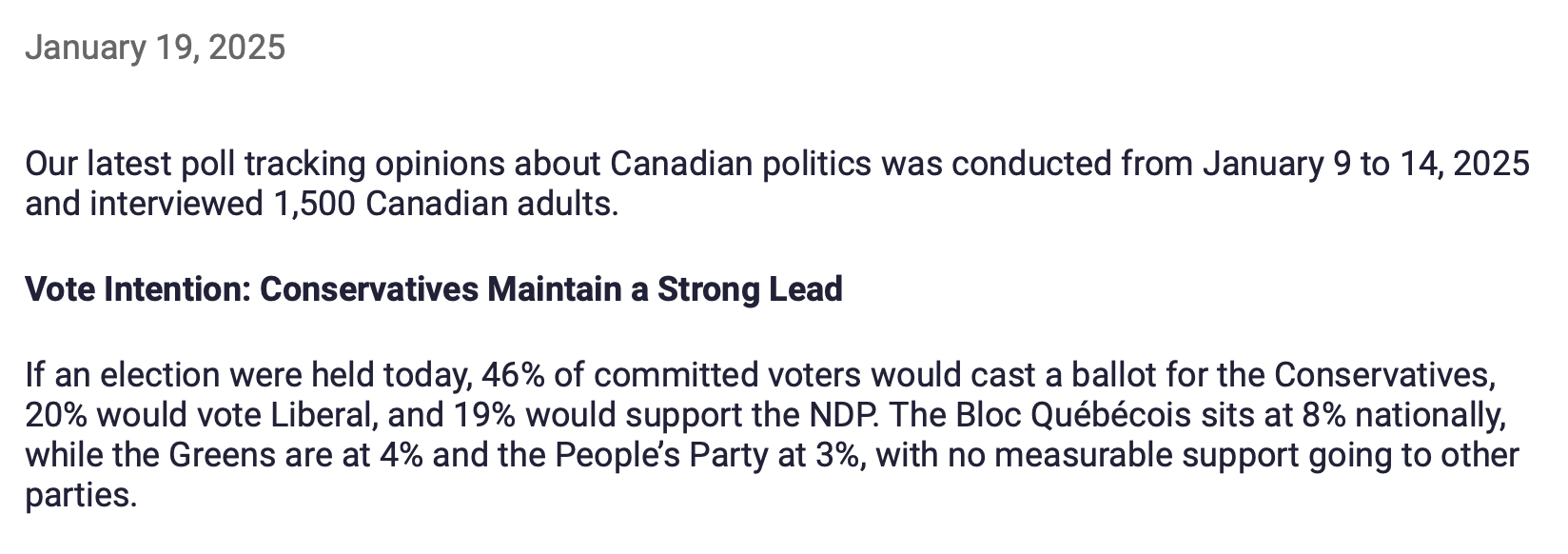
At that moment, a Liberal victory seemed out of reach.
What followed was a shift in tone. Blame for policy failures was increasingly placed on Trudeau, and pressure mounted until he stepped down. Carney then entered the race against long-serving MPs and quickly became the frontrunner.
This is notable. He had spent over a decade outside Canada, serving as Governor of the Bank of England (2013–2020), later as a UN Special Envoy, and then as chair of Brookfield Asset Management (2020–2025). Despite this, he won the leadership race decisively.
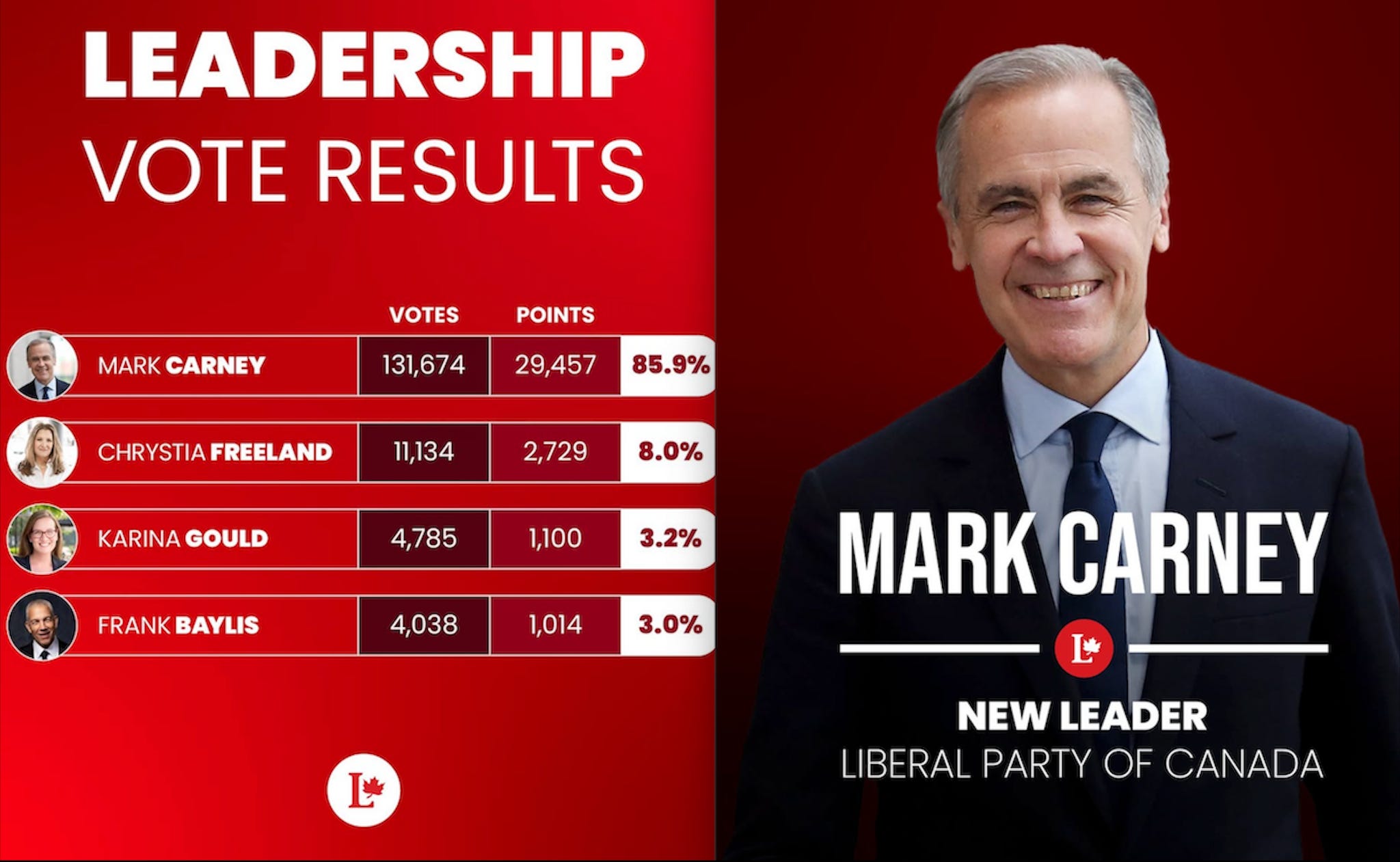
That alone is unusual. Leadership winners are almost always long-time MPs with recent domestic political experience. Carney not only broke that pattern but also did so with record support, winning every one of the 343 ridings—including those of his opponents.
Then came the 2025 election. The Liberals secured 43.76% of the vote and 169 seats, just short of a majority. The Conservatives won 41.31% and 144 seats. Under proportional representation, the Liberals would have held about 148 seats and the Conservatives around 140—highlighting how first-past-the-post can distort outcomes depending on geography.
This result also marked a sharp reversal: a roughly 24-point swing from the 20% polling figure in January to nearly 44% in the election. Such a comeback is rare in Canadian politics.
After the election, the Liberals moved to secure a majority through floor crossings—another unheard-of outcome. Reports surfaced of efforts to recruit MPs from other parties. Five crossed the floor, four from the Conservatives.
Historically, large-scale floor crossing is rare. It has happened before—under John A. Macdonald and Jean Chrétien—but remains unusual. Overall, Liberal governments have benefited more from such moves, gaining 26 seats compared to 15 for Conservatives.
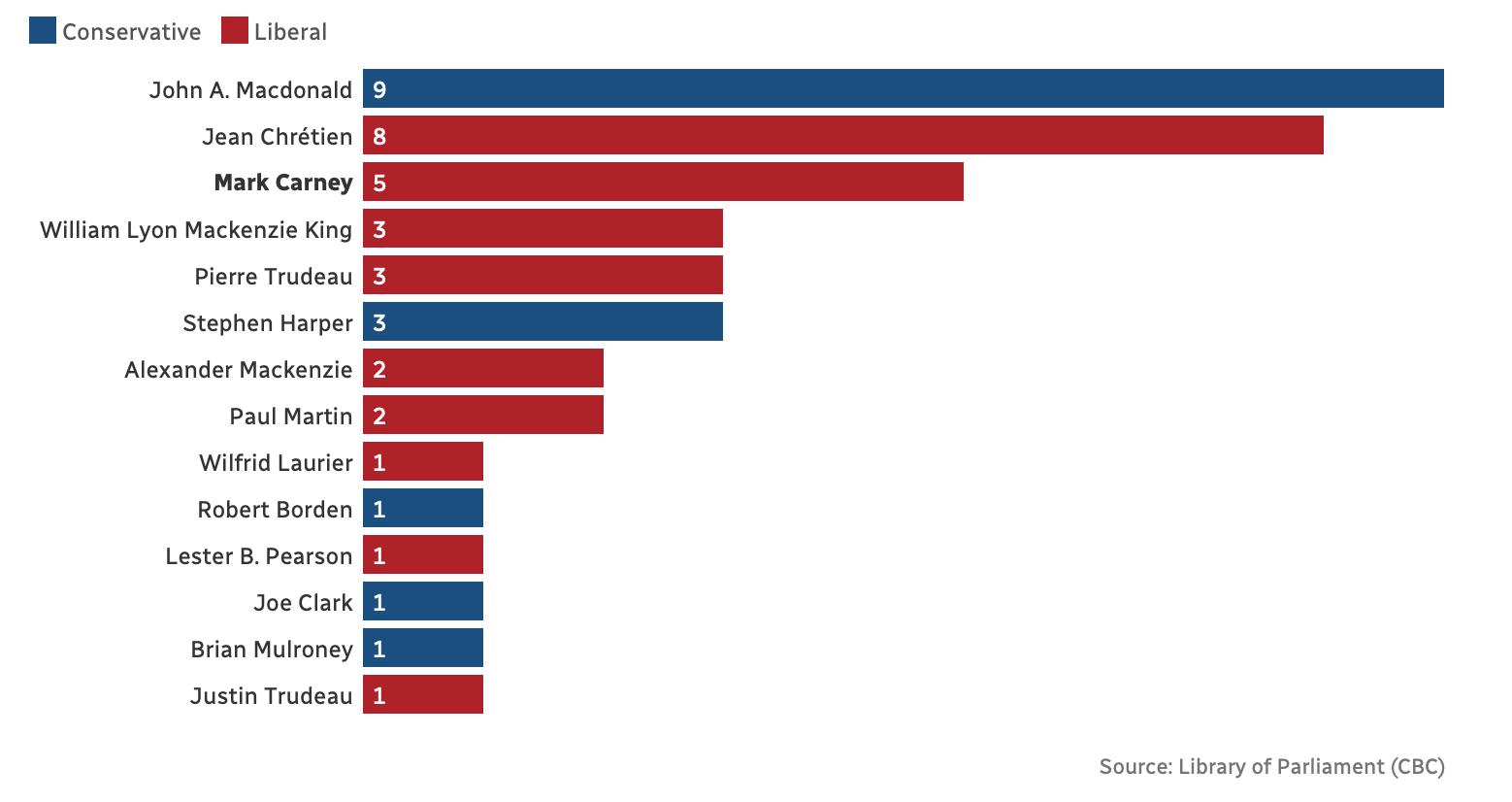
What stands out here is the profile of some who crossed. For example, Marilyn Gladu, known for positions at odds with current Liberal policy, switching sides raises questions that many find hard to reconcile.
She supported the truckers’ movement that happened during COVID, she’s supported legislation that would limit abortion, and she’s spoken in favor of conversion therapy.
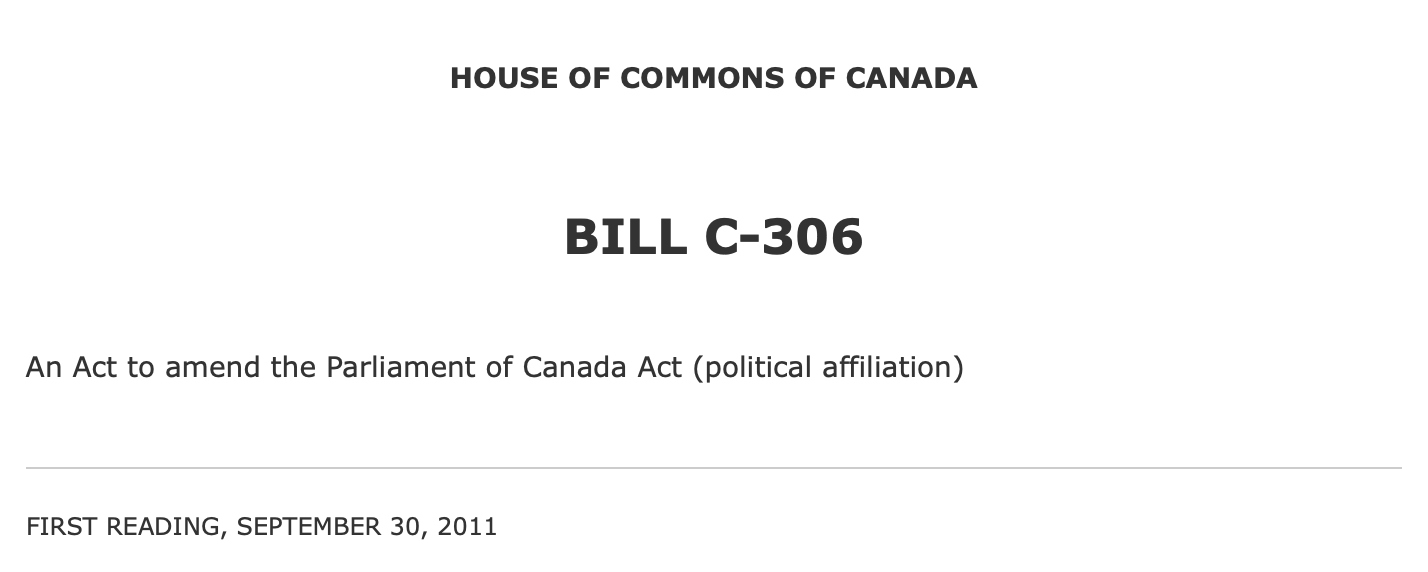
There is also context worth noting. In 2011, Bill C-306 proposed requiring MPs who switch parties to trigger a by-election. It would have forced MPs to seek a fresh mandate before sitting under a new banner. The Conservatives voted against it—142 opposed. That decision now has consequences.
Given all this, some Canadians are turning cynical, concluding that their vote no longer matters. I take a different view. If anything, this is a reason to do more, not less.
If you believe important actions are happening behind the scenes—or in plain sight—and not being properly examined, then speak. Participation cannot end at the ballot box.
There are laws coming that, in my view, risk undermining freedom and security—what I have called “Liberal Trojan horse laws.” Whether one agrees with that label or not, the broader point stands: laws should be judged by their effect, not their framing. They definitely should stand up to scrutiny and not be pushed through forcefully like in the case of Bill C-9.
The irony of fast-tracking and ending discussion on legislation that will limit free speech and expression is almost laughable if it weren’t so dangerous.
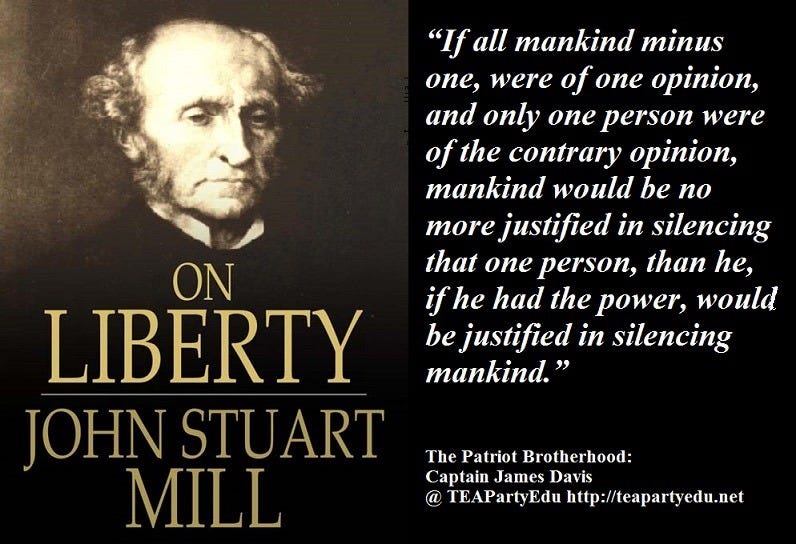
Rights unused tend to weaken. If people disengage, the space for power widens.
Some are considering leaving the country. That may offer relief, but likely only in the short term. I encourage those who wish to leave to continue spreading the messages needed to end the erosion of rights and freedoms. Political and ideological trends do not stop at borders, especially in an age shaped by social media.
There is also a broader debate about ideology. Some argue that elements of modern policy draw from ideas that have been reshaped or repurposed over time. Take Milton Friedman’s “negative income tax,” often cited today in discussions of guaranteed basic income. What was proposed as a replacement for certain social programs is now, in practice, layered on top of existing systems—such as the GST credit, which provides income-based support.
Whether one sees this as adaptation or drift depends on perspective. But it shows how ideas can change as they move from theory to policy and become weaponized.
The Liberal government, like any government, uses language to frame its agenda. That is not new. It does, however, place a burden on citizens to look past wording and assess substance.
Eventually, silence is treated as consent, whether you like it or not.

Yes, the Uniparty reigns supreme across the West.
However, as Margaret Mead pointed out years ago, “Never doubt that a small group of thoughtful committed individuals can change the world. In fact, it's the only thing that ever has."
And as someone who has shut down in the World Trade Organization meetings (Seattle 1999), stopped toxic waste from being dumped in Richmond, BC, joined the Truck Convoy in 2022 and been involved in many other citizen actions I concur wholeheartedly with Margaret Mead.
Puppet show indeed, and increasingly feeling like the the Uniparty system south of the border. I find it incredibly hard to believe that PP told Joe Rogan how he communicated with Carney on his US trip and somehow shares "mutual respect" with his opponent who just poached 4 of his MPs. How incredibly moving that he can get past that fact and work towards a greater good for Canada. . .