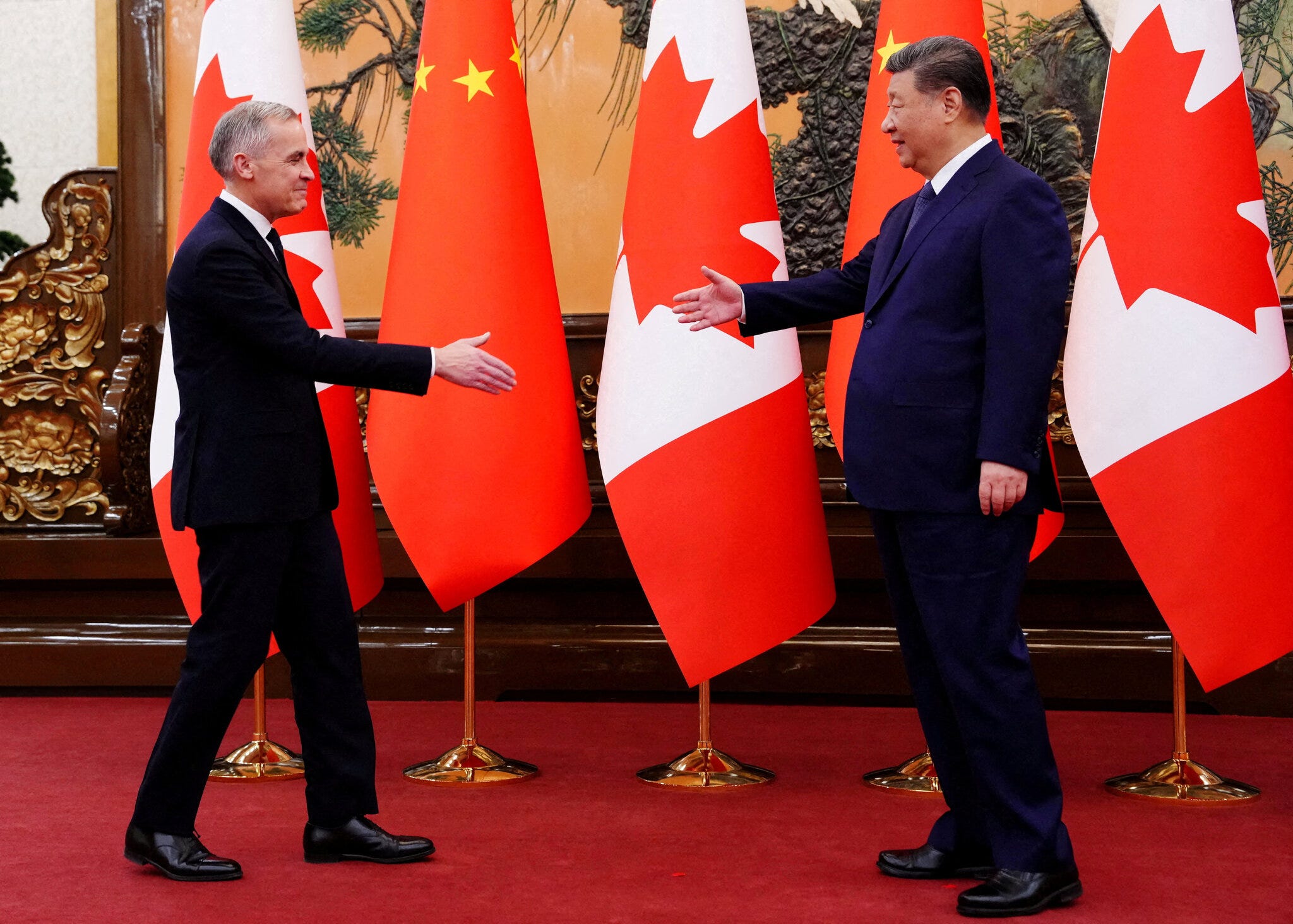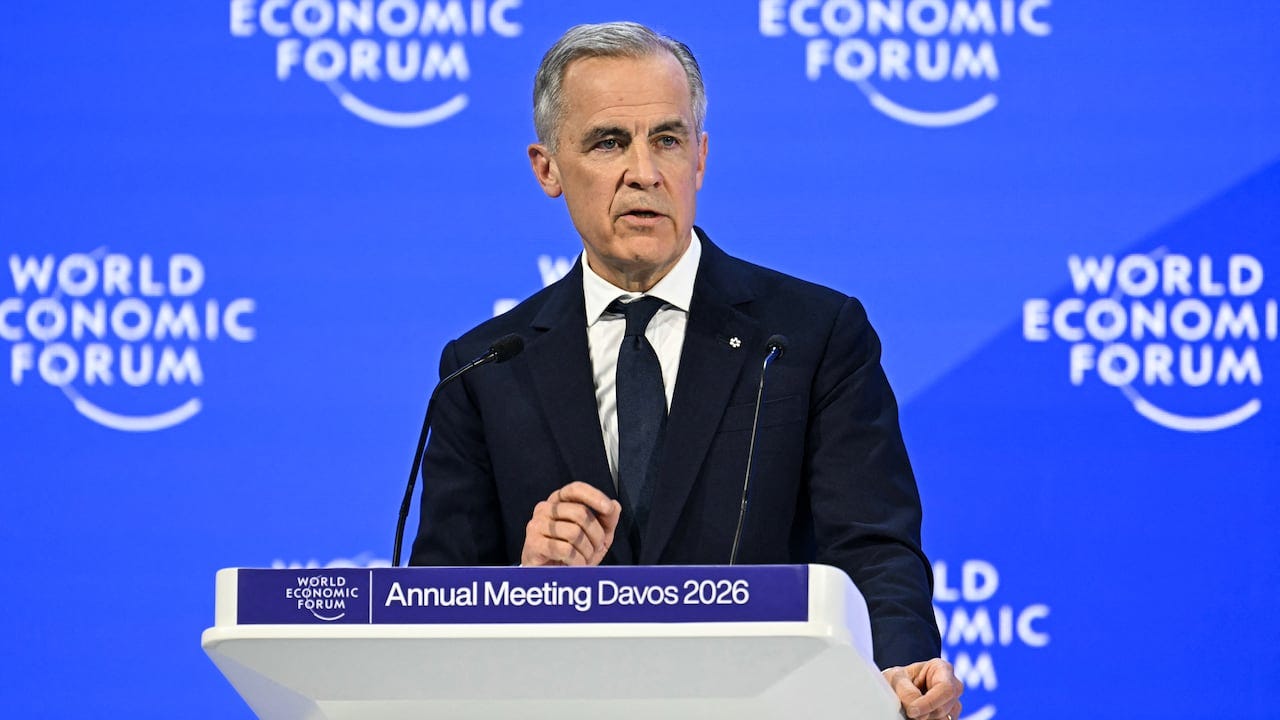
The World Economic Forum’s annual meeting in Davos, Switzerland, took place this week. While Canada’s former prime minister, Justin Trudeau, was in attendance alongside his celebrity partner, Katy Perry, it was clear that a new figure has emerged as Canada’s face on the international stage.
Mark Carney has received well-deserved praise for a disciplined and effective speech that accurately diagnosed the moment we are living through: the collapse of a short-lived unipolar world and its fragmentation into one defined by competing super-states.
Carney opened by invoking Václav Havel and his essay The Power of the Powerless. He warned against “living within a lie,” against continuing to perform belief in international systems that no longer function as advertised. His speech served as a rallying call for the world’s middle powers—countries like Canada—to accept the return of hard-edged, might-makes-right geopolitics.
On that diagnosis, he is correct.
The era in which nations could plausibly act as though international law and a global “rules-based order” were meaningfully constraining power is over. States such as the United States, Russia, and China now exercise power openly—often through economic pressure, and increasingly through outright force. Carney acknowledges an uncomfortable truth: in this new environment, integration can quickly become coercion. Nostalgia for the old order, he argues, is not a strategy.
And yet, while Carney and his team deserve credit for a well-written and well-delivered speech, it is worth asking whether his response truly reflects the lesson Havel was offering. Havel’s warning was not primarily about foreign policy or global alignments. It was a diagnosis of how power sustains itself within a society—through ritual compliance, selective enforcement, and the quiet suppression of dissent.
This is where Carney’s argument begins to strain. The standard of honesty he demands internationally is not one his own political order has consistently applied at home.
What Carney Gets Right
To his credit, Mark Carney correctly diagnoses what we are witnessing—not a temporary disruption in how the world works, but a “rupture.” The unipolar moment that followed the Cold War, when American power quietly underwrote global stability, is over. It is unlikely that a gentler world will emerge in its place. What is far more plausible is open rivalry among great powers, marked by fewer illusions and fewer restraints.
Carney is also right that power today is less often exercised through tanks than through balance sheets. Trade, finance, and supply chains are increasingly weaponized and used as leverage. He admits something few elites have been willing to say aloud:
“We knew the story of the international rules based order was partially false. That the strongest would exempt themselves when convenient. That trade rules were enforced asymmetrically. And we knew that international law applied with varying rigour depending on the identity of the accused or the victim. This fiction was useful and American hegemony in particular helped provide public goods, open sea lanes, a stable financial system, collective security and support for frameworks for resolving disputes. We participated in the rituals and we largely avoided calling out the gaps between rhetoric and reality. This bargain no longer works.”
Tariffs are now deployed as pressure. Financial infrastructure is weaponized. Dependence on another countries labour or resources is no longer efficiency but a liability. As Carney puts it, integration can quickly become subordination. That observation alone is something most of the Western political class has failed to recognize.
This completely changes the landscape and rules for middle power nations like Canada. They lack the market size, military capabilities, and general leverage to dictate terms in geopolitical negotiations. When international norms cease to exist, states like Canada are left exposed—often forced to bend the knee to stronger nations. Carney is correct that negotiations between two-parties with unequal leverage and power rarely produce anything resembling genuine sovereignty.
He is equally honest about the limits of international institutions. Organizations like the WTO or UN do not (only) fail because their principles are flawed, but because rules without an enforcement mechanism are merely rituals, not constraints. They function only so long as powerful states choose to honour them.
This is not radical thinking but realistic. It has always been this way, we just pretended it wasn’t for a quick blip in human history. The central problem with Carney’s argument is not that he misunderstands power politics—but how he chooses to apply that knowledge.
The Selective Use of Havel’s “Living Within the Lie”
Central to Carney’s speech was Václav Havel’s concept of living within the lie. The irony is difficult to miss. Havel’s warning was not about states failing to honour international agreements, nor about diplomatic misalignment. It was about how totalitarian systems induce citizens to participate in ideological falsehoods—thereby excusing, and eventually normalizing, the tyranny and decay unfolding around them. His concern was inward-facing, not geopolitical.
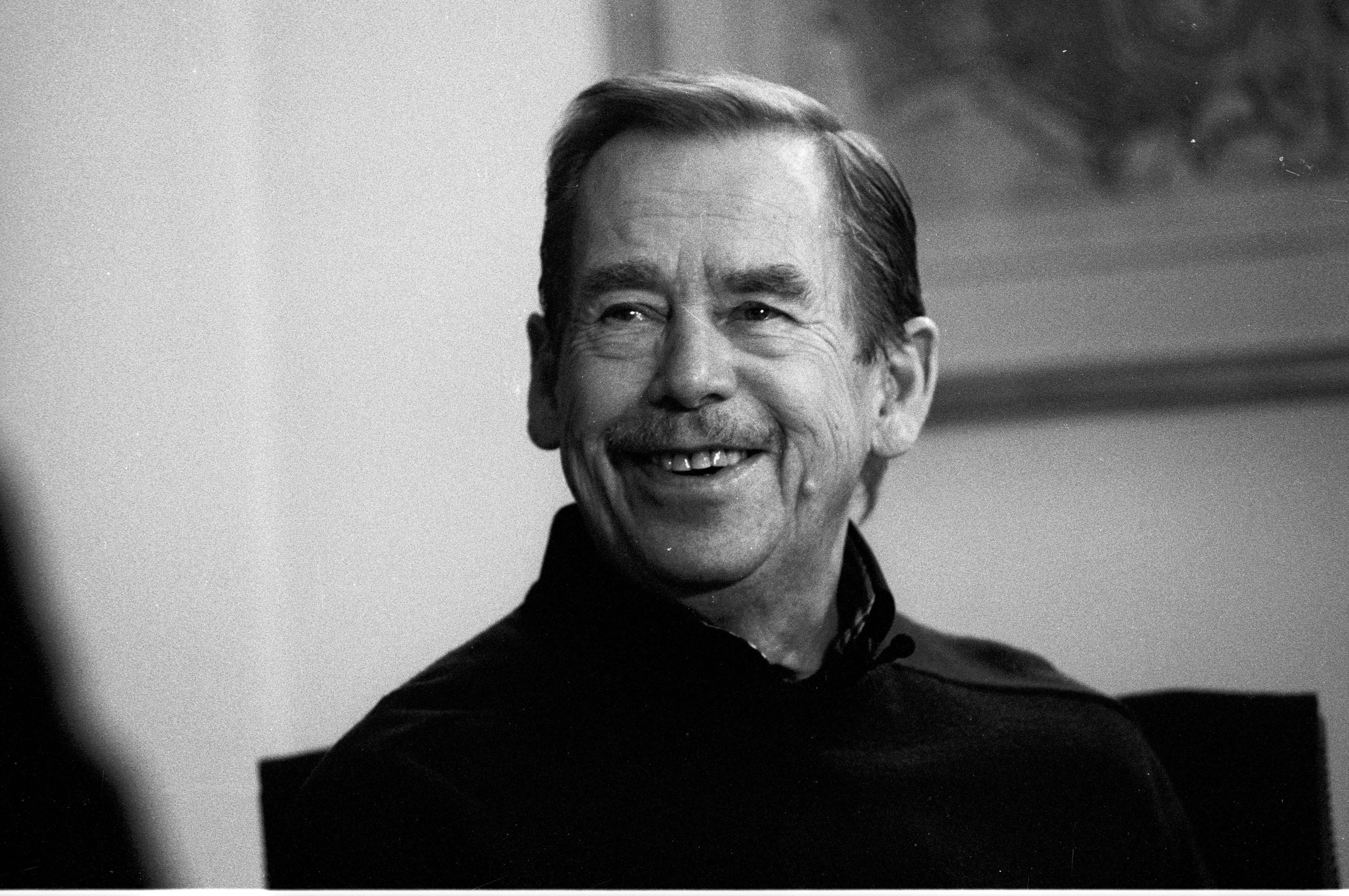
The Power of the Powerless is an unsettling account of how power sustains itself inside a corrupted society: through small, habitual acts of compliance. Through rituals people perform not because they believe in them, or because they advance the common good, but because refusal carries social, professional, or legal consequences. Havel’s insight was that the system endures not merely through force, but through fear of nonconformity.
The well-known image of the shopkeeper placing a “Workers of the world, unite” sign in his window was not about allegiance to a foreign bloc or participation in a global economic order. It was about signalling ideological conformity. About performing belief in order to preserve one’s job, reputation, and access to ordinary life. Totalitarian systems, Havel argued, do not rely primarily on overt force—the kind of power Carney focuses on in his speech—but on something quieter and more durable: ordinary people adapting their behaviour to distorted incentives and penalties.
Carney draws heavily on the moral authority of Václav Havel, even as he has actively supported the construction of “progressive” political systems in the West that display many of the very traits Havel warned against. Across Canada, businesses and public institutions now perform ritualized displays of ideological virtue—flying pride flags, issuing approved slogans—while implementing hiring and promotion policies that openly discriminate on ideological grounds.
More directly, Mark Carney advised the previous Liberal government to financially choke the Freedom Convoy—a protest he publicly described as terrorizing and abusive, despite a measurable decline in crime during its presence in Ottawa. He labelled its leaders treacherous and declared, “no one should have any doubt—this is sedition.” The government he advised went on to invoke a wartime emergency act to suspend the rights of peaceful protesters, freeze bank accounts, and override basic civil liberties. That decision has since been ruled illegal and unconstitutional, with even the government’s appeal failing.
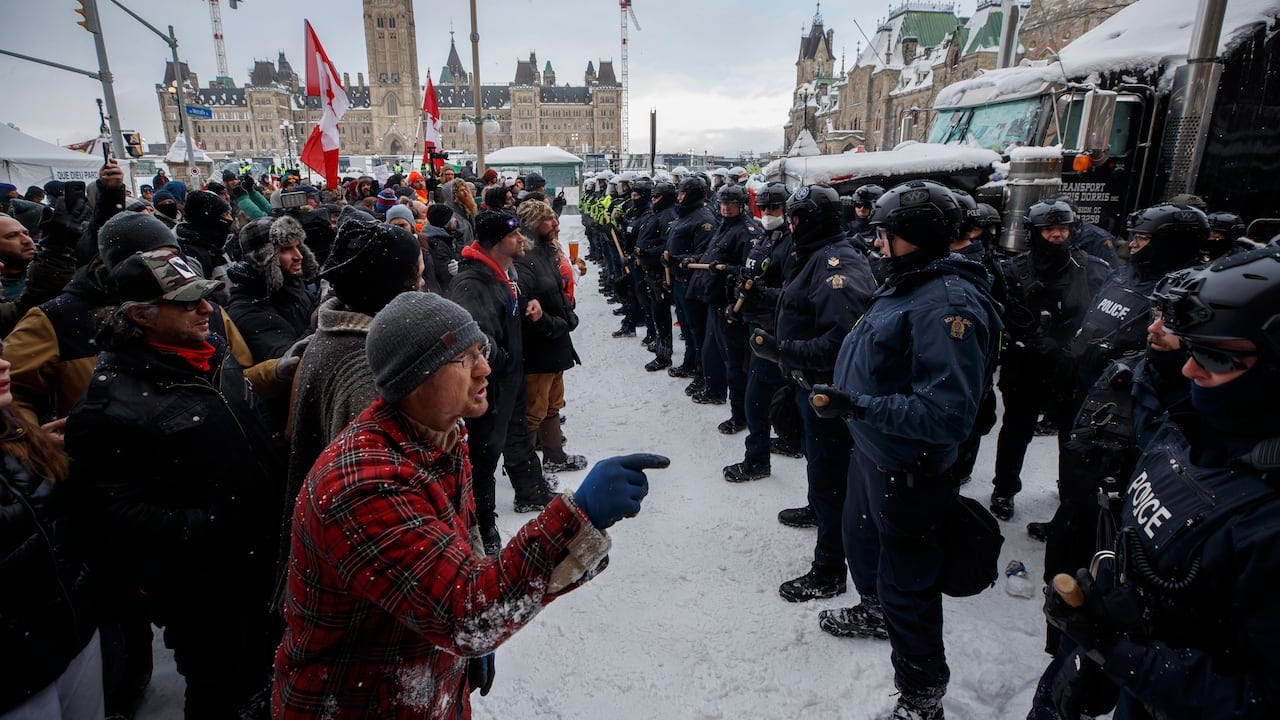
Nor is this an isolated episode. The political project Carney now leads continues to advance Trudeau-era legislation that pushes deeper into territory Havel understood all too well—most notably the regulation of speech. Canada now operates one of the most sophisticated propaganda machines in the democratic world. Legal consequences increasingly depend on identity. Grants, subsidies, and institutional access are routinely conditioned on ideological declarations. Speech is regulated under the banner of combating hate, quietly extending the reach of law into belief, intent, and thought.
It is unnecessary to exhaust the examples. The pattern is clear. This is not power announced with uniforms and slogans, but power administered through procedures, incentives, and normalization. And it is precisely this form of power—the kind Havel warned was most effective—that Carney has never publicly examined, even as he helps to wield it.
Who Gets to Erode Sovereignty?
Carney defines sovereignty in realistic terms. Not as a shared moral understanding between nations, but as a condition earned through resilience. Sovereignty has always been created and defended—not given. He puts it plainly:
“A country that can’t feed itself, fuel itself, or defend itself has few options. When the rules no longer protect you, you must protect yourself.”
He is right. Economic leverage—applied through trade, finance, or supply chains—quickly becomes coercion. Cheap foreign labour and resources look like efficiency until access is threatened. Dependence then reveals itself as vulnerability.
This framing is coherent. It is also, once again, selective.