I once had a fairy-tale view of Canada.
Growing up in a small town where everyone knew at least one of your relatives and you could go out for dinner without locking the front door, it was easy to believe we were a cohesive, high-trust society. Canada’s global reputation for being “nice” made that story effortless to internalize.
That view has been fading for more than a decade. It hasn’t felt like changing my mind but like waking up from a dream.
The illusion first cracked when I watched a family business install heavier security year after year. It began with cameras, then gates, then heavy equipment blocking entrances at the end of each day.
After moving to the city, I watched the homeless population change. They no longer looked like addicts struggling to get back on their feet but like fentanyl casualties—vacant, barely present, as if consciousness itself were flickering. I began hearing more stories of home invasions. While managing a bar at King and Bathurst, I arrived one morning to find thousands of dollars’ worth of liquor stolen from our storage area.
Then I started paying attention beyond my immediate surroundings. Articles about rising violent crime, extortion becoming routine, and organized criminal networks multiplying.
It all felt abstract. Yes, it was happening… but why?
Then I picked up Wilful Blindness by investigative journalist Sam Cooper and everything clicked: crime has not merely grown in Canada. It has been absorbed into the system.
As one veteran investigator in Cooper’s book put it:
“Organized crime doesn’t exist on drugs. It exists on money. Drugs are just the path of least resistance to making money fast. But you have to recycle it to use it. And thus, the profession of money laundering—an extraordinary economy employing thousands of Vancouverites—was born.”
That’s what is important to recognize: crime is not the entire story—money is.
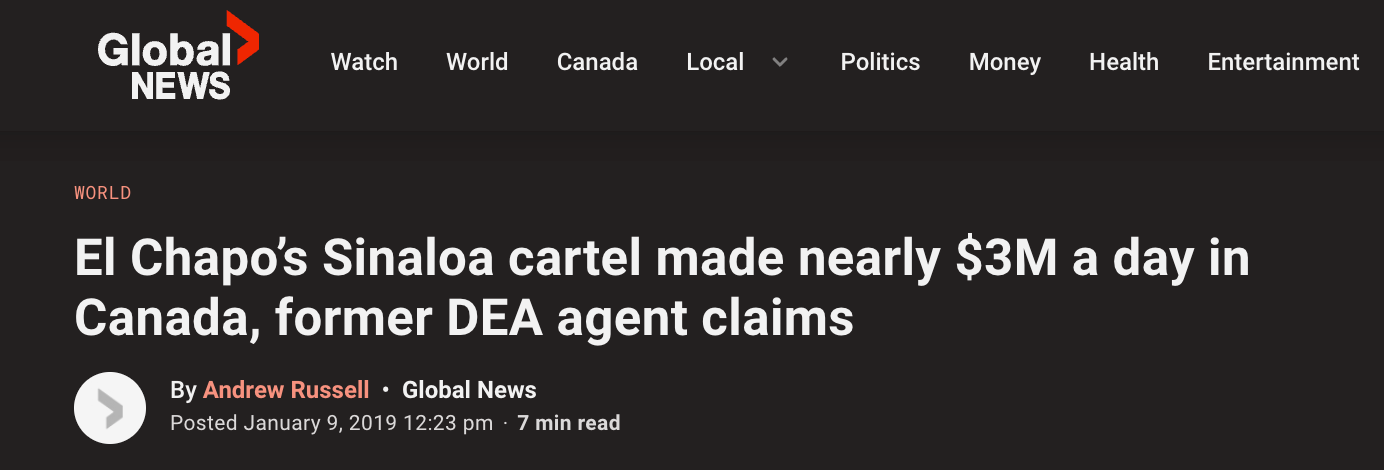
Cartels generate staggering amounts of cash. In 2019, Global News reported that Joaquín “El Chapo” Guzmán’s Sinaloa cartel was clearing more than $3 million a day in Canada, according to a former DEA agent.
And Sinaloa is just one organization.
The RCMP now estimates there are more than 4,000 organized crime groups operating in Canada — up from roughly 800 in 2011.
Canada became attractive to international criminals for three simple reasons:
A weak immigration system with minimal vetting in key periods
Outdated laws and hesitant enforcement
Government-run casinos willing to accept massive volumes of cash
Cash is king in underground economies. But it is bulky, risky, and hard to store. So it has to be cleaned.
The process is simple: earn, refine, launder, invest.
First, earning. Mexican cartels ship cocaine north and Chinese criminal networks distribute fentanyl precursors, while small time gangs sell the drugs on Canadian streets.
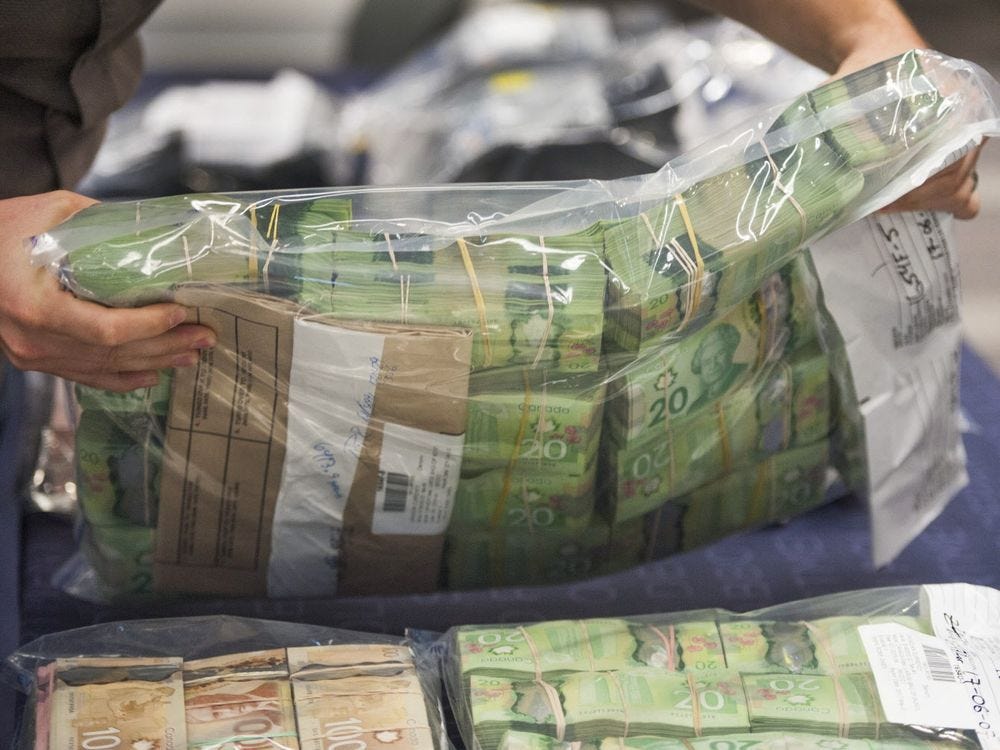
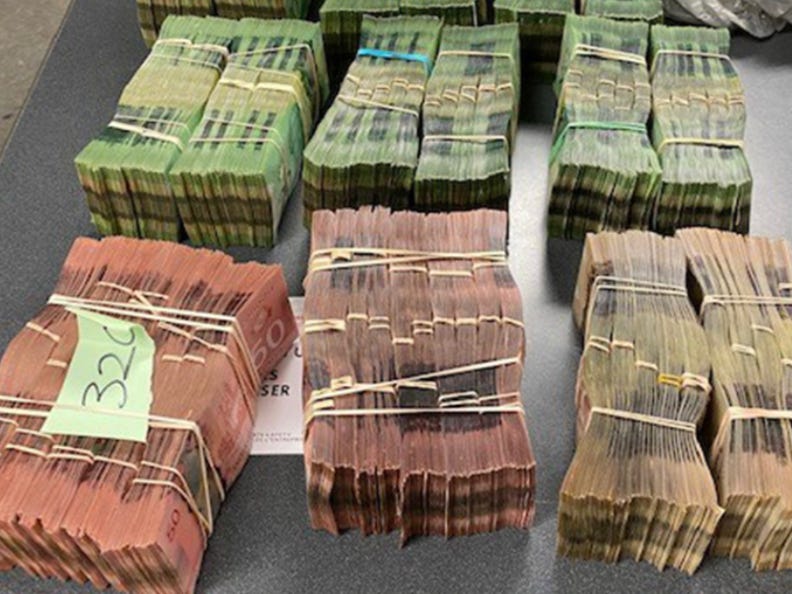
This creates mountains of cash—mostly small bills—but international criminals don’t want piles of Canadian twenties. They want usable money in Mexico, China, or elsewhere.
And this is where things get interesting.
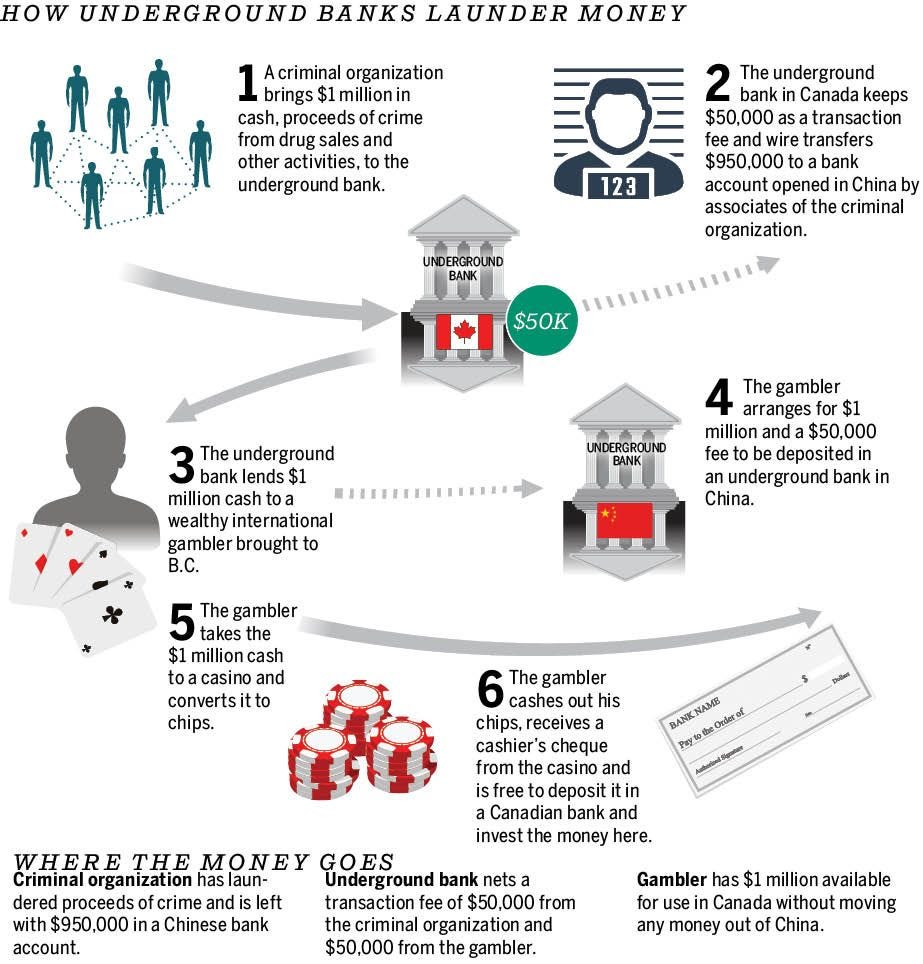
After the money is made — whether through drugs, extortion, scams, theft, or other criminal activity — it is deposited into underground banks.
These “banks” are not formal financial institutions. They don’t use wire transfers or the SWIFT system. There is no conventional paper trail. Instead, they operate on mirrored ledgers.
A cartel hands bulk drug cash to a Chinese underground banker operating in Vancouver, Richmond, or Markham.
On the surface, this banker runs what appears to be a legitimate business — a currency exchange, investment firm, “massage” spa, auto shop, restaurant, or trading company. Except the real function of the business is an intermediary.
The underground banker contacts a counterpart in China, Hong Kong, Mexico, or elsewhere. That counterpart releases an equivalent amount of funds in local currency to whoever the cartel designates.
No money physically crosses borders. The books are balanced through debt accounting between underground banking nodes — a private settlement system built on long-standing criminal relationships and trust.
Silver International, an underground bank operating in Canada, is described in Willful Blindness as “a stunning and terrible operation, laundering more than $1 billion each year in Vancouver for Chinese, Mexican, and Iranian crime cartels.”
So at this stage, cartel cash sits inside Canadian underground banks run by Chinese triads. Meanwhile, affiliated networks abroad release matching funds to the cartel.
The question is: what happens to the cash in Canada?
China has strict capital controls. Citizens are limited in how much money they can legally move out of the country each year.
Now imagine you are a wealthy Chinese citizen concerned about political risk. You don’t want the CCP to have the ability to freeze or seize your assets. You want liquidity outside China — preferably parked in foreign real estate.
So you go to the triads. You transfer Chinese currency domestically to an underground banker in China. That banker instructs his Vancouver counterpart to release Canadian dollars to you. Those dollars are the original proceeds of cartel drug sales.
Now the system is complete.
Cartels get their money settled abroad, Chinese elites get Canadian cash in Vancouver, and underground bankers take a cut on both sides.
Everyone wins… except Canadians.
You might think this financial scheme doesn’t affect you but it does—in very real ways.
The wealthy Chinese client receives his transfer in hockey bags of cash, typically small bills collected from street-level drug sales.
He walks into a government casino, buys chips, plays minimally, then cashes out. The money now emerges as casino cheques, bank drafts, or $100 bills wrapped to banking standards. It looks legitimate.
That “cleaned” money then flows into:
Real estate
Luxury vehicles
Development projects
Loan sharking
Political donations
Trade-based laundering schemes
This scheme inflates Canadian assets, pricing our citizens out of markets now dominated by criminal finances.
Police research found that more than 10 percent of Vancouver-area property sales priced over $3 million in 2016 were tied to buyers with criminal records, and 95 percent of those were believed linked to mainland China crime networks.
At this point, you would reasonably ask: why does government allow this?
Three comforting explanations are often offered. First, revenue dependency: casinos are major provincial earners. Second, political naivety: leaders mistook capital inflow for growth. Third, structural blindness: institutions lacked tools or coordination.
But those explanations don’t hold up when you consider Cooper’s reporting:
“Fintrac had provided BC police with evidence of $40 million in suspected casino money-laundering transactions in several years.”
And yet:
“Suspicious transactions in BCLC casinos had surged from 459 in 2011 to 1,013 in 2013. None of these suspicious transaction reports were investigated by the RCMP.”
When a specialized illegal gaming enforcement unit attempted to expand investigations inside casinos, it was disbanded.
“In April 2009, BC’s government did disband IIGET… Pinnock was so disturbed by the decision that he burned his police files.”
This is where responsibility becomes harder to untangle. While provinces profited from casino revenues, the RCMP is federal. So why didn’t Ottawa treat this as a national security threat?
Perhaps part of the answer lies in a scandal.
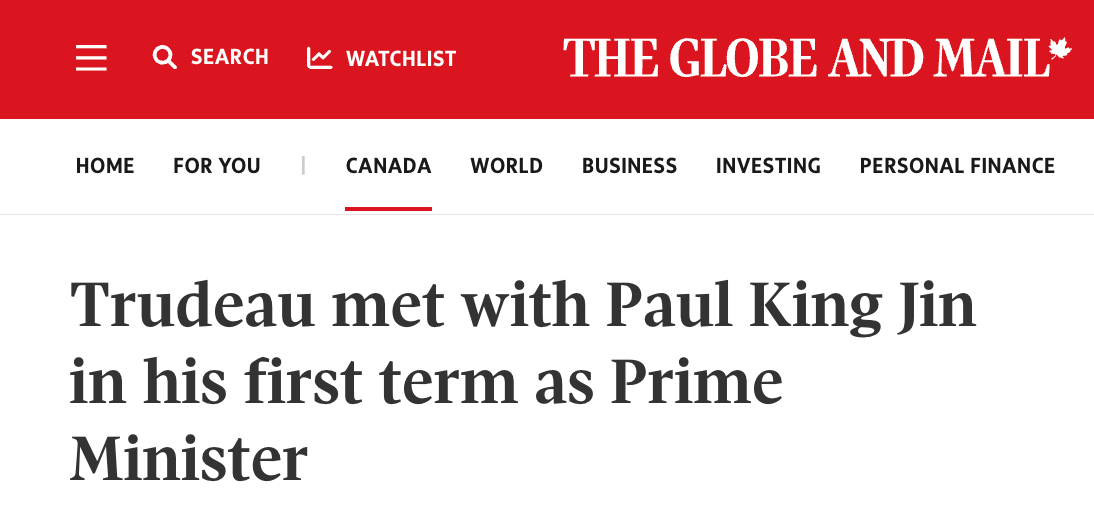
During his first term as Prime Minister, Justin Trudeau met with Paul King Jin, a businessman based in British Columbia. But Jin was no ordinary businessman. He would later become a central figure in BC’s commission of inquiry into money laundering.