


Many Canadians currently hold the view that government spending and problem-solving are one and the same. Cuts are often framed as immoral or as proof the government doesn’t care about people or about solving real problems.
The sharp rise in homelessness has brought this debate into focus, especially after a shocking report from the Canadian Human Rights Commission.
The report outlined a dramatic rise in homelessness, noting an increase of 107% between 2020–2022 and 2024. Ontario alone recorded more than 85,000 people experiencing homelessness in 2025.
Homelessness has grown to the point where the Commission now calls it a human rights crisis. The report clearly identifies the problem. The solution, however, is far less clear. The Commission reflects what many Canadians instinctively believe: when there is a problem, government spending should fix it.
Yet there is little evidence that this spending and these programs have solved the problem in any meaningful way.
Over the past decade — especially since COVID — Canada has undertaken one of the largest expansions of social policy in its modern history.
Federal and provincial governments deployed tens of billions toward poverty reduction, housing stability, and homelessness prevention. Through income transfers, eviction moratoriums, emergency benefits, and large housing programs, policymakers promised to protect the most vulnerable and maintain social stability during an unprecedented disruption.
However, the results tell an uncomfortable story that many Canadians seem reluctant to confront, in part because Canada remains a deeply pro-welfare society. How long will Canadians tolerate the economic burden created by these policies? Especially future generations who will inherit the cost of today’s political decisions.
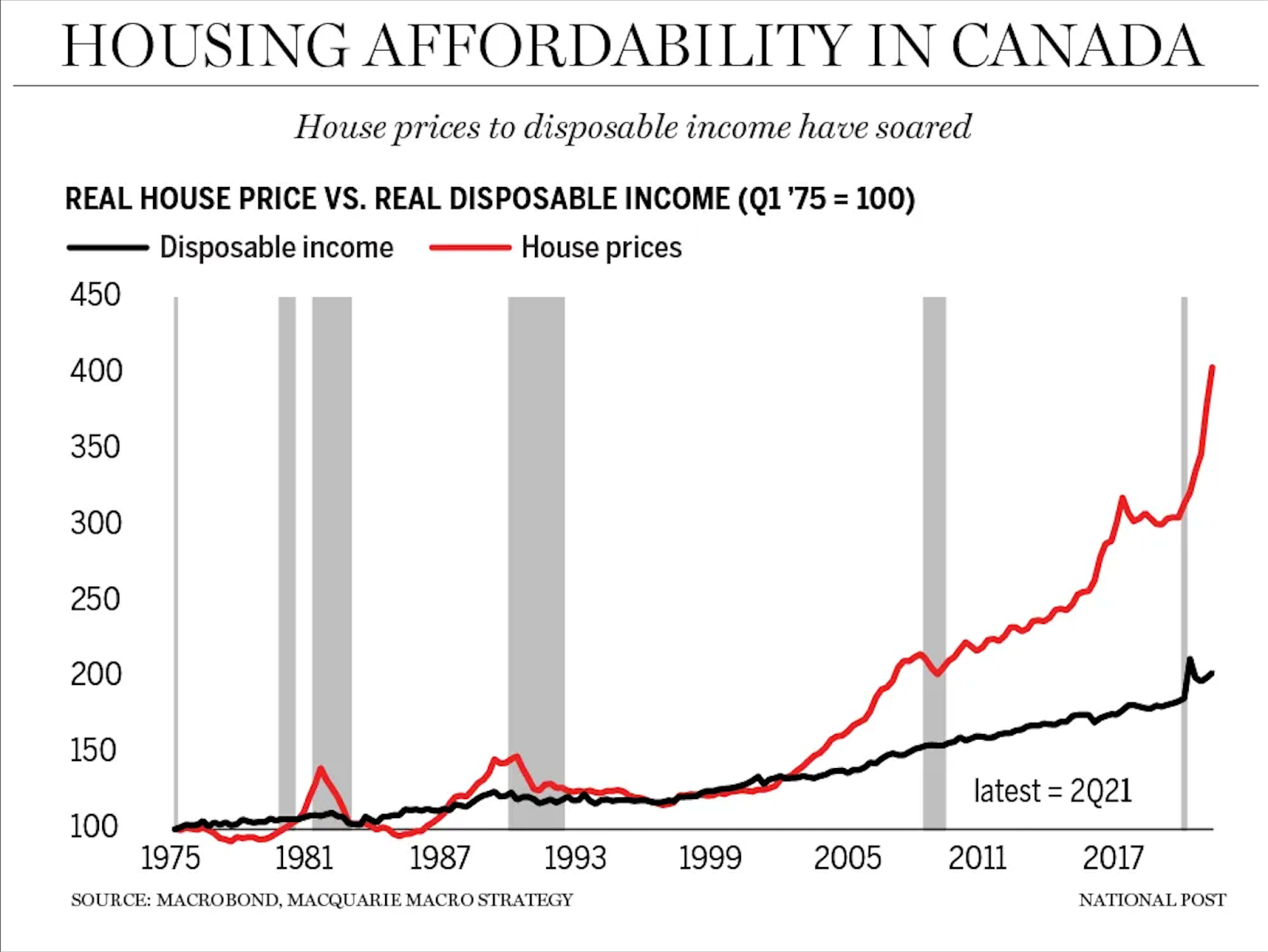
Despite this surge in intervention, key indicators have moved in the opposite direction. Housing affordability has fallen to historic lows, homelessness has risen sharply, and a growing share of working Canadians now live in financial precarity.
According to Housing, Infrastructure and Communities Canada’s Everyone Counts 2024 report, nearly 60,000 Canadians experience homelessness on any given night. This is nearly double the level observed just six years earlier, before COVID. Even more striking is the shift in severity: unsheltered homelessness, including encampments, increased from 14% in 2018 to 28% in 2024.
These trends did not occur in the absence of government action. They occurred during a period defined by aggressive spending and intervention — market restrictions, prolonged lockdowns, eviction moratoriums, income replacement programs, and large housing subsidies — all intended to reduce poverty and prevent homelessness.
The central question is no longer whether governments acted, but whether their actions addressed root causes or instead distorted the systems they were meant to stabilize.
The pandemic period offers a useful lens for examining this divergence. Lockdowns and economic restrictions hit lower-income workers hardest, particularly those in service sectors. At the same time, asset prices — especially housing — rose rapidly. This dynamic widened the wealth divide: those with assets saw their balance sheets grow, while those without faced rising costs and declining stability.
While it remains difficult to isolate how many people were pushed into poverty or homelessness directly because of these policies, the broader pattern is clear. Economic disruption combined with housing inflation increased vulnerability across large parts of the population. These were policy choices, though many remain uncomfortable acknowledging that fact. Inflation is a policy choice, not an act of God or nature.
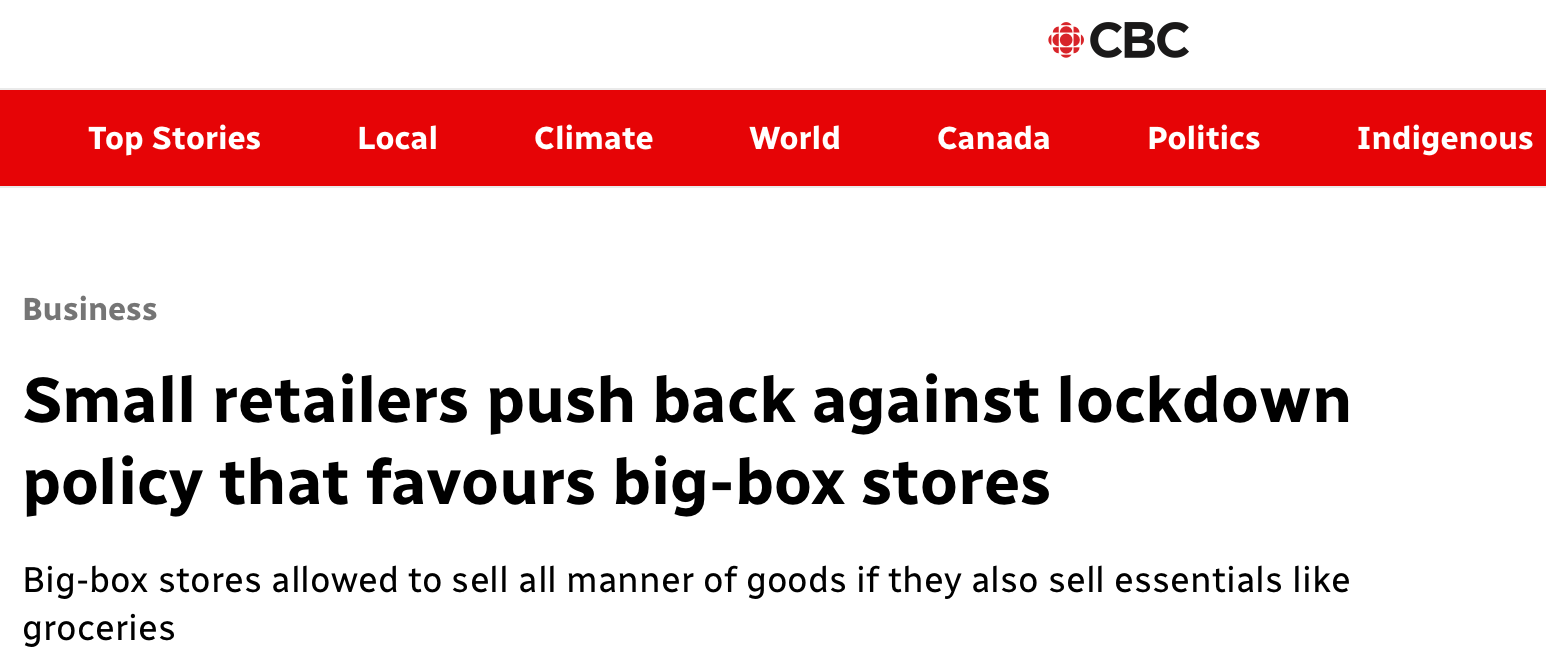
COVID itself did not dictate these decisions. Lockdowns, the closure of small and medium businesses deemed “non-essential” while large corporations remained open, curfews, quantitative easing, and near-zero interest rates all contributed to the domino effect of regressing socioeconomic conditions we all see today.
These conditions also coincided with rising mental health problems. Drug and alcohol abuse increased alongside depression and suicide, driven by isolation, fear, and financial strain. This aligns with data showing homelessness nearly doubling since 2019, according to the Everyone Counts 2024 report.
This raises a basic question: if spending and intervention increased so dramatically, why did outcomes continue to worsen?
A common assumption is that poverty and homelessness persist because governments have not spent enough — that more funding would produce better results. But this assumption deserves scrutiny.
Federal homelessness spending alone has increased roughly 374% compared to the previous decade, averaging more than $561 million annually through programs such as Reaching Home, alongside billions more committed through recent budgets. Yet the persistence — and growth — of the problem suggests the relationship between spending and outcomes is far from linear.
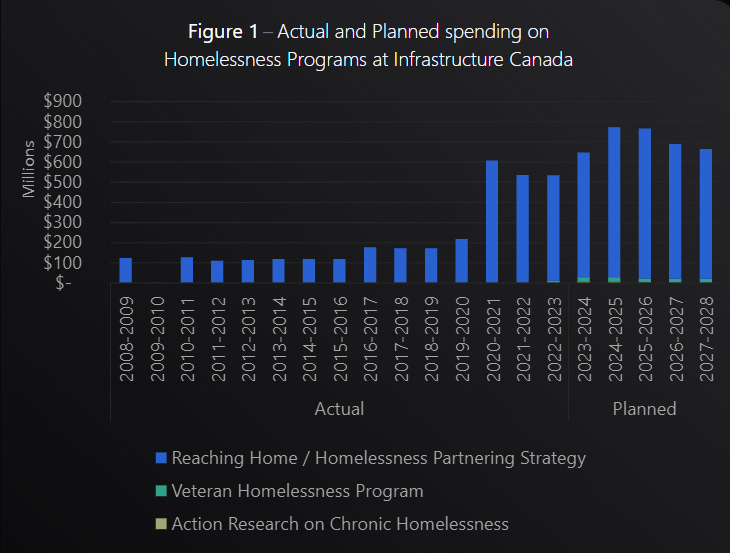
Figure 1. Actual & Planned Spending on Homelessness Programs
People assume that more government spending is always the solution, yet in business we know that spending does not equate to results or success. So why does this fantasy correlation prosper in the political realm?
How did we get to a place where we believe politicians with short-term objectives and little to no understanding of basic economics trick us into allowing them to keep expanding debt, which we citizens must bear without holding accountability for those failures?
According to the Office of the Parliamentary Budget Officer’s 2024 Federal Spending to Address Homelessness report, achieving a 50% reduction in chronic homelessness would require an additional $3.5 billion PER YEAR, Meanwhile, Budget 2024 proposed $1 billion over four years to stabilize Reaching Home, plus $250 million over two years to address encampments and unsheltered homelessness.
Notice the pattern — more intervention, more spending, and the promise of improvement.
The continued rise in homelessness despite increased spending raises another question: what is the government actually doing with the money? To explore this, we can look at Red Deer as an example.
In 2019, Red Deer launched what it called an ambitious plan to end homelessness. The plan proposed spending $273 million over five years. At the time, the city had an estimated 150 homeless individuals — implying a cost of roughly $1.82 million per person.
The justification was that 1,800 additional people were at risk of homelessness, and the city wanted to act proactively. In practice, this meant preparing housing capacity rather than preventing homelessness upstream.
The more realistic conclusion is that when governments announce spending to “address homelessness,” they often mean managing homelessness — not reducing the number of people who become homeless, but transitioning them into publicly funded systems after the fact.
It is therefore not surprising that two years after the end of this five-year plan, homelessness in Red Deer continues to rise and the city struggles to keep up with shelter demand.
Self-interest is a basic principle of human behaviour, and governments are not exempt from it. Governments must justify their existence, and so must the NGOs that depend on government funding. If a government-funded shelter sees homelessness decline, its funding may also decline. That creates incentives that do not always align with solving the problem permanently.
With this in mind, it is notable that the 2019 Red Deer plan was not the first attempt to end homelessness there. An earlier five-year plan launched in 2014 aimed to end homelessness by 2018. The 2019 plan followed when that goal was not achieved.
Recently, Red Deer announced a third plan beginning in 2026 called Project Nexus, involving a range of publicly funded programs, including addiction support, healthcare services, and temporary and long-term housing.
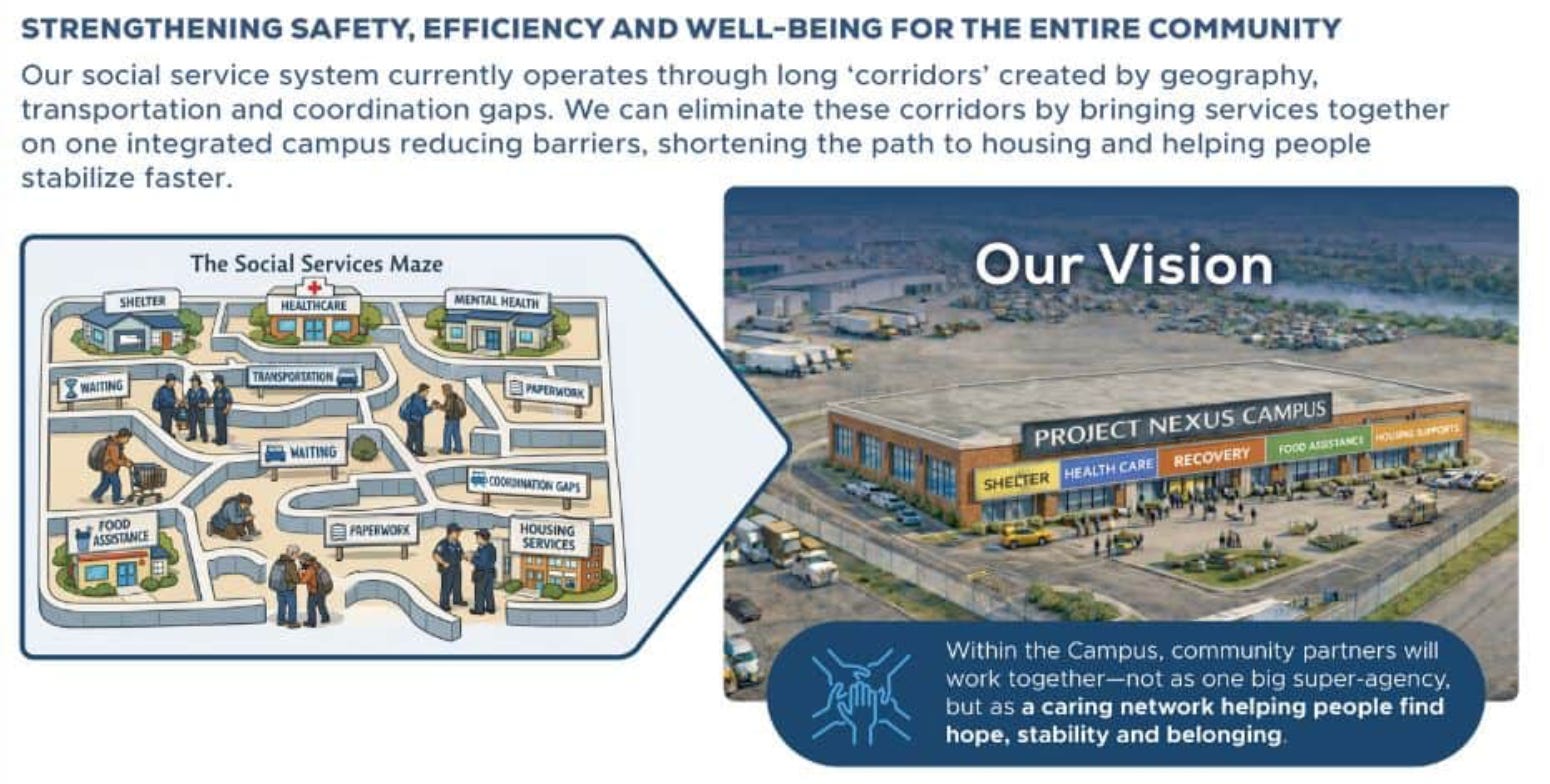
Despite hundreds of millions in spending across multiple plans, homelessness continues to rise. Rather than eliminating homelessness, governments appear to be building permanent bureaucracies to manage it. Big business for the Welfare State.
It is therefore unsurprising that the NDP has now elected a leader proposing to double down on this approach with even more expansive federal programs.
Avi Lewis claims his platform will “end homelessness” through coordination across all levels of government. Yet, as the Red Deer example shows, even at smaller scales, governments have struggled not only to end homelessness but even to reduce it.
Understanding poverty and homelessness in Canada requires looking beyond headlines and intentions. It requires examining policy design, incentives, and unintended consequences — in other words, basic economics.
If the goal is not simply to manage poverty but to reduce it, then the key question is no longer how much governments spend, but whether the current intervention model can solve the problem at all.
Is welfarism truly the solution?
“Emergencies have always been the pretext on which the safeguards of individual liberty have eroded. Once suspended, it is not difficult for those who assume emergency powers to ensure the emergency never truly ends.”
- Friedrich August Von Hayek
Thanks for the article and informative perspective. We're in two camps, those that believe government is the answer and those that believe too much government is problematic. Sadly, Canadians seem mostly in the first group. A useful look at how government attempts at "solving" homelessness has only made things worse the more that has been spent is offered by Michael Shellenberger in his book Sanfransicko and current documentary done by Bill O'Reilly. Hoping this link isn't paywalled: https://www.public.news/p/san-francisco-proves-the-progressive?utm_source=podcast-email&publication_id=279400&post_id=192992370&utm_campaign=email-play-on-substack&utm_content=watch_now_button&r=2r3t8&triedRedirect=true&utm_medium=email