



Many people believe Mark Carney appeared almost out of nowhere — that he was simply in the right place at the right time. Needed in a moment of panic, he stepped in to save Canada from Trump while saving the Liberal party from a complete collapse. That is the surface level version of what happened. It’s neat, flattering, believable and easy to sell. At least for those who haven’t been paying close attention.
For those that have, that story isn’t just false– it’s incomplete. The reality is Mark Carney didn’t suddenly emerge. He was being placed, prepared, and introduced years in advance. The Liberal majority we now find ourselves under was not some shocking turn of fortune, it was the result of careful positioning, long planning, and a political class using every opening the system gave them.
I’m not claiming there were any secret meetings in dark rooms or some grand conspiracy written on paper. Politics rarely works that way. More often, it works through networks, timing, soft introductions, institutional loyalty, media shaping, and people in power making sure the right doors open for the right person at the right time.
Based on what I’ve seen, Mark Carney’s rise looks less like an accident and more like an architect’s design.
The Myth of the Sudden Saviour
Every political era tries to produce its saviour. When governments become unpopular, or exhausted, they need renewal without surrender. They need a new face who can inherit the machine without being blamed for the destruction it leaves behind. They need a scapegoat and someone who feels fresh to protect its future.
That is where Carney fits perfectly. He wasn’t a long-serving cabinet minister tied to every Liberal mistake. He wasn’t a backbench MP carrying years of baggage. He wasn’t Trudeau. He was an “outsider”, or at least he was presented as one.
He had prestige, credentials, media polish, and enough distance from the government to seem clean, while remaining close enough to be trusted by those already in power.
That combination is rare. It is also politically valuable. So when people say Carney simply stepped up in a time of need, I think they miss the years that made that moment possible.
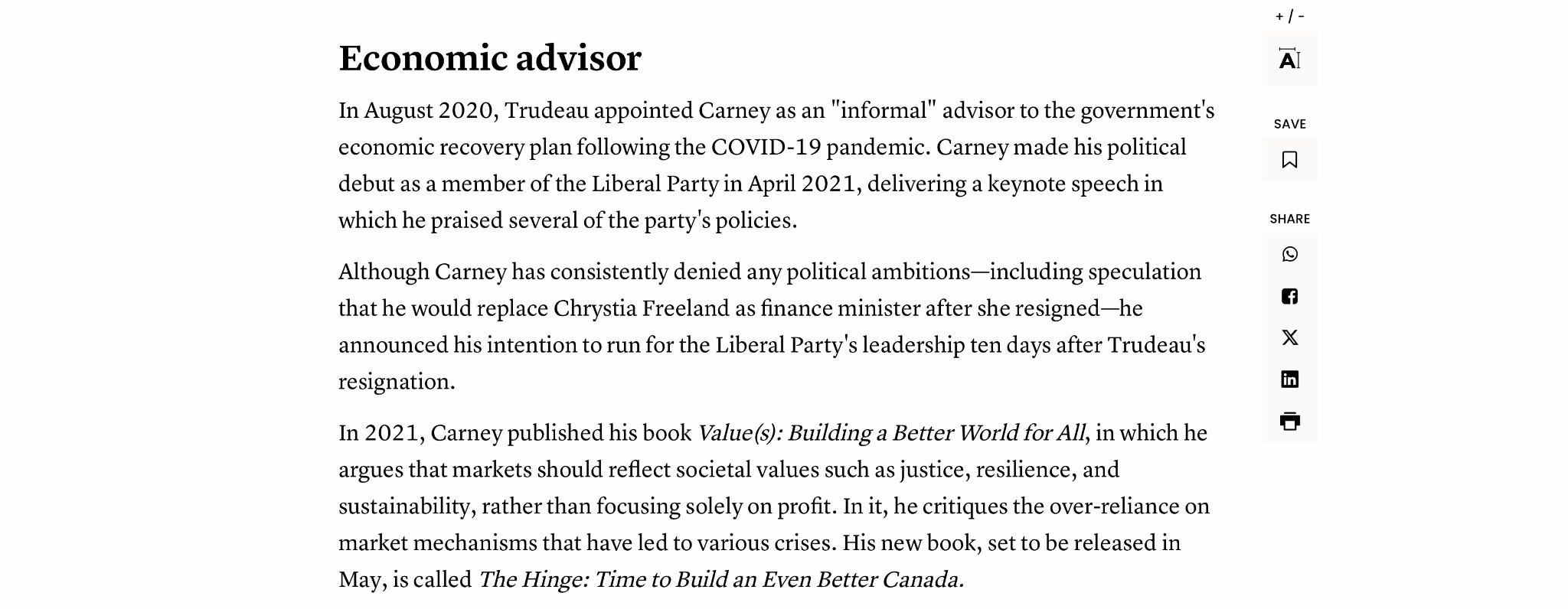
2020: Entry Through Crisis
Let’s Start in 2020. Canada came through COVID with deep economic damage. Businesses were shut down, spending exploded, inflation pressures grew, debt climbed, and public trust began to fray. Whether one supports the pandemic response or not, the country was weakened.
That is when Justin Trudeau brought in Mark Carney as an “informal” economic adviser.
Now ask a basic question: why Carney?
Because he carried a brand. Former Governor of the Bank of Canada. Former Governor of the Bank of England. International profile. Calm banker image. Crisis-manager reputation because of his role in the 2008 financial crisis.
To many Canadians, that resume sounds like competence before he says a word. During a time of a strong economic downturn, someone with an extensive “economic background” is exactly what Canadians were looking for. Officially, he was there to help guide recovery, but politics is rarely single-purposed. Bringing Carney close to the government did more than add advice. It reintroduced him to Canada. It put him near power. It let him study the landscape. It let the public grow used to seeing him linked with national leadership.
That matters. You don’t always launch a leader by declaring it. Sometimes you normalize them first.
The Soft Re-entry Into Canadian Politics
Remember, Carney had spent many years abroad. To much of the public, he was respected but distant. He needed re-entry. That process appears to begin here.
By attaching him to national recovery, the Liberals gave him relevance. By giving him an advisory role rather than a partisan title, they reduced backlash. By keeping him near Trudeau but not inside cabinet, they let him gain proximity without blame. That is clever politics.
He could influence policy, learn the mood of the country, reconnect with elite networks, and prepare for something larger — all while appearing above day-to-day politics.
If you were trying to build a future leader quietly, this is roughly how it would look.
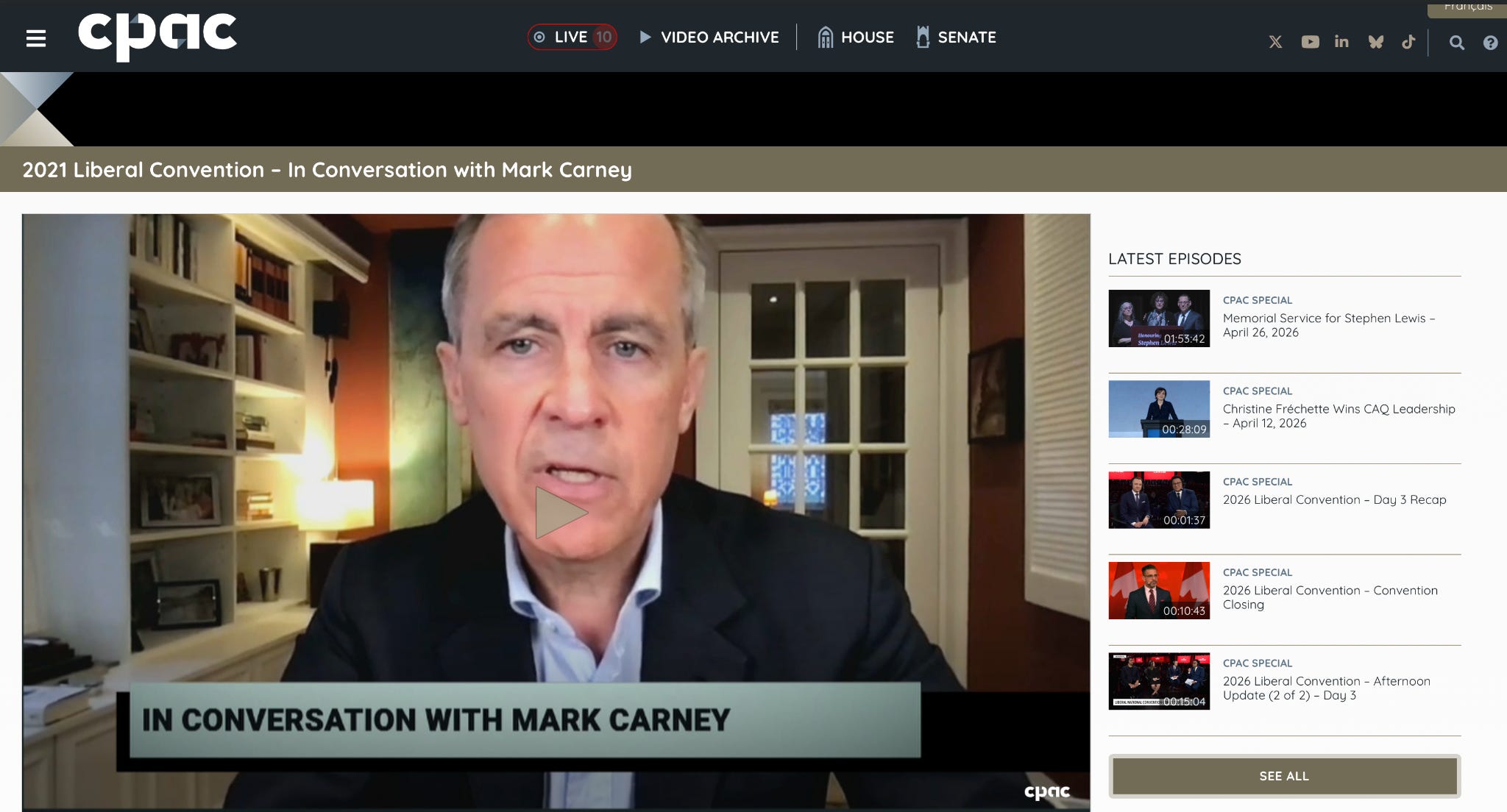
2021: Introduction to the Liberal Base
Then came 2021. Carney delivered a keynote speech at the Liberal convention. This was not some accidental cameo. This was a formal presentation to the party faithful.
He spoke of his experience, his ideas, his vision, and the major challenges ahead. He promoted themes he returns to often: climate risk, economic change, technological disruption, the need for managed transition.
Some heard thoughtful leadership. I heard something else: branding.
This was the party meeting the “possible successor.” Politics often introduces future leaders long before admitting they are future leaders. A convention stage is where parties test reactions. They watch, applause, headlines, donor chatter, elite approval, and grassroots comfort. Carney was being shown to Liberal voters in a safe setting, wrapped in policy language and global credentials. Again: not an accident.
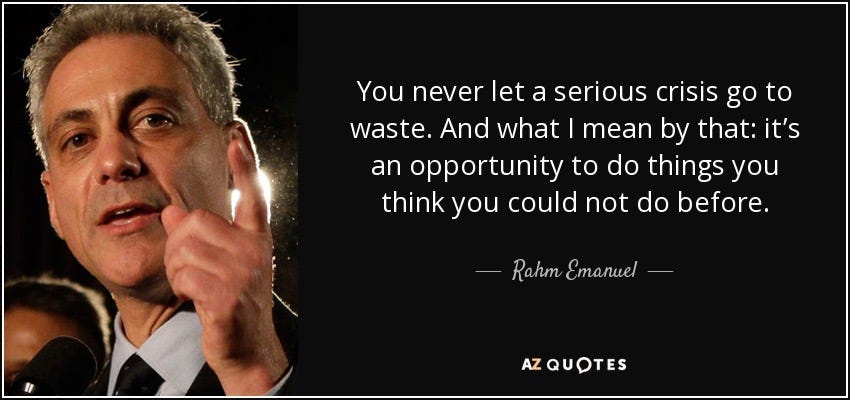
Crisis as Political Fuel
There is also a pattern in Carney’s messaging style. He is effective at framing issues as urgent turning points. Climate disaster. Economic upheaval. Democratic danger. Sovereignty threats. History at the door. Maybe he believes all of it sincerely. Maybe some of it is true. But politically, urgency is useful. When people feel calm, they compare details. When people feel fear, they look for managers. Carney’s public style creates moments where voters are told the stakes are existential and only serious experts can steer the ship.
That’s why the Trump angle later mattered so much. It fits an existing template: danger is here, normal politics is too small, trust the credentials. In a world growing towards trust in authority instead of competence and results, Carney wasn’t just a good fit, he was a perfect match.
This Substack is reader-supported. To receive new posts and support our work, consider becoming a free or paid subscriber.
2022: The Maclean’s Prediction
Then there is 2022. Under a section for Mark Carney, A Maclean’s line described the challenge of saving the world from climate disaster and then added that perhaps an even greater challenge would be leading a “certain late-cycle governing political party in Canada.”
That phrase deserves attention.
Late-cycle means nearing the end of its run. Governing party meaning the party in power. In Canada at the time, that clearly pointed to the Liberals under Trudeau.
So what was being floated? That Carney might one day lead them.
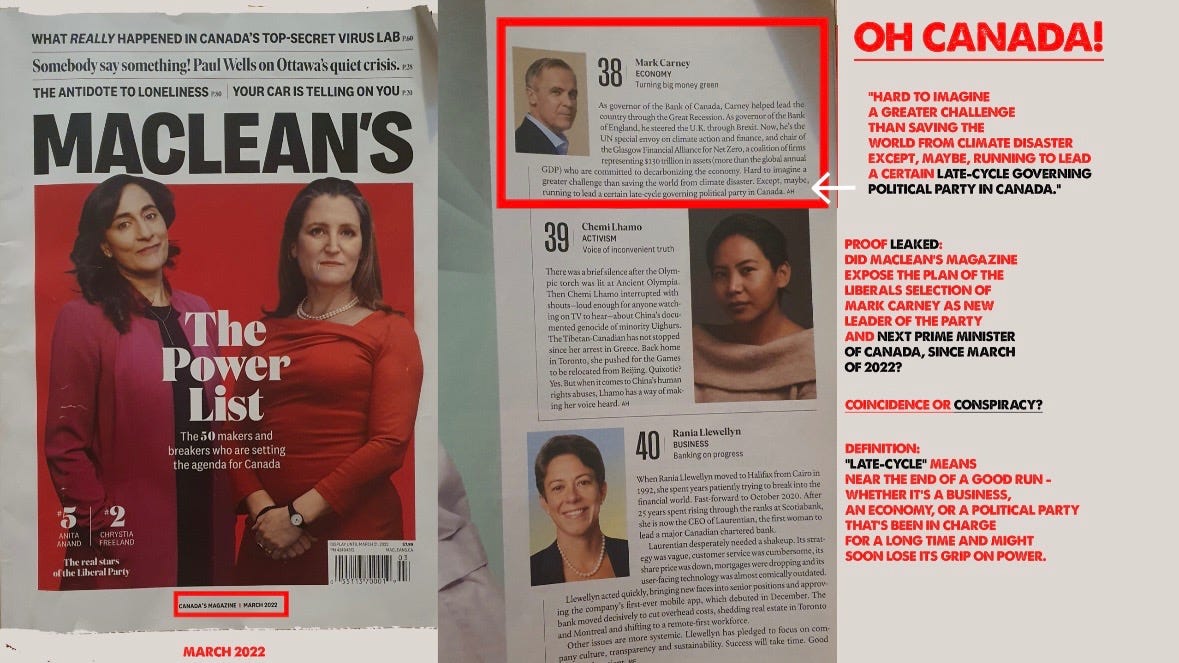
Was it a prophecy? No. More likely it reflected what connected people were already discussing quietly. Elite magazines often do not predict from nowhere. They echo narratives already moving through political circles. Sometimes a “speculation” piece is simply an early public airing of a private conversation. If so, then by 2022 the idea of Carney replacing Trudeau was already established, and likely the Liberal party was in the process of making it happen.
2024: No Longer “Informal”
Fast forward to 2024. Carney is named chair of the Task Force on Economic Growth. Now he was not merely hovering nearby. He was tied directly to the Liberal economic future. Trudeau said Carney would play a vital role in shaping the next steps of the plan. Read that carefully: shaping the next steps.
That is not ceremonial language. That signals trust, influence, and succession energy.
At this stage, Carney’s path had moved through three phases:
Adviser in crisis
Introduced to the base
Given formal strategic role
That is a ladder. People only call careers accidental when they ignore the steps.
Trudeau’s Fall, Carney’s Opportunity
Meanwhile Trudeau was weakening. The cost of living pressure rose. Fatigue set in. The carbon tax became a major symbol of Liberal overreach in the eyes of many voters. Opposition attacks sharpened. The public wanted Trudeau gone. Then, Trudeau resigned. Personally, I believe all of this was theater and intentional. Meant to put the blame for all the bad policies and scandals on Trudeau and away from the Liberals as a party.
But Trudeau had already fulfilled his role in the plan. Not just what seemed like intentionally plunging Canada into an economic free fall, but packing the senate during his leadership.
The Senate reviews legislation and can slow, amend, or complicate government plans. While it is more nuanced than pure party obedience, appointments still matter. And Trudeau appointed 81 out of the 97 senators before he resigned.
That does not mean every senator becomes a puppet but it does mean the governing worldview of the appointing era can remain long after the appointing prime minister is gone.
So imagine you are handing power to a successor from your own side. Leaving behind a Senate filled largely under your watch is not meaningless. It lowers friction. It preserves continuity. It gives the next government friendlier terrain than starting from scratch.
Again, not illegal. Not secret. Just power used intelligently.
The Missing Piece: Majority Control
At this point the Liberals could have:
A fresh leader with elite credentials
Distance from Trudeau’s image
Institutional continuity
A favourable Senate environment
But one thing still matters most in parliamentary politics: numbers in the House of Commons. Without a majority, governing becomes negotiation. With a majority, governing becomes command. So how do you close a narrow gap? One answer is floor crossing.
Some people speak of the recent floor crossings as if it suddenly happened in response to fresh conditions, but evidence suggests courting MPs had been ongoing for years.
Mélanie Joly admitted efforts had been made to recruit Chris d’Entremont dating back to around 2020.
Think about that.
If you are trying to persuade opposition MPs years in advance, then this is not a random post-election movement. It is long-game politics. Relationships are built. Grievances are tracked. Ambitions are noticed. Doors are kept open. That is how serious political operators work.
“You Vote for the Person” — Mostly False
Whenever floor crossing angers voters, defenders repeat a line: you vote for the person, not the party. This is one of the most convenient myths in Canadian politics. When you vote, you vote in the party you want to rule, not the MP or the leader. After all, if a leader resigns it doesn’t trigger a general election. Just like how Mark Carney came to power, the leader is simply replaced while the ruling party stays the same. Even if theoretically MPs left the ruling party and crossed to another party, giving the other party more seats in the house of commons, the ruling party would stay in power despite having less seats in the house of commons. Also, Canadians do not vote based on the MP in their riding.
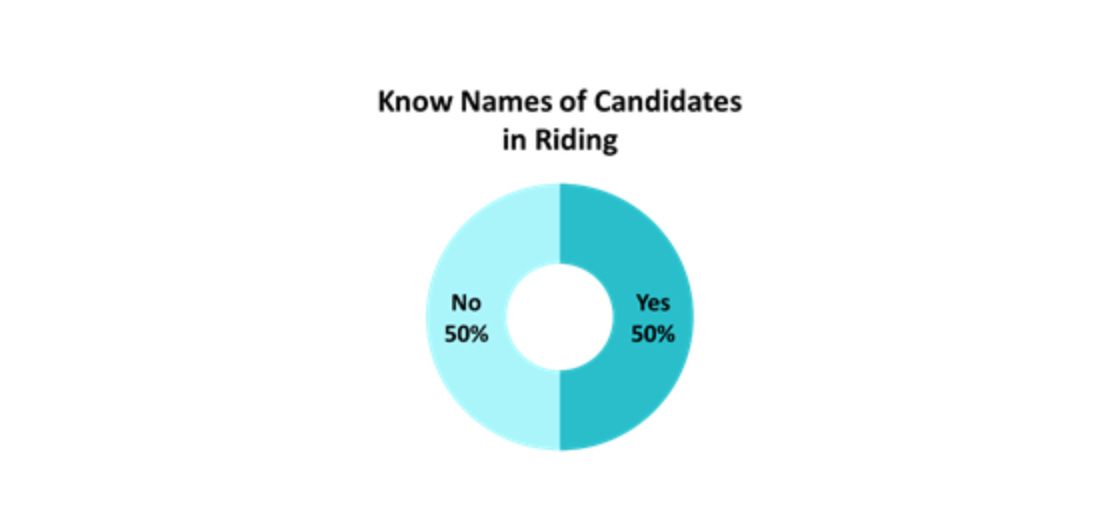
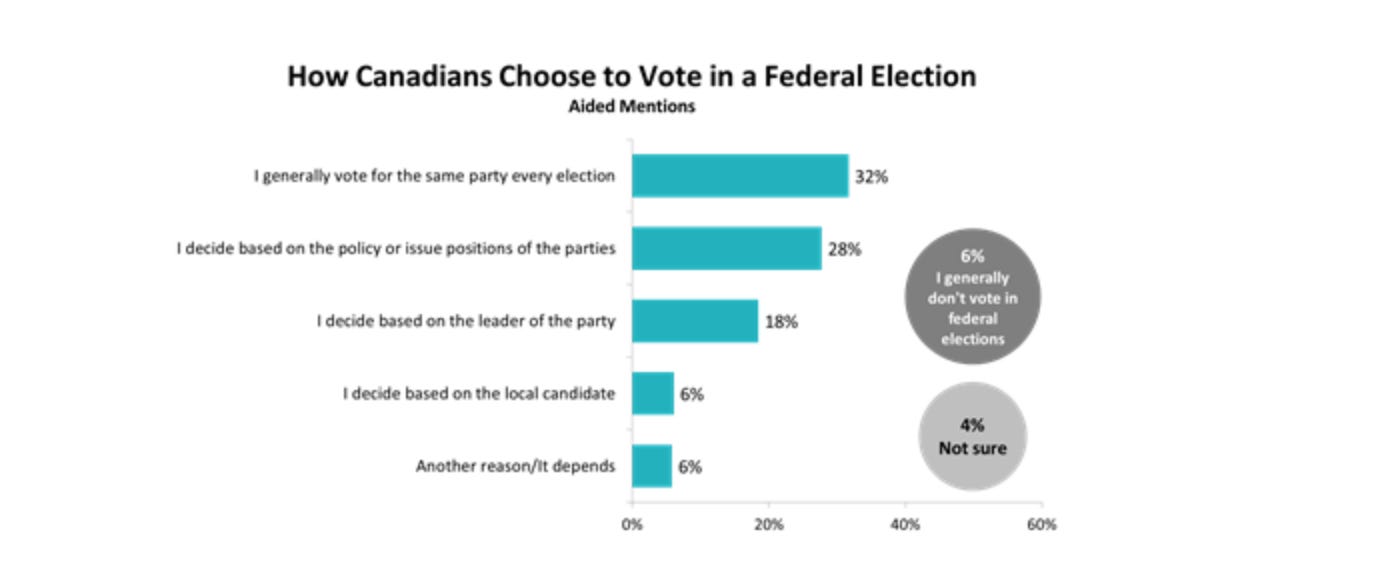
In reality, a Narrative Research survey suggests only 50% of Canadians say they know the names of the Candidates in their ridings that they voted for, and only 6% say they vote for the riding MP instead of the party. That doesn’t reinforce the narrative of a system of individual MPs that represent the voices of their riding. It’s evidence that most people will vote for any name that represents the broad values of the party.
What the data actually suggests is that most people blindly vote for the same political party every federal election, about 1 in 3. Second most vote based on the policies of the parties, and third votes based on the party leader. Not only do people not mainly vote based on the MP, it’s dead last in people’s considerations.
And MPs themselves reinforce this truth every day by voting almost always with party lines. A report from Canada Commons found that MPs vote with the party 99.6% of the time. They even urge MPs to be more independent. But when you consider the advantages you get from running under a party banner, it all makes sense. Using party branding, party messaging, party funds, party leaders, party whips, and party campaign machines. Not many would disagree with the claim that most MPs wouldn’t even win their seats without help from the party. If MPs act as party members nearly all the time, but suddenly become lone independent vessels the moment they cross the floor, people are right to be skeptical.
Voters Rightfully Feel Betrayed
If someone wins under one banner, using one team’s volunteers, donors, signs, message, and voters — then hands that seat to another party midstream, many people feel their vote was transferred without consent. That reaction is rational and many people would like to see the end of floorcrossing.
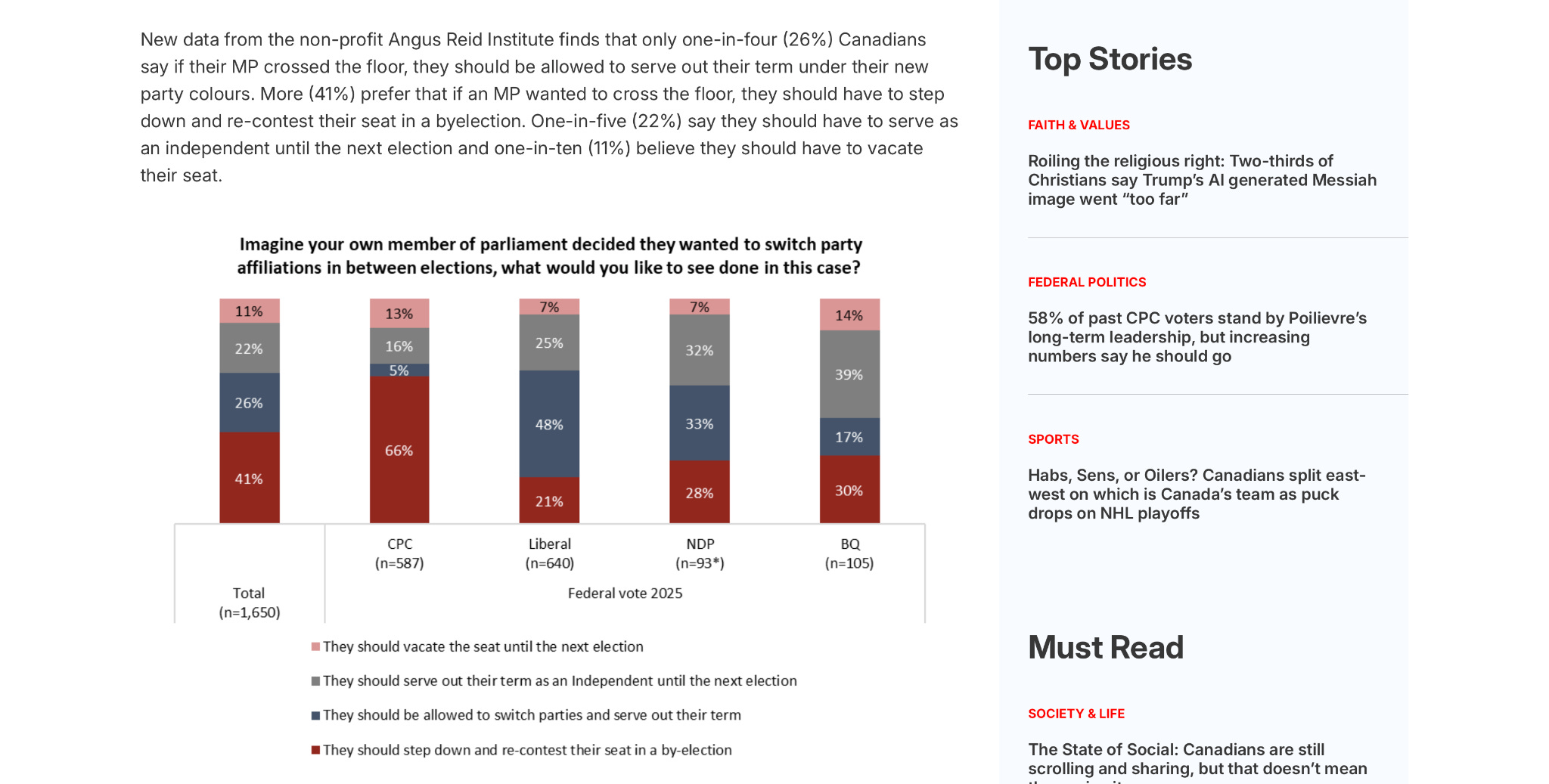
Even those who defend the legality of floor crossing often know it lacks moral legitimacy in many cases. That is why polling tends to show voters prefer alternatives such as:
resigning and re-running
sitting as an independent
forcing a by-election
Why Reform Never Happens
Repeated efforts have been made to restrict or reform floor crossing and they all fail. Why? Because every major party imagines one day benefiting from it. There have been multiple bills tabled to address this issue that have been consistently voted down, by often the bigger parties. The Liberals may use it today. Conservatives may need it tomorrow. Smaller parties may rely on it later. Political classes often preserve tools they publicly condemn when in opposition. That is one of the oldest habits in politics: denounce the loophole until it helps you.
The Incentives Behind Crossing
Each floor crosser will give reasons: values, fit, changed circumstances, leadership concerns, national interest. Sometimes those reasons may be sincere. But incentives exist too:
committee roles
profile boosts
access to ministers
local funding leverage
future nominations
career survival
relevance inside power
To pretend none of that matters is childish. Human beings respond to incentives. Politicians are human beings with microphones, no different than you and I.

The End Game
The final step of almost total control void of accountability came after the majority. The liberals packed committees, the last stand of parliamentary debate. Opposition still exists. Courts still exist. Elections still exist. So no, democracy is not literally dead.
But concentrated power is real. Majorities matter. They can move fast, shut down resistance, and define the national story.
The deeper problem is the system. This article isn’t really about one man. The sad truth is as much as Canadians don’t like what Carney is doing, everything he did is allowed in our system as it stands. Carney is simply the most polished recent example of a broader truth: Canada’s political system allows for parties to game it with recycled power through leader swaps, institutional appointments, media narratives, and seat transfers while claiming every outcome is pure democratic will.
Maybe sometimes voters choose, but as it is now, they’re managed toward a narrow set of outcomes already prepared for them. That distinction matters.
Maybe Mark Carney is exactly what Canada wanted. Maybe he is the right man at the right time. Or maybe he is what a governing machine spent years preparing as its greatest secret weapon. Maybe the machine has more control of the people and the system than many would like to believe. What I reject is the fairy tale that he just appeared, untouched by design, summoned by need.
Politics is rarely that innocent.
If Canadians want a better country they should strive for a better system. They should dedicate themselves to involvement in politics. In the west-minister system we have no leader. Party leaders are not the leaders of the country, they are leaders of the party. The party is led by the will of the people. Or so it should be.
If we don’t take our role seriously and lead this country, the narcissistic tyrants will lead, and the country will continue down the path of chaos.
Thanks for reading! This post is public so feel free to share it.
Lets not forget that in Feb of 2022 Mark Carney penned an article indicating falsely that the Freedom Convoy was an insurrection. If it was an insurrection, then parliament would have locked down. It didn't. It continued to function while Wellington St had the most peaceful of protests. But MC was the person to suggest that bank accounts needed to be shut down. He wanted to set an example against the peaceful protestors, indicating they were a threat to society.
So accurate. So heartbreaking. Thank you