


Speech is a fundamental pillar of a free society. For a democracy to function with any degree of stability, communication grounded in truth is essential. When truth deteriorates, so does the trust that holds a free system together.
There are rare cases where limits on speech are considered acceptable. For example, even most “free speech” nations treat certain forms of lying as criminal acts, such as false advertising or defamation.
With the rise of gender ideology, however, we have seen a shift in how the legal system approaches speech and discrimination. Laws have traditionally been based on objective, observable truth—favouring what is provable and penalizing what is false or illegitimate.
In Canada, there are now cases that suggest this principle—and even truth itself—is no longer upheld when it conflicts with certain ideological narratives. The traditional ideals of Lady Justice appear increasingly fragile. The law is meant to be blind and impartial, symbolized by the blindfold. It is meant to be balanced, fair, and grounded in evidence, symbolized by the scales.
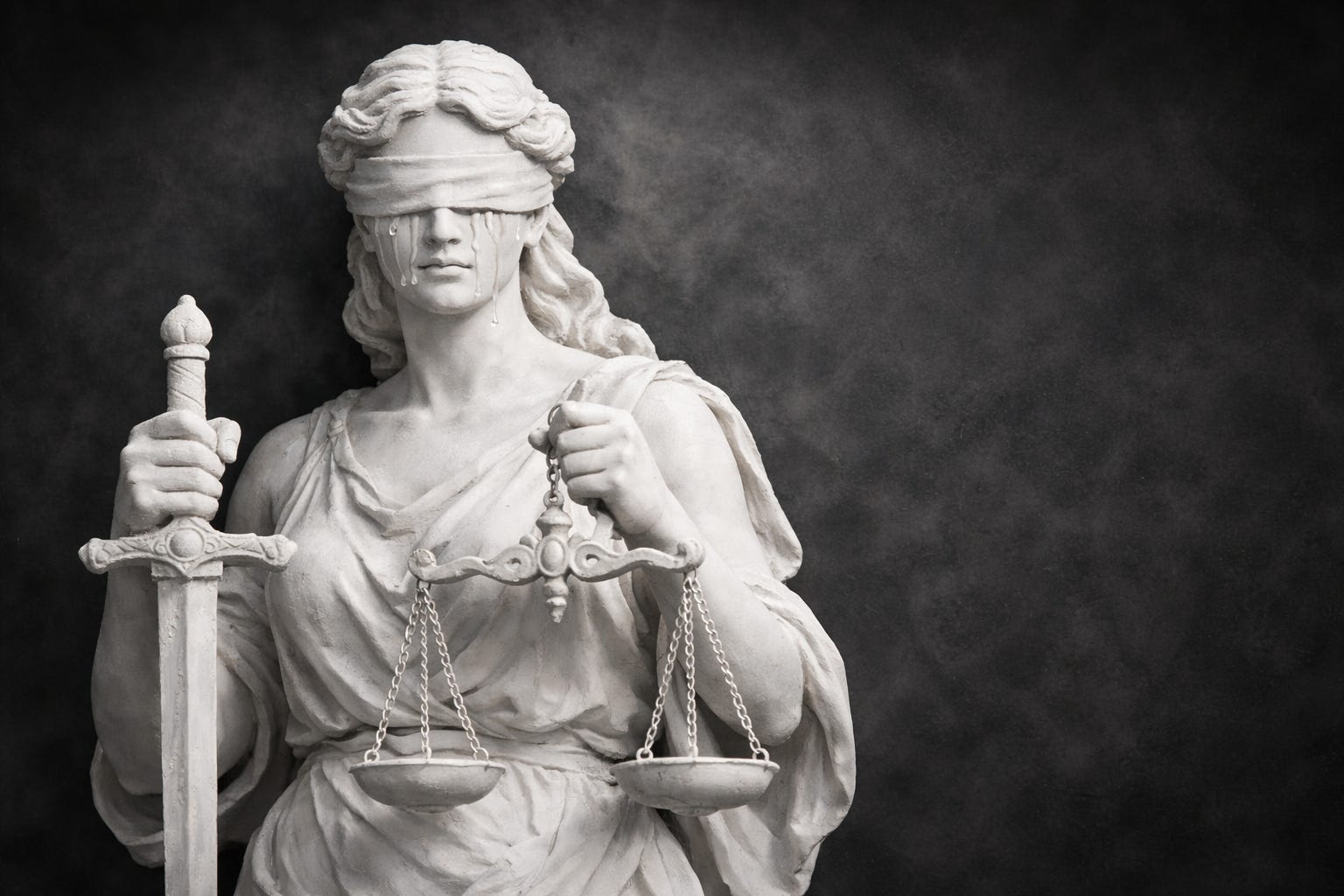
However, a case in Quebec has further exposed that the law favours some over others, deception over truth, and has put pressure on businesses—whether small or big—to conform to new societal norms, even when they are not grounded in truth.
A hair salon named Station 10 was ordered to pay $500 to Alexe Frédéric Migneaul, a self-identifying non-binary person who filed a complaint because there was no gender-fluid option on the business’s website, forcing them to select either male or female. This may seem small, but it paves the way for businesses to face lawsuits if they require clients to select “male” or “female” when applying for services.
This case is not the first of this nature, and it likely won’t be the last. What was promoted as acknowledging people’s feelings and addressing them with the proper pronouns has quickly made its way into law—spreading throughout our legislative system in the form of “human rights” codes.
Misgendering someone, or declining to treat a person according to a gender identity that differs from their biological sex, can now expose individuals and businesses to complaints or lawsuits at both the provincial and federal levels. Even in cases where the person retains the natural body parts of their biological sex.
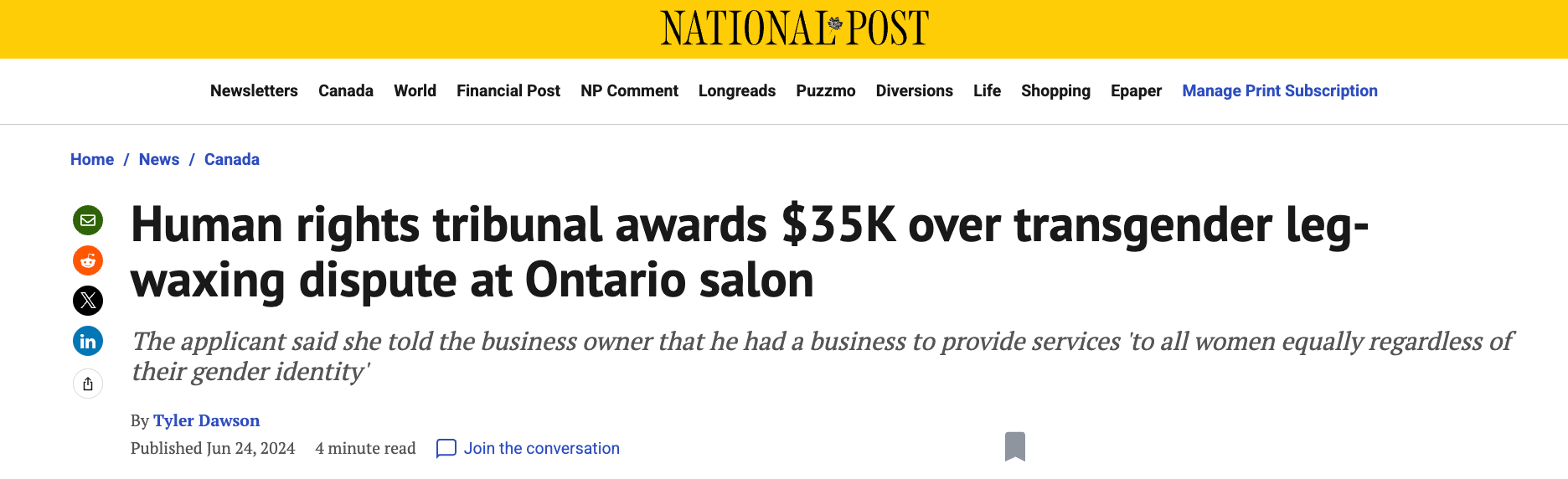
Consider the case in Windsor, Ontario, where a local waxing spa was served with a human rights complaint and ordered to pay $35,000 after declining services to a biological male who identified as a transgender woman. The complainant alleged that the business had engaged in discrimination, arguing that the refusal was based on gender identity and gender expression. The stated basis for seeking compensation was what was described as “immense harm to my dignity.”
However, when you dig into the details, a different picture emerges. The service the trans woman requested was a “Brazilian wax,” which entails removing the pubic hair from the front (genitals) to the back (butt strip) and everything in between. It is a deeply intimate service and usually preformed by women to women and by men to men. As the waxing business’s clientele is 98% female, all of his staff are also female; however, they do wax men’s arms and backs from time to time.
In this particular case, the spa owner told the transgender person that they “have no male wax staff” and would be unable to provide that service to someone with male genitalia. Not to mention, the employees working that day included a practicing Muslim woman who refrains from physical contact with males outside her family, validating the refusal of service.
Conformity in both cases did not resolve the issue. In the instance of the salon that lacked gender-fluid options on its website, the business updated its forms to include an “other” category, yet the complainant proceeded with the lawsuit regardless.
Similarly, the spa owner who declined a Brazilian wax stated that his business had no policy against serving transgender clients, emphasizing: “I once again reiterate and state my position and the position of Mad Wax Windsor Inc. that all clients, regardless of sex, gender, gender identity, sexual orientation, are welcome.” Even so, the statement offered no protection in the outcome of the case.
We have blurred the lines between discrimination and truth, while inserting that principle into our laws. This is the result of integrating gender identity into our legislation, which is solely based on feelings and has no roots in objective reality.
If legal punishments in the name of gender ideology persist, companies and individuals will be forced to self-censor—and lie—in order to operate. This isn’t just a problem for businesses; individuals have been punished for saying what they believe to be true outside of professional settings. It has exposed a double standard in the system, furthering our descent away from true fairness.
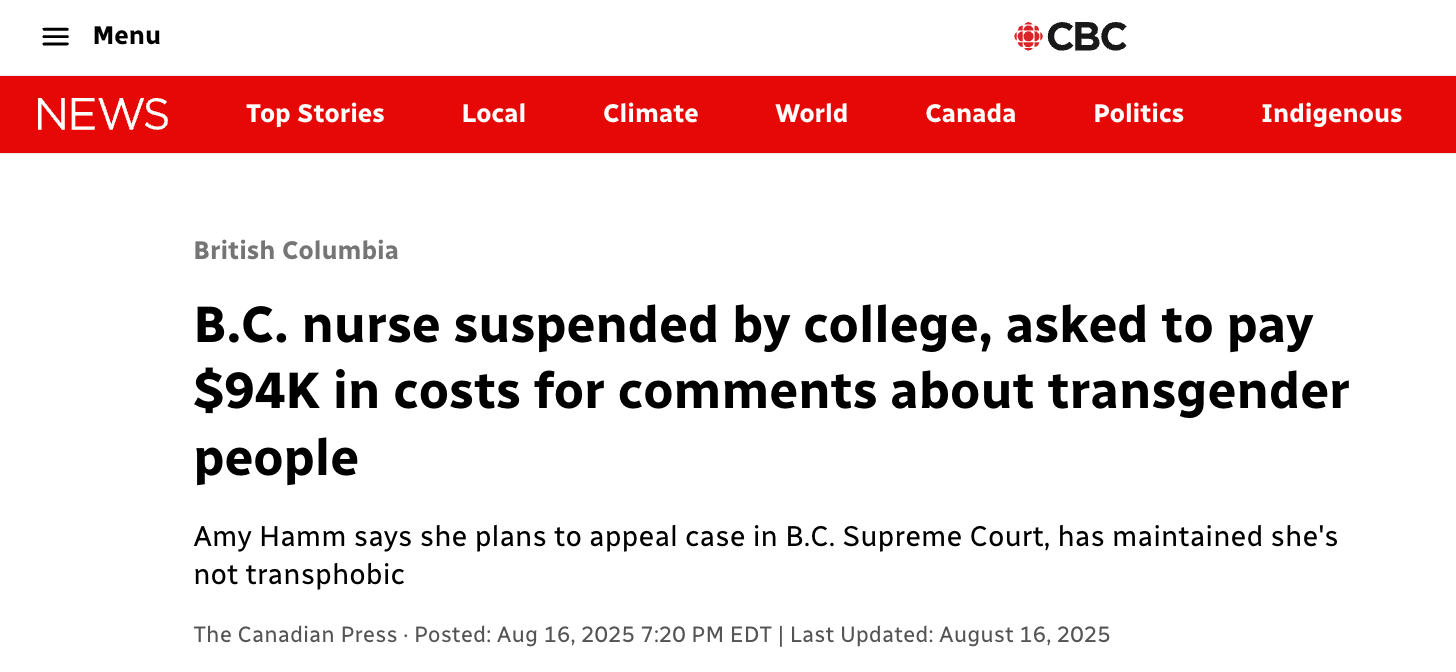
Consider the case of nurse Amy Hamm. While working as a nurse and educator in B.C., she was suspended and asked to pay $94,000 for making “discriminatory and derogatory statements” about transgender people. This case takes the issue out of the professional realm and into the personal.
In 2017, Jordan Peterson warned that amending the Criminal Code and Canadian Human Rights Act to include “gender identity” and “gender expression” would result in legal chaos. He argued that refusal to use someone’s preferred pronouns or denied and refused to acknowledge their gender identity, then the state could effectively compel individuals’ speech. While many legal scholars at the time argued this wouldn’t harm speech in everyday dialogue, the case of Amy Hamm clearly disputes that argument.
