



Why are western governments flooding their countries with immigrants? Why are housing markets collapsing under population growth? Why are social programs becoming more expensive? Why are governments becoming increasingly desperate to find new taxpayers?
Most people assume these are separate problems, but they’re not. They may all stem from a single issue that almost nobody wants to talk about: fertility collapse.
The reason why speaking about fertility is so controversial is because many say it leads to telling women what to do with their bodies. Assigning traditional duties to women is often seen as oppressive. I say “traditional duties” specifically because the feminist movement has made it perfectly fine to burden women with economic obligations like getting an education or a job, however traditional duties like getting married and having children have been demonized.

However, the fertility crisis is one that the world should not ignore considering many problems stem from it. At this point it is becoming harder to ignore an uncomfortable pattern across Western countries like Canada, the US and the UK: almost every major political crisis we are dealing with today—mass immigration, strained public services, housing pressure, wage stagnation, and even cultural fragmentation—can be traced back to the collapse of fertility.
It is not just a small decline either, but a sustained fall below replacement level that has now lasted long enough to fundamentally reshape how Western states function, finance themselves, and justify their own policies.
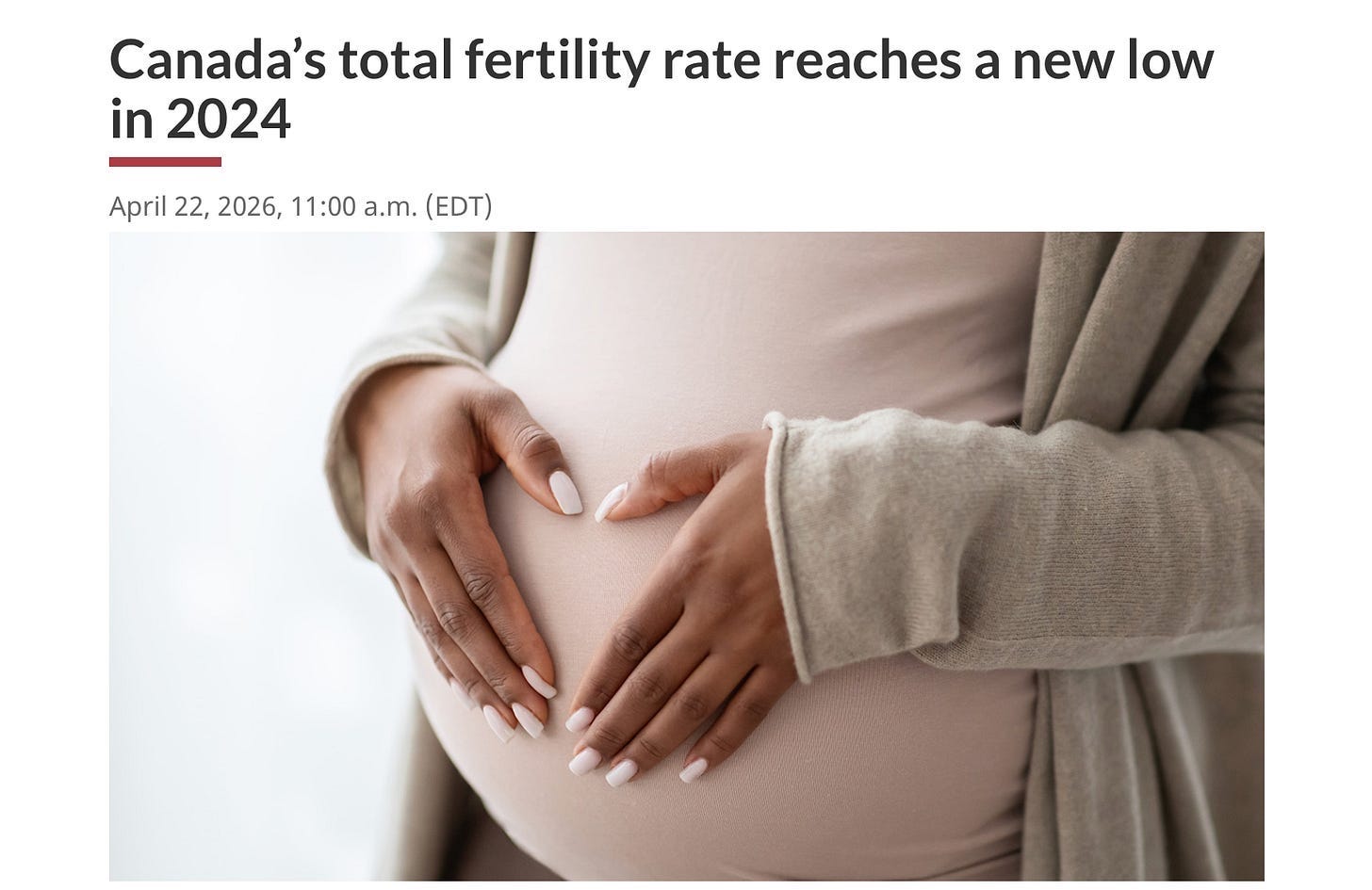
Canada currently sits at roughly 1.25 children per woman, replacement is 2.1. That gap is a structural deficit in population reproduction that compounds every generation. Once you understand that most Western governments rely heavily on continuous economic expansion, tax intake growth, and a stable working-age population to sustain their systems, the consequences start to stack up quickly.
A modern welfare state does not run on ideals, it runs on contributors and the problem is that the contributor base is shrinking.
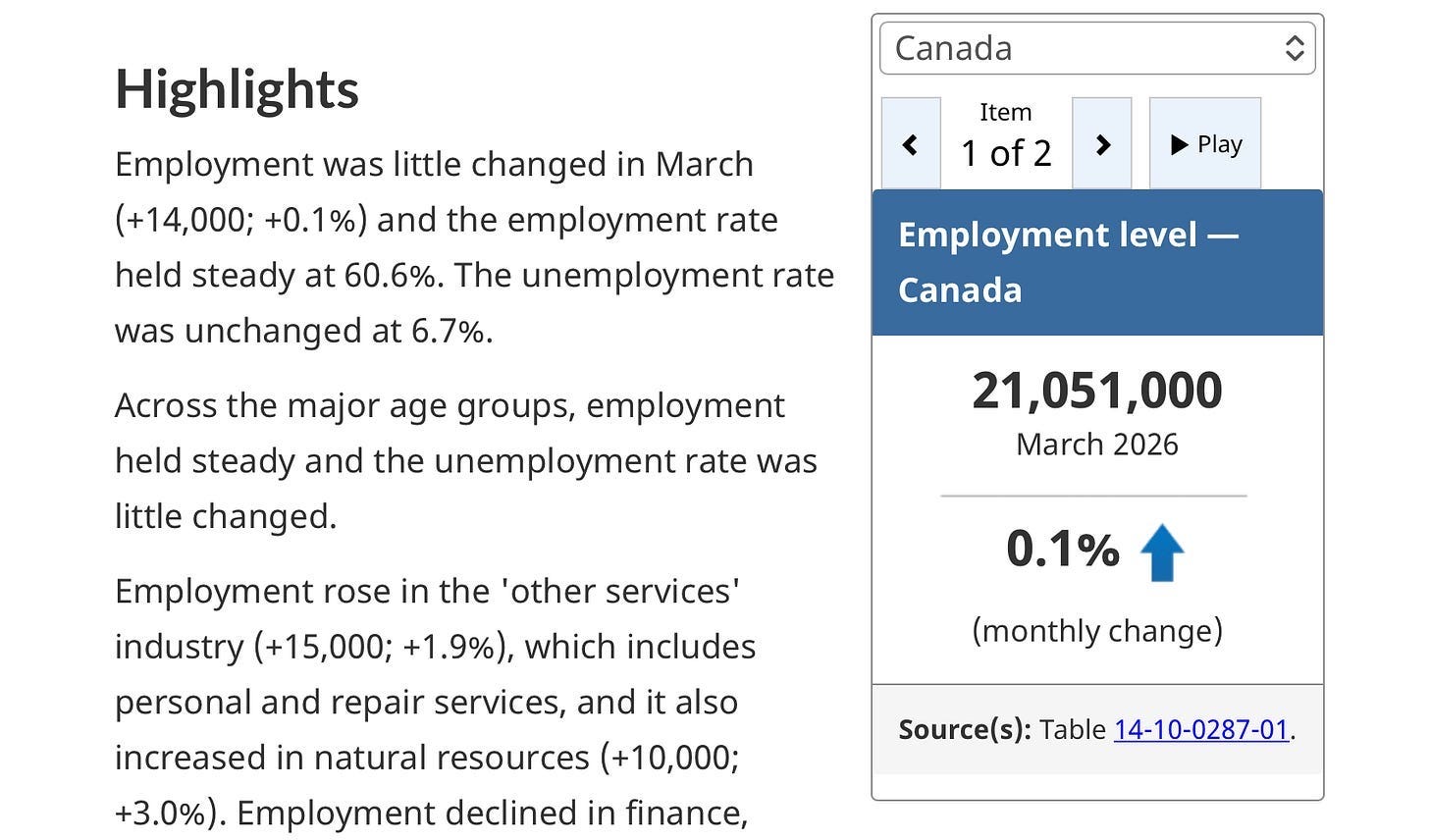
When you take a look at Canada’s current workforce you start to see the picture clearly. According to Stats Canada, there are a total of 21 million people employed in Canada currently. That means about half of the country is creating tax revenue to fuel the entire nation’s government spending. This alone is not ideal, especially since Canada has such a robust social state. However, when you remove part time workers the situation takes an even worse turn.
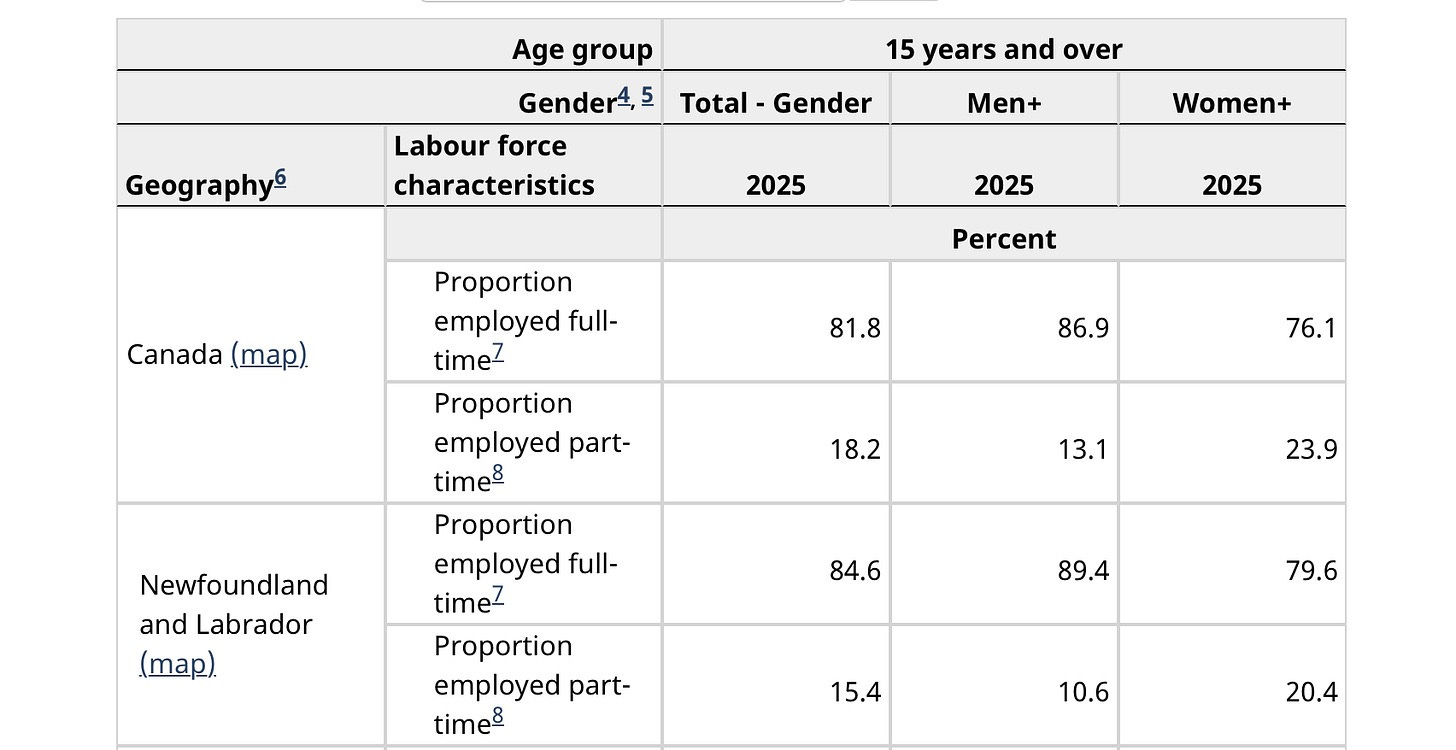
About 82% of Canada’s workers work a full time position. That is just over 17 million people working full time in a country of 41.5 million, which adds up to only 41.5% of people working a full time job in Canada.
With that we can conclude that more than half of Canadians are likely to be net beneficiaries when it comes to tax expenditures and it’s also likely that even many full time workers cost more than they contribute in terms of taxes.
When you include that Canada is losing high earners, capital and businesses then it starts to paint an even darker picture. So, it is not a stretch to say that most Canadians receive more in tax funded services than they pay.
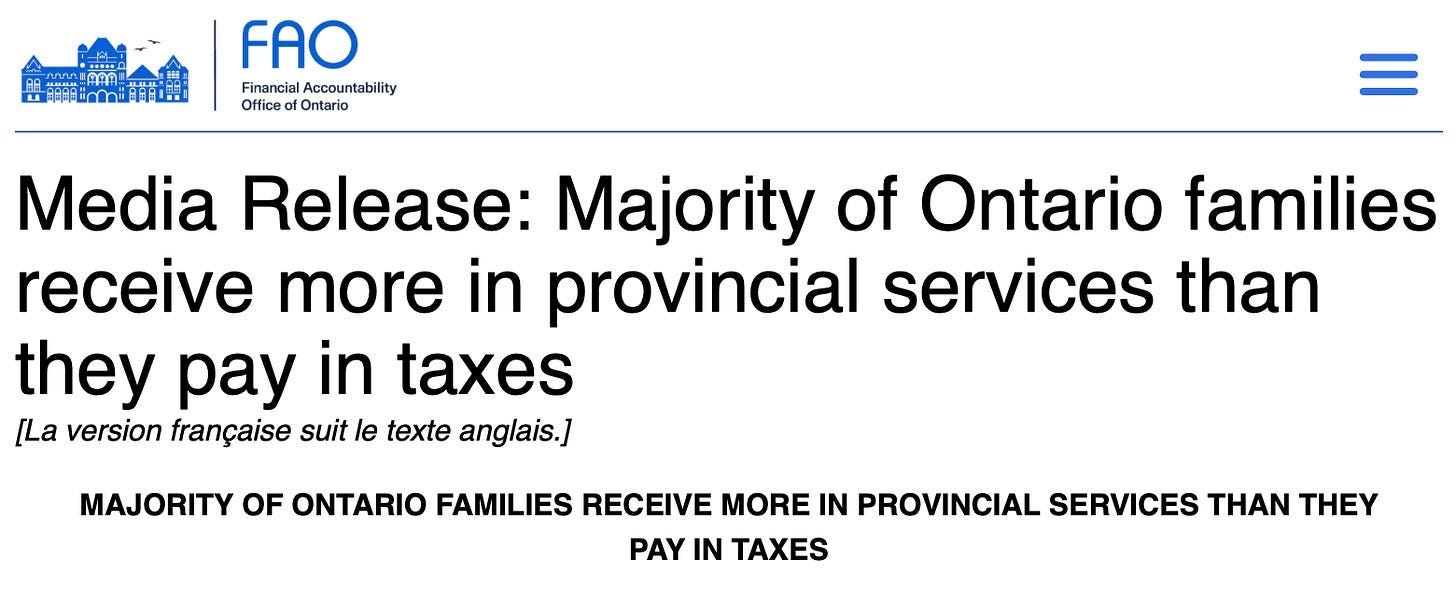
As a matter of fact, a study done by the Financial Accountability Office of Ontario already concluded this for Ontario families. They found that 60% of Ontario families were net beneficiaries of provincial services, 20% were neutral and only 20% were net contributors. Now imagine that on a national scale, if only 20% of people put in more than they take out, how is that a sustainable system?
We have built a system where most people take out more than they put in and it is unsustainable. Then when you consider how much government spending is bolstering the economy this becomes a problem you cannot ignore.
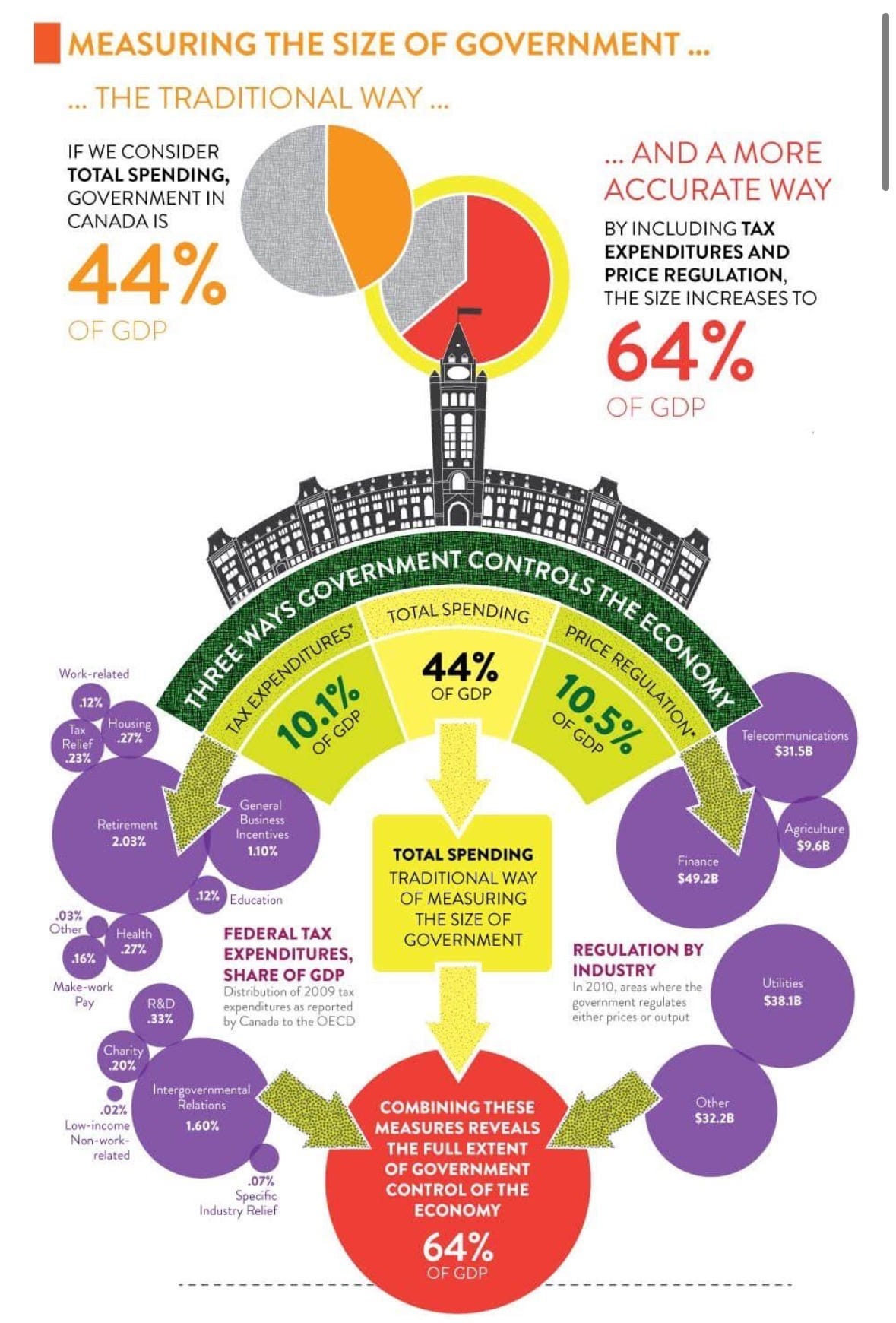
In Canada, government activity—when you include direct spending, tax expenditures, and regulatory influence—accounts for a large share of economic output, about 44-64% according to a study done by MacDonald Laurier. Estimates vary depending on measurement, but the broader point remains consistent: the state is not a passive referee in the economy, it is one of the largest participants in it.
So what happens when that system loses its demographic fuel source?
Well, you import it.
That is where immigration enters the picture, not as an ideological choice, but as a mathematical response to workforce shortages and fiscal pressure. If you have a shrinking base of working-age citizens supporting an expanding cohort of retirees and dependents, you only have a few options: reduce benefits, raise taxes, increase productivity dramatically, or bring in more workers.
Most governments choose the path of least immediate resistance, but this creates its own downstream effects. Mass immigration does not occur in a vacuum—it interacts with housing supply, wage levels, infrastructure capacity, and cultural assimilation speed.
When the scale is large enough, it does not just “add people” to a system, it reshapes the system itself. After all, immigrants do not just bring economic activity to a nation, they bring their traditions, languages and culture. This is where the public reaction starts to split.
Some people see immigration as a solution to labour shortages and fiscal imbalance. Others see it as destabilizing cultural cohesion and accelerating social fragmentation. Both perspectives often miss the upstream cause that forced the policy choice in the first place, a shrinking domestic population.
So the question becomes: why is fertility collapsing so broadly across advanced economies?
There are competing explanations—cost of living, housing prices, cultural shifts, changing values—but one variable stands out in cross-country data patterns: the expansion of higher education, particularly among women, and its correlation with delayed family formation and reduced lifetime fertility.
A 2022 paper in the Economics of Education Review examined the relationship between female educational attainment and fertility outcomes. While it does not claim a single causal story, it reinforces a consistent finding in the literature: as educational participation increases, fertility tends to decline, often through delayed childbirth and reduced total number of children.
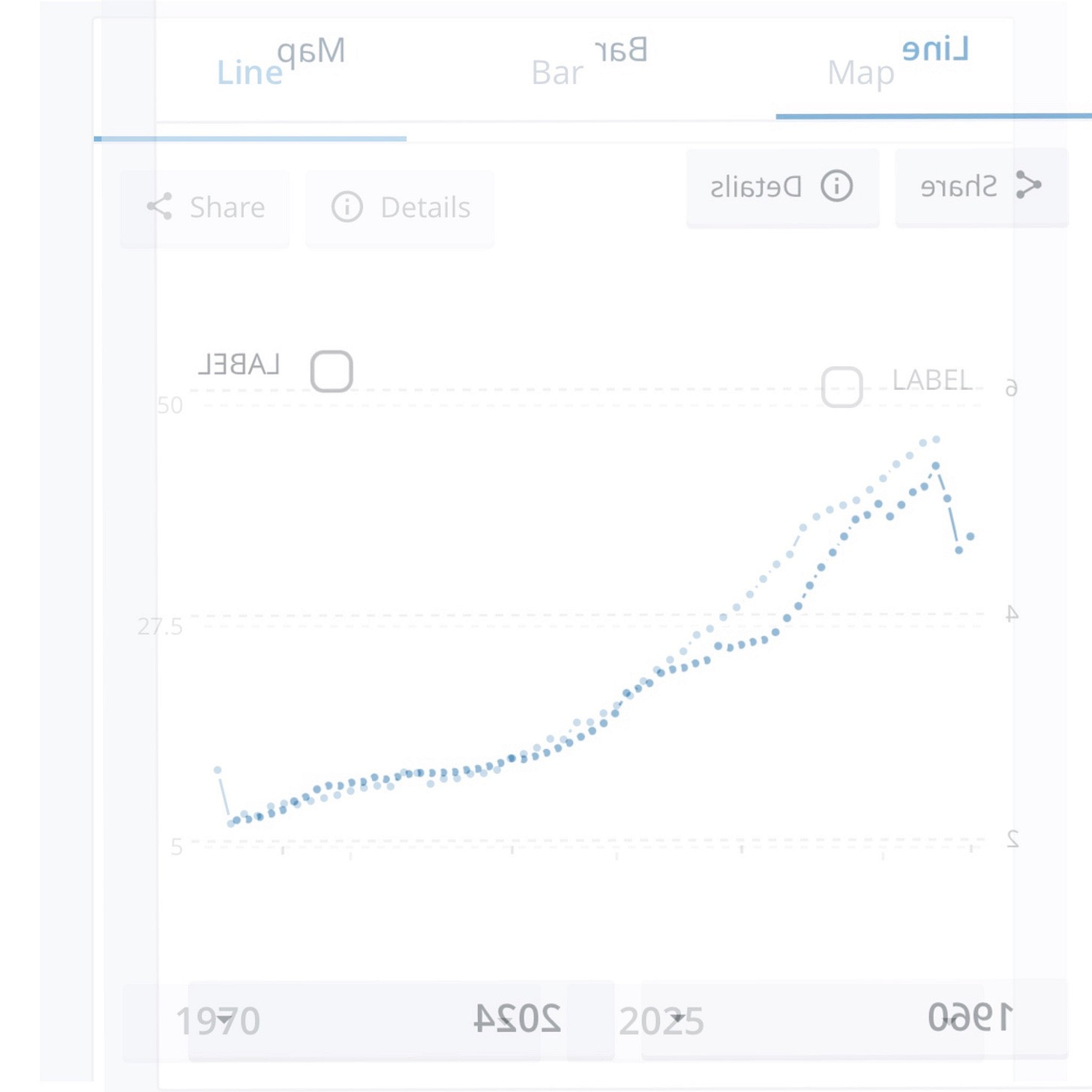
When you line up global maps of rising female higher education enrollment with global fertility decline over the same period, the directional pattern is difficult to ignore. They move in opposite directions across most developed regions over multiple decades.
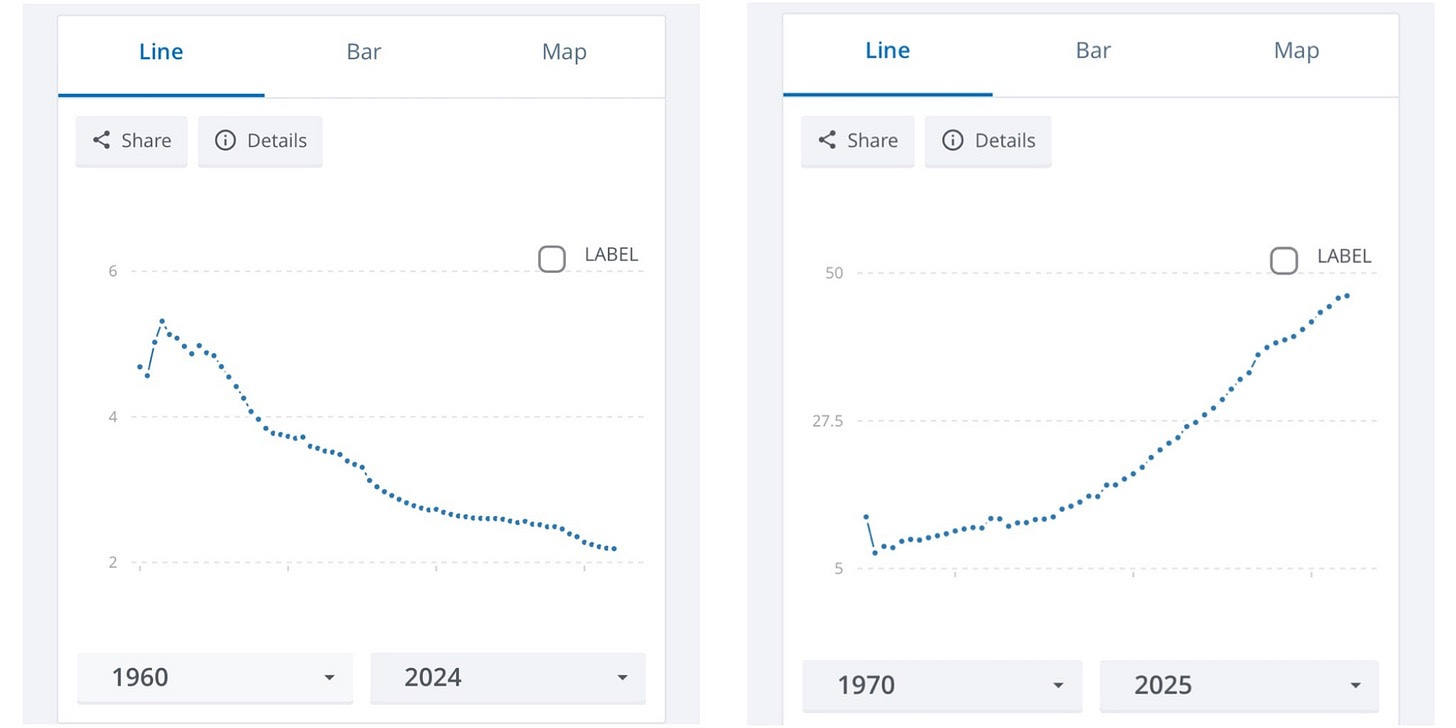
This is what those charts look like when they overlap, demonstrating that fertility falls at almost the exact same rate of higher education for women increasing.
Now the key question is not whether education is “good” or “bad.” That framing misses the point entirely. The real question is what kind of society you get when your most educated cohorts systematically delay or reduce childbearing while the economic system still depends on continuous population renewal to sustain itself.
That mismatch does not resolve itself, it compounds and governments are left managing the gap in real time. Which brings us back to immigration again.
If domestic fertility does not recover—and there is little evidence across OECD countries that it is rebounding to replacement levels—then maintaining current welfare structures requires external population inflows. Not as a preference, but as a constraint.
At that point, immigration policy stops being purely about cultural openness or border philosophy and becomes a form of demographic and fiscal maintenance.
However, this creates a political contradiction. The same populations that rely on expanded social programs are often the most resistant to the economic and cultural adjustments required to sustain them. Therefore, governments operating under electoral pressure are incentivized to preserve both conditions at once: high service provision and high population inflow to fund it.
That tension is not stable long term. It produces a slow structural drift where policy becomes reactive rather than strategic, and where demographic substitution is used instead of demographic recovery.
So what are the actual long-term options? In theory, there are only a few:
One, fertility rebounds significantly enough to restore population balance domestically. Although, based on the data that would require women prioritizing having children over education and career.
Two, productivity growth accelerates enough to decouple economic output from population growth. However, with Canada’s aging population, and shrinking economy that would take a lot of reduction to red tape and incentives.
Three, social programs contract to match a smaller tax base. Though this is political suicide, campaigning on reducing social spending will almost certainly get any politician to lose the base in which social spending reduction effects.
Or lastly option four, immigration continues to compensate for the gap indefinitely. However, many Canadians will continue to be outraged by the demographic and cultural changes of the nation.
The uncomfortable reality is that many of the political conflicts we are seeing today are downstream symptoms of this demographic imbalance rather than independent phenomena. Immigration debates, housing crises, fiscal strain, even cultural polarization—they are all interacting with the same structural constraint.
A population that is no longer reproducing itself at replacement level.
Once that becomes the baseline condition, almost every other policy debate starts to orbit around it, whether explicitly acknowledged or not.
The question is no longer whether this is happening, it is how long current systems can continue to absorb the consequences without completely collapsing.