


Good morning, it’s Friday, December 12th. In today’s news, Conservative MP Michael Ma crosses the floor to join the Liberal Party, an Ontario parent challenges school board over mandatory land acknowledgements, Europeans conquered the world for reasons we were never taught, a member of Canada’s military intelligence unit was charged with espionage, and much more.
First time reading the daily blend? Sign up here.

Conservative MP Michael Ma Crosses the Floor: Another Conservative Defection Puts Liberals on Brink of Majority
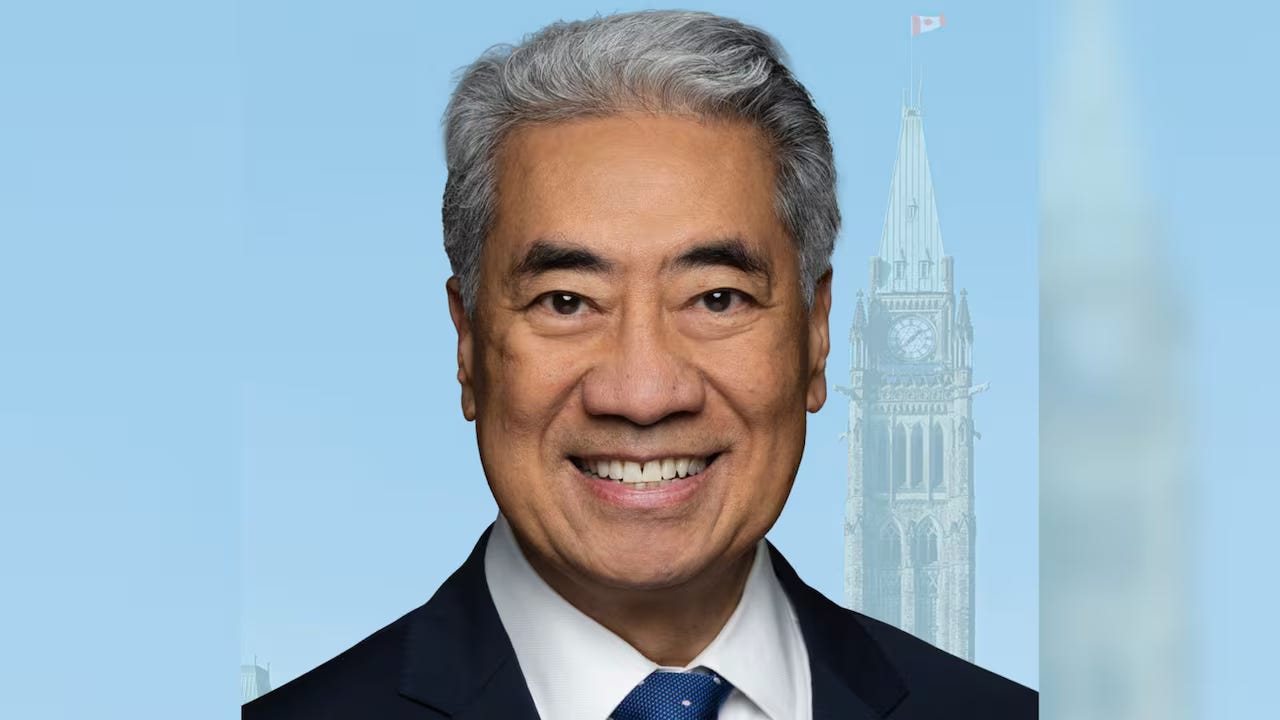
In a stunning political move, Toronto-area MP Michael Ma has crossed the floor from the Conservatives to join Prime Minister Mark Carney’s Liberal Party, citing alignment with Carney’s priorities on affordability, economic growth, community safety, and opportunities for young Canadians. Ma’s defection brings the Liberals to 171 seats in the 343-seat House of Commons, just one seat shy of a majority, significantly strengthening Carney’s position and reshaping the balance of power in Parliament. The move also lands a blow to Conservative leader Pierre Poilievre, who faces a leadership review next month.
Ma, who narrowly won Markham–Unionville for the Conservatives in the 2025 election, stunned colleagues and constituents alike. Only days earlier, he had publicly opposed the Liberals’ budget, attended Conservative events, and voted with his former caucus, making the sudden switch all the more surprising. With the Liberals now just a single seat short of a majority, Carney can more easily advance his legislative agenda without relying on other parties, fundamentally altering parliamentary dynamics.
The timing and context of Ma’s decision have sparked speculation about potential outside influence, including questions about whether this move could have been strategically supported by foreign powers like China’s Chinese Communist Party to strengthen the Liberal majority without an election. While there is no public evidence to confirm such influence yet, the defection has intensified debates about political strategy, loyalty, foreign interference, and the future direction of Canada’s government.
Ontario Parent Challenges School Board Over Mandatory Land Acknowledgements

The debate over land acknowledgements has often been painted as a fringe concern, but a new court case out of Waterloo shows the issue is much larger than one ritual. It goes to the core question of whether Canadians can be compelled to affirm political or spiritual claims they do not share — and whether parents still have any real say in how publicly funded schools are run.
Dr. Jeff Horseman, a lecturer at the University of Waterloo and a father with children in the local public system, has launched a judicial review against the Waterloo Region District School Board. His case is straightforward: school councils are required to begin every meeting with a land acknowledgement, and parents are barred from even discussing the rule. He argues this violates both freedom of conscience and freedom of expression under the Charter.
The board’s own communications make the policy plain. Officials told him that questioning “equity-focused initiatives,” including land acknowledgements, could “undermine the dignity” of certain groups and run afoul of the Human Rights Code. In practice, that means the board sets the rule, enforces the ritual, and forbids any debate about it.
School councils, however, were never meant to be treated as extensions of board ideology. In Ontario’s Education Act, they exist so parents can hold schools — and the board itself — to account. They are designed as arms-length bodies where parents raise concerns, shape priorities, and bring forward issues that are not always heard through formal channels. When a board steps in to dictate what must be said and what may never be said, that basic purpose is lost.
Horseman’s concern is not only the practice itself, but the way it forces parents to appear as if they agree. He sees the mandatory statement as a political and even spiritual claim about land, identity, and group rights. Being required to sit through it, without the chance to object or offer an alternative view, creates the appearance of consent where none exists.
The outcome of this case could reach far beyond Waterloo. Across Canada, parents have raised similar concerns about compelled speech in schools — from land acknowledgements to equity statements to rules that forbid questioning official narratives. A ruling here may set the first clear limits on how far publicly funded boards can go when enforcing beliefs.
Most of all, this dispute shows something simple: open discussion still matters. Public bodies may not always welcome debate, but without it, democratic oversight becomes a formality rather than a safeguard. This case asks the courts to decide whether that line has now been crossed. Source.
Why Europeans Conquered the World
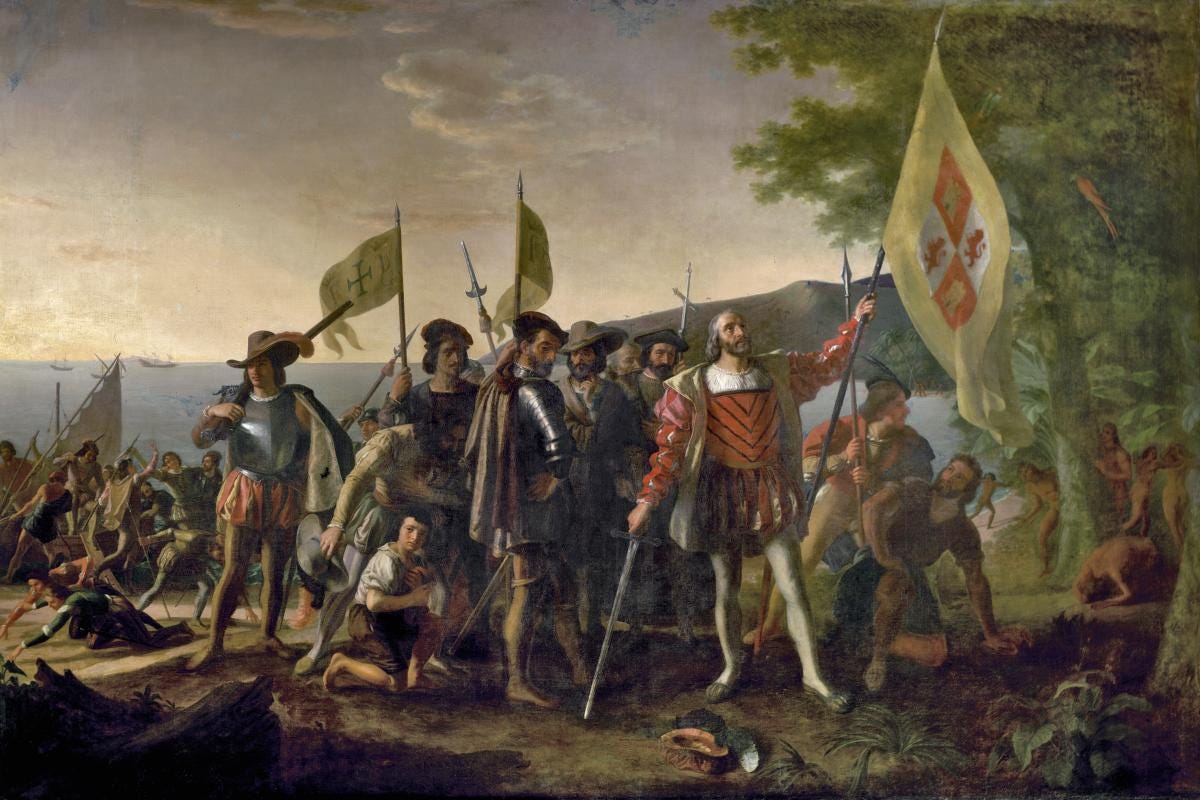
Why did Europe — a relatively small peninsula on the western edge of Eurasia — end up shaping so much of global history? The clearest answer begins with geography. Europe’s landmass stretches east to west, unlike others which run north to south. That single fact made the spread of agriculture and domesticated animals far easier across Europe’s similar climates, while other continents were divided by deserts, jungles, and drastic seasonal shifts.
Food production is the first step in building a civilization. When people can grow crops, store them, and rely on surplus, they’re freed from the constant demands of hunting and gathering. That shift unlocks everything that follows: specialized work, innovation, metalworking, written language, complex government, and standing armies. Societies without easily domesticated crops or beasts of burden stayed smaller, more dispersed, and less able to coordinate on a large scale.
Domesticated animals also brought something unintended: disease. Living alongside livestock exposed Europeans to smallpox, measles, and influenza for thousands of years, slowly building population-level immunity. When Europeans crossed the oceans, Indigenous peoples had no such defences. Estimates vary widely by region, but the overwhelming majority of Indigenous deaths during colonisation came from germs, not war. Some historical estimates suggest that disease accounted for nearly ninety percent of Indigenous deaths during the colonial period.
Geography shaped political competition as well. Europe’s dense cluster of rivers, ports, and neighbouring states encouraged constant trade and rivalry. If one kingdom developed better ships or stronger steel, the others either matched it or fell behind. Large, isolated empires such as China could flourish for centuries but also stagnate without the same external pressure.
By the time Europeans began exploring the world, they possessed steel weapons, ocean-going ships, gunpowder, bureaucratic systems, and hardened immunity. Many of the societies they encountered did not. European conquest wasn’t the product of a uniquely evil culture — it was human nature expressed at scale by a civilization with unusual geographic advantages. Any group with those same resources would likely have done the same.
But there was also a cultural twist. Between the 6th and 12th centuries, the Catholic Church imposed strict marriage rules: no cousin marriage, no clan marriage, no large-kin alliances. This dismantled Europe’s old tribal structure. While it increased out-marriage and reduced inbreeding, its deeper effect was social. Without strong clans, Europeans built voluntary institutions — universities, monasteries, merchant networks, courts, and cities — that rewarded cooperation with strangers rather than loyalty only to kin.
Weak tribes made strong states possible. Strong states fostered markets, literacy, innovation, and the rule of law. These weren’t perfect societies, but they had fewer barriers to scale, growth, and trust. And in the long sweep of history, those conditions helped Europe move outward — reshaping the world long before the world could push back.
This passage was largely inspired by Guns, Germs, and Steel by Jared Diamond

Member of Canadian Military Intelligence Unit Charged With Espionage
Master Warrant Officer Matthew Robar of the Canadian Forces was arrested on Dec. 10 for allegedly passing intelligence to an unidentified foreign entity. He faces eight charges under the Foreign Interference and Security of Information Act, including communicating special operational information to a foreign actor. The investigation, which began in 2024, was conducted jointly by the Canadian Forces Military Police and the RCMP, and the case will be prosecuted through a court martial.
Under section 17(1) of the Foreign Interference and Security of Information Act, communicating “special operational information” to a foreign entity is an indictable offence punishable by life in prison. More
US Proposes Donbas “Free Economic Zone” as Part of Ukraine Peace Talks
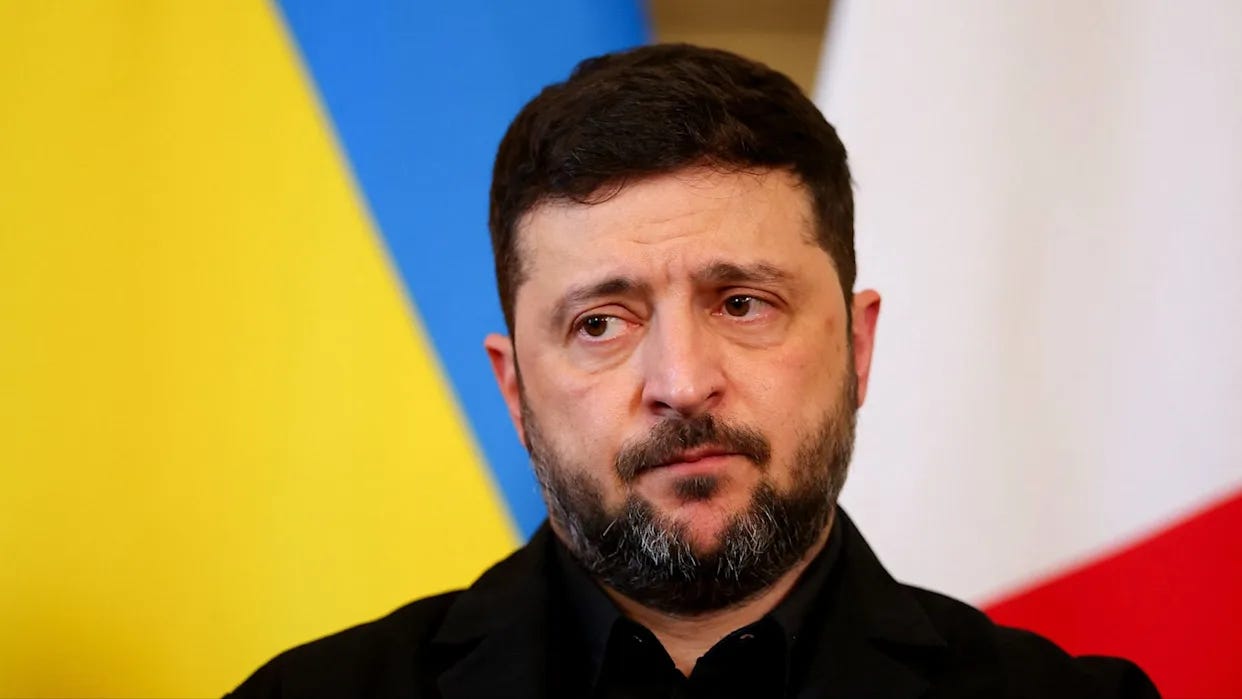
Ukraine’s President Volodymyr Zelenskyy said the US has proposed a compromise in which Ukraine would withdraw troops from the Donbas, creating a “free economic zone” in areas Kyiv currently controls, while Russian forces would not advance. Zelenskyy stressed that any deal must be fair, include local approval through elections or a referendum, and address key issues such as control of the Zaporizhzhia nuclear plant. Zelenskyy also expressed concern that Russia could seize the territory after a peace deal and said Ukraine is seeking guarantees to prevent that from happening.
The proposal is part of broader efforts to negotiate a peace framework, with Washington pushing for progress, European leaders urging that Ukraine itself must decide on territorial concessions, and ongoing discussions around security guarantees and economic rebuilding shaping the overall peace process. More
Thailand-Cambodia Border Clashes Enter Third Day as 500,000 Flee Fighting—Canada Issues Serious Travel Advisory - More
US Considers Hitting UN Palestinian Refugee Agency (UNRWA) with Terrorism-Related Sanctions - State Department official says ‘everything on the table,’ but no final decision has been made, slamming the UN agency as a ‘corrupt organization with a proven track record of aiding and abetting terrorists.’ More
Bulgaria’s Government Resigns After Weeks of Protests as Eurozone Entry Nears - The resignation follows surging protests over taxes, corruption, and oligarchic influence in Bulgaria as the country heads into a volatile political period. More
1.9 Million Illegal Immigrants Self-Deported Under Trump Admin in 2025 - The DHS arrested another 605,000 illegal aliens who had not self-deported, bringing the total to roughly 2.5 million. More
EU and Ukraine Agree to 10-Point Plan to Speed up Kyiv’s Accession Bid Despite Hungary’s Veto - More
FBI Says Seized Oil Tanker Near Venezuela Was Supporting Terrorist Groups - Iran’s embassy in Caracas condemned the move as a ‘grave violation of international laws and norms.’ More

Disney Teams Up With OpenAI in Billion-Dollar Deal

Disney is investing $1 billion in OpenAI under a three-year licensing deal to create AI-generated videos for Disney+ starting in early 2026. Using OpenAI’s Sora tool, Disney will stream curated AI content and allow fans to make short films featuring over 200 iconic characters—without using actors’ likenesses or voices. The partnership also aims to develop new tools and experiences for streaming, marking Disney as the first major content partner to license OpenAI’s video-generation technology. More
Mexico Approves Tariffs of up to 50 Percent on China, and Others - The new tariffs will take effect next year and apply to countries that don’t have a free-trade agreement with Mexico. More
Debt Keeps Climbing: Canadians Owe $1.77 for Every $1 of Disposable Income - Statistics Canada reports that the debt-to-disposable-income ratio rose to 176.7% in Q3, marking the fourth consecutive quarterly increase and signaling growing financial strain for households. More
Musk Hints at a SpaceX IPO in 2026 at a $1.5 Trillion Valuation—The Highest in History - More

The “Sixth Mass Extinction” Might Be a Myth

A new University of Arizona study challenges the idea that Earth is in a rapidly accelerating mass extinction. Researchers Kristen Saban and John Wiens found that extinction rates actually peaked about a century ago—mainly on islands due to invasive species—and have declined since. Today’s biggest threats, like habitat destruction on continents, differ from past drivers, meaning historical patterns don’t reliably predict current risks. While biodiversity loss remains serious, the study suggests extinction rates aren’t spiraling out of control, and conservation efforts are making a difference. More
Millions With Anxiety Share One Striking Brain Chemistry Difference - Researchers analyzing data from 25 studies have found that people with anxiety disorders consistently show lower levels of choline, an essential nutrient involved in brain signaling and emotional regulation. More

Time Magazine Names ‘Architects of AI’ as Its Person of the Year for 2025
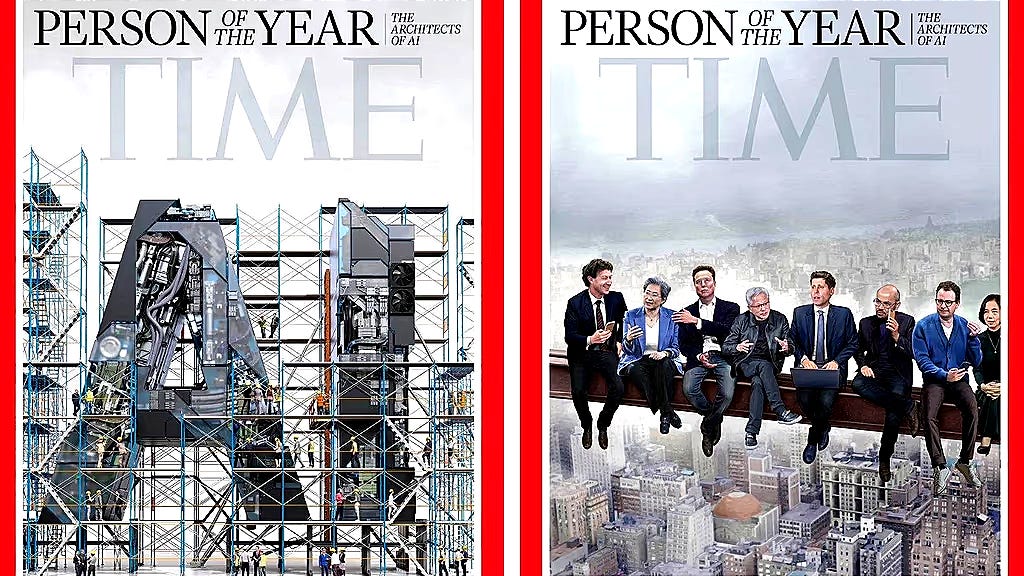
Time magazine has named the “Architects of AI” its 2025 Person of the Year, recognizing the tech leaders and innovators who have driven artificial intelligence into the mainstream this year. The feature highlights figures like Jensen Huang (Nvidia), Sam Altman (OpenAI), Elon Musk (xAI), Mark Zuckerberg (Meta), Lisa Su (AMD), Demis Hassabis (DeepMind), Dario Amodei (Anthropic), Fei‑Fei Li (Stanford), and investors such as Masayoshi Son (SoftBank). Time praised these individuals for shaping the technology, funding its growth, and influencing how AI is transforming society—sometimes in ways that both awe and alarm. More
FIFA Accused of ‘Monumental Betrayal’ Over Latest World Cup Ticket Prices -
The cost for Canada’s June 12 match in Toronto ranges from $1,300 to $3,035. More
Michael Jordan Prevails in Settlement of Antitrust Lawsuit Against NASCAR - The attorney representing Jordan’s 23XI Racing and Front Row Motorsports told Judge Kenneth Bell that the parties had reached a settlement Thursday “in a way that will benefit the industry going forward.” More
Robert Munsch Says He has Written Dozens More Children’s Books that Will be Released After He Dies by MAID - More

An Ontario Woman Has Been Accused of Being a Serial “Jellycat Burglar” After Police Seize $7,000 Worth of the Popular Plush Toys
A Canadian Museum CEO Had to Step Down After She was Reported for Calling Employees a Bunch of ‘Sluts’
On This Day in 2000, the US Supreme Court issued its 5–4 ruling in Bush v. Gore, ending the disputed Florida recount and confirming George W. Bush as the winner of the 2000 presidential election over Al Gore.
CROSSING THE FLOOR SHOULD NOT BE LEGAL? If an MP changes their mind-- they can step down!! How IS THIS DEMOCRATIC? So an individual MP GETS TO OVERRIDE THE VOTES OF HUNDREDS OF THOUSANDS OF PEOPLE?????🤮🤮🤮🤮
There should be a recall and a new election. These voters voted conservative NOT liberal. It should be criminal to cross the aisle. This government is a sick joke perpetrated on the electorate. Heaven help us...🙏🏻