



The Liberal government has a bad—and I believe intentional—habit of introducing legislation framed as ensuring safety, but which ultimately gives the government excessive power to take away the freedoms of Canadians.
I see these laws as a kind of “Trojan horse,” based on the story of the Greek warriors in the Trojan War. Disguised as a gift, with the aim of lowering the guard of the receiver, what appears harmless on the outside can conceal a much greater threat within. When you finally look inside, you may find something far more dangerous than expected, such as, the fall of a nation like the story depicts.
Recent developments suggest these Liberal Trojan horse bills may no longer need to be hidden. They may now pass into law with little resistance, whether it is what Canadians voted for or not.
At this point, it appears increasingly likely that Mark Carney’s Liberals will secure a majority government—not through a fair and free election, but with the help of floor crossers from the Conservative and NDP parties.
His government currently holds 170 seats, with three by-elections approaching. If the Liberals win two of those three races—which appears likely—they will reach the 172 seats required for a majority. With that, they will be able to pass any legislation they wish, provided it is approved by the Senate.

The floor crossing of NDP MP Lori Idlout has effectively ensured a Liberal majority government. Two of the three ridings in the upcoming by-elections are already Liberal strongholds.
Bill Blair was the former MP for the riding of Scarborough Southwest. He resigned after being appointed High Commissioner to the U.K. on February 2. In the last election, his riding voted 61.5 percent Liberal, while the Conservative candidate received only 30.6 percent.
It is reasonable to expect the riding will vote in a similar way in the upcoming by-election, securing that seat for the Liberals.

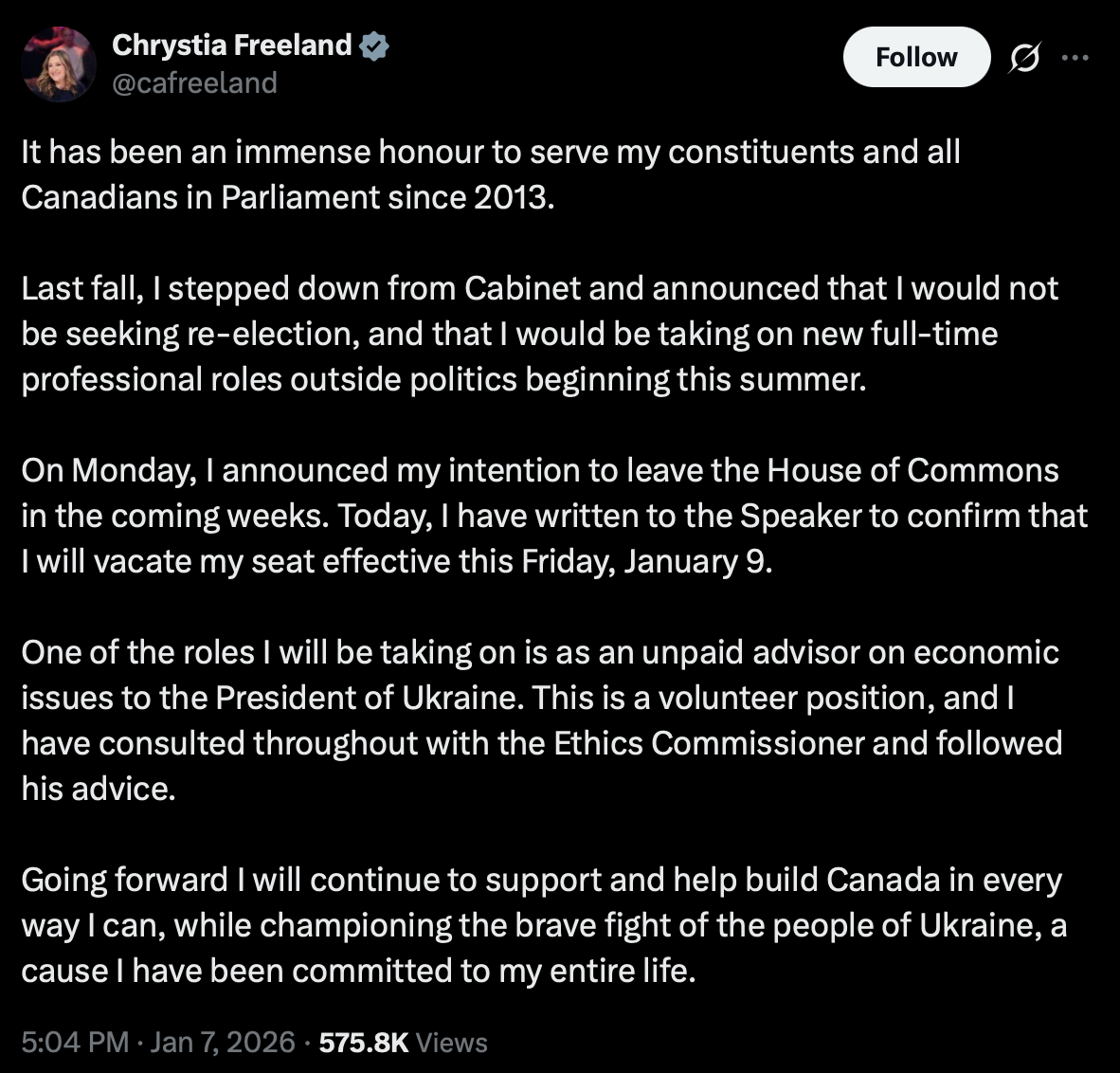
Chrystia Freeland resigned to take an unpaid role as an adviser on economic issues to the president of Ukraine. It seems the Liberals have made a tradition of failing upwards.
Her riding of University–Rosedale voted 64 percent Liberal, with the Conservatives a distant second at 23.5 percent.
These are the only two ridings the Liberal government needs to secure a majority, and it is reasonable to expect that is exactly what it will get.
After these by-elections, Canada will be governed by what I consider an illegitimate Liberal majority government. Based on the bills they have already attempted to pass, we may move toward something resembling totalitarianism very quickly.
In light of these developments, it is worth revisiting some of the laws and amendments that were only altered or failed to pass because the Liberal government lacked a majority. It is very likely these measures will be reintroduced and passed once the government secures one.
Each of these laws represents, in my view, a reduction in privacy, security, and freedom for Canadians.
Bill C-8 was poised to be one of the most devastating laws because of the sweeping powers it would place in the hands of the Minister of Industry. It would give the minister the authority to direct telecommunications service providers to do anything—or refrain from doing anything—deemed necessary to “secure” the Canadian telecommunications system.
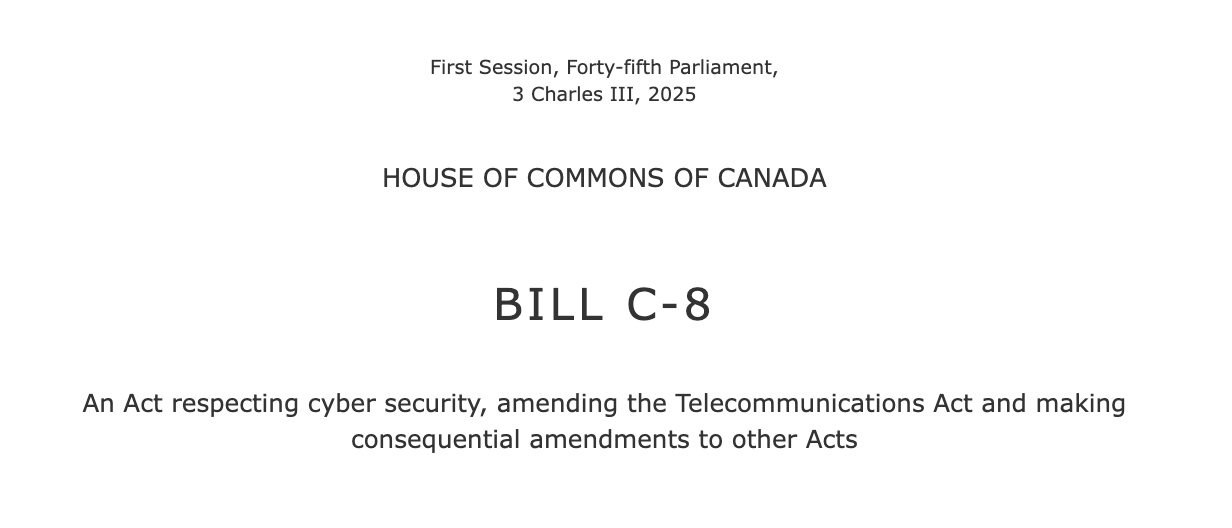
The bill was framed as a necessary step to increase safety for Canadians, but critics argue that, upon closer examination, it would allow the government to decide who can and cannot access telecommunication services in Canada.
If this law passes as written, wireless services in Canada, in any form, could effectively be placed under complete government control.
In this case, the bill would allow the government to force a telecommunications service provider to stop providing services or products to any person the minister deems a threat. This would give the government the ability to remove anyone from internet, telephone, or satellite services.
It would also allow the government to prevent telecommunications providers from receiving products or services from certain individuals or businesses, giving it significant leverage and control over the telecommunications industry.
Anyone who goes against these orders could face serious fines. For individuals, penalties could range from $25,000 to $50,000. In other cases, fines could reach $10 million to $15 million.
In theory, this would give the government powers similar to those seen in China over businesses operating within its borders, where industries can be crippled at any time.
It is no surprise that this bill alarmed many Canadians and led other parties to vote against it. Once the Liberals achieve a majority, however, those parties will no longer have the numbers to meaningfully block such legislation.
For instance, if this bill had been in effect during COVID, businesses that tried to keep operating after being ordered to shut down might not have posed much of a problem for the government. It could have been as simple as cutting off their phone lines and internet access, making it extremely difficult for those businesses to continue operating.
Not only has the government proposed laws that could financially cripple companies and individuals, it has also introduced legislation that could give certain businesses an overwhelming economic advantage.
