

Good morning, it’s Tuesday, October 28th. In today’s news, Carney approved Ford’s anti-tariff ad while pivoting Canada toward China, a 50-year Chinese Communist Party influence operation is still shaping Canada today, Canada’s trucking system is dangerously broken, the Liberals currently lack the necessary votes to pass their federal budget, and much more.
First time reading the daily blend? Sign up here.

Mark Carney’s Calculated Maneuver: Approving Anti-Tariff Ads to Pivot Canada Toward China
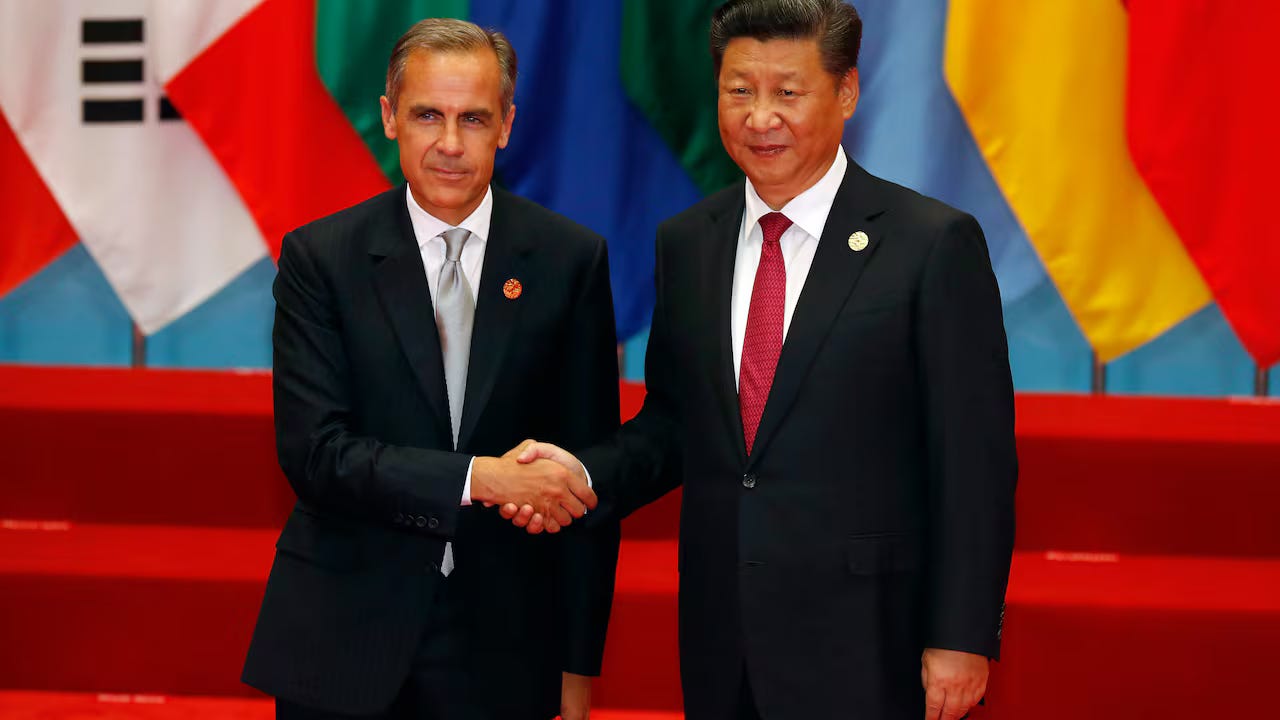
In the high-stakes world of international trade, actions often speak louder than diplomacy. Recent developments suggest Canadian Prime Minister Mark Carney deliberately strained relations with the United States to create political and economic cover for a renewed partnership with China.
By greenlighting provocative anti-tariff ads aimed squarely at American audiences, Carney appears to have intentionally provoked US President Donald Trump—triggering retaliatory tariffs, the collapse of trade talks, and a sudden opening for a “reset” with Beijing.
The Anti-Tariff Ads: Carney’s Fingerprints All Over It
The controversy began when Ontario Premier Doug Ford revealed the federal government’s involvement in a series of US-aired advertisements invoking former President Ronald Reagan to argue against tariffs on Canadian goods. The ads sought to rally American public opinion against Trump’s proposed duties by highlighting Reagan’s legacy as a champion of free trade.
At a press conference, Ford disclosed that both Carney and his chief of staff had reviewed the ads in advance.
“He saw the ad before I put it out, so did his chief of staff,” Ford said. “They both saw it and we moved forward on it.”
Ford then claimed victory for the campaign:
“We achieved our goal. You know, mission accomplished. It was done. They’re talking about it in the US, and they weren’t talking about it before. I’m glad that Ronald Reagan was a free trader.”
This admission directly implicates Carney in approving the ads—ads that the Trump administration perceived as antagonistic and disrespectful. Far from being a rogue provincial effort, the federal blessing suggests coordination at the highest levels to stir tensions that could derail ongoing negotiations.
The US Backlash: Tariffs and a Diplomatic Snub
The campaign achieved its “goal,” but at a steep cost. Within days, Trump announced a 10 percent tariff increase on Canadian imports and canceled scheduled trade talks.
Aboard Air Force One, Trump made his stance crystal clear:
“I don’t want to meet with him, no. I’m not going to be meeting with him for a while.”
Carney’s public response to the snub was revealing. Speaking to reporters, he acknowledged the stalled talks but struck a tone of self-reliance:
“We stand ready to sit down with the United States… If they’re not ready to do that, as those comments indicate, then we first and foremost build our economy with generational investments.”
He added that Canada was seeing “very much traction” with other partners—signaling a pivot already underway.
The China Pivot: Rebuilding Bridges in Beijing
With US relations in tatters, Carney quickly turned east. He is set to meet with Chinese President Xi Jinping at the upcoming APEC summit—the first such encounter since diplomatic ties soured in 2018 over Huawei and the detention of two Canadians.
Following a recent meeting with Chinese Premier Li Qiang, Carney described it as “the start of a broader discussion,” adding:
“Relationships rebuild over time when they have changed for the worse. And so we have a lot of areas on which we can build.”
Carney has since signaled openness to lifting restrictions on Chinese investment, pursuing a full free trade agreement, and potentially rolling back tariffs on Chinese electric vehicles—even as Beijing maintains steep duties on Canadian canola, steel, and aluminum.
“China is Canada’s second-largest trading partner, the second-largest economy in the world, and one of the most influential nations on the world stage,” Carney said, underscoring his eagerness to “reset” ties.
Connecting the Dots: A Manufactured Crisis, a Convenient Excuse
The sequence of events paints a compelling picture. Carney’s approval of the Reagan-themed ads provoked Trump, triggering tariffs and a diplomatic freeze that now serve as justification for deepening ties with Beijing.
Doug Ford’s “mission accomplished” remark, coupled with Carney’s emphasis on “generational investments” and “traction with other partners,” suggests the fallout wasn’t accidental—it was strategic.
While Carney maintains a tough public posture—what he calls going in “elbows up”—the evidence points to a calculated move to shift Canada’s economic future toward China, under the guise of American hostility.
As tariffs bite and trade with the US falters, one question lingers: Whose interests is Mark Carney really serving—Canada’s, or China’s?
China’s Long Game with Canada: How a 50-Year Influence Operation Still Shapes Ottawa Today
As Canada drifts further from the United States and closer to China, it’s easy to see Mark Carney’s pivot as a matter of short-term politics. But viewed through the lens of journalist Sam Cooper’s reporting for The Bureau and historian Dennis Molinaro’s groundbreaking research, it becomes clear this isn’t a new strategy—it’s the continuation of a decades-long operation that began when Pierre Trudeau was still an idealistic scholar and Mao Zedong was cementing his rule in China.
In his book Under Assault: Interference and Espionage in China’s Secret War Against Canada, Molinaro reveals how Paul Lin, a University of British Columbia scholar turned agent of influence, became a trusted operative for Zhou Enlai—the Chinese premier who pioneered the Communist Party’s “United Front” strategy. Lin’s mission, RCMP files show, was simple but devastatingly effective: cultivate Canadian elites, win over Pierre Trudeau, and break Canada from the orbit of the United States.
Declassified intelligence records cited by Molinaro and detailed by The Bureau show that Lin was identified by the RCMP Security Service as an “agent of influence” directly linked to the Central Committee of the Chinese Communist Party. His job wasn’t espionage in the Hollywood sense—it was relationship-building, ideology-shaping, and “talent spotting” among Canada’s academic and political class. In modern terms, he was Beijing’s original influencer.
Beijing’s goal, as Molinaro outlines, was to use Canada as a wedge—“a friend in America’s backyard,” as Mao himself is quoted as saying when Ottawa recognized the People’s Republic in 1970. That recognition, Molinaro argues, was the CCP’s first successful foreign interference operation in the West. What began as ideological courtship soon evolved into a complex web of business and political ties that would stretch from Zhou Enlai’s study in Beijing to the boardrooms of Power Corporation in Montreal.
The RCMP’s files went even further, tracing early cooperation between Chinese intelligence, organized crime, and the Toronto consulate, where officials allegedly helped forge passports for human traffickers and Chinese nationals. It was a warning sign that Canada had become both a testing ground and a gateway.
Molinaro’s thesis is chilling in its simplicity: the subversion of Canada was not a one-off—it was a model. Every act of interference since has followed the same script: cultivate elites, co-opt institutions, and turn Canada into a compliant partner.
When Justin Trudeau told a Shanghai audience in 2016 that “the success of the world is inexorably linked to China’s success,” he wasn’t just echoing globalist rhetoric. He was speaking from within the architecture that Paul Lin helped build half a century ago.
When you consider that Mark Carney approved Doug Ford’s ad campaign—the one that abruptly derailed trade talks with the United States—and now hopes for a “relations reset” with the Chinese Communist Party, the pattern becomes unmistakable. This isn’t an isolated misstep; it’s the latest chapter in a fifty-year story of political subversion. History, it seems, isn’t just repeating—it’s collecting dividends. Source.
The Dangerous Consequences of Canada’s Broken Trucking System
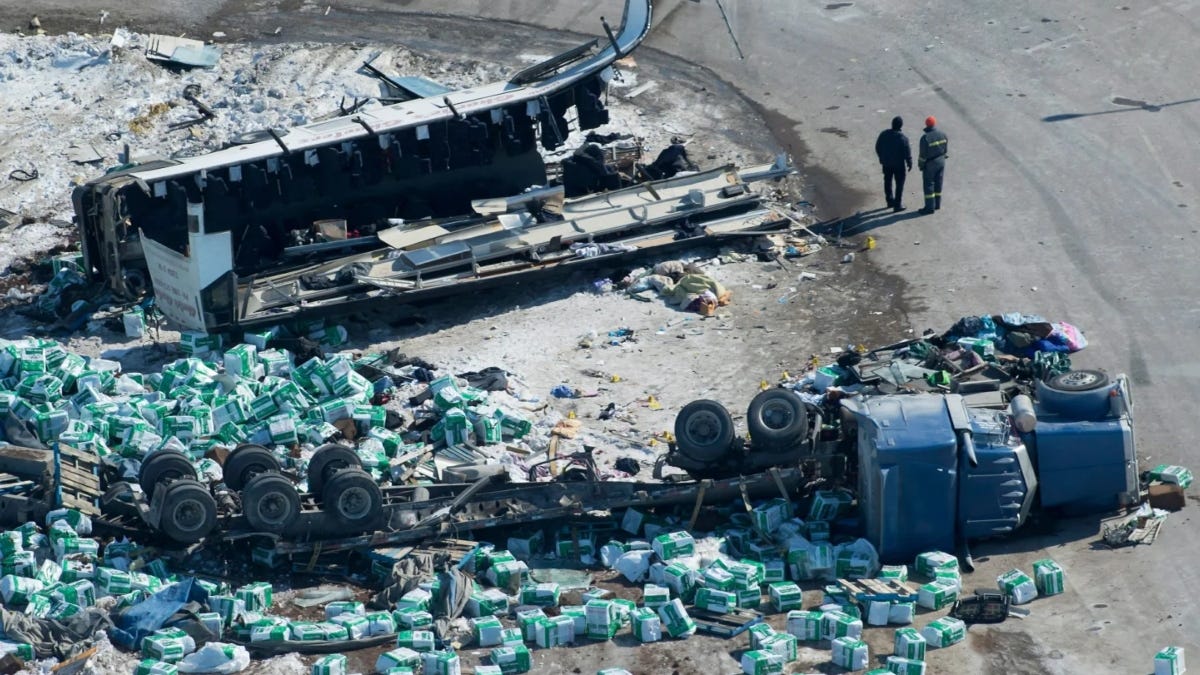
Over the past decade, Canada’s trucking industry has quietly become a microcosm of the country’s broader decline — one where immigration policy, weak enforcement, and bureaucratic cowardice collide at high speed. Across provinces, crashes involving commercial trucks have surged, yet governments seem unwilling — or unable — to even ask the most basic questions about why.
The issue isn’t simply bad drivers. It’s a system that has allowed corruption, negligence, and exploitation to thrive under the banner of diversity and labour shortage solutions. Since the 2018 Humboldt Broncos tragedy, in which 16 young Canadians were killed by a newly licensed trucker from India, officials promised sweeping reforms. But six years later, the headlines look the same — fatal crashes, falsified logbooks, bribed licensing exams, and drivers with fraudulent credentials still behind the wheel.
Some provinces introduced so-called “Mandatory Entry Level Training” programs to raise standards, but enforcement has been spotty and riddled with loopholes. Ontario’s system, for instance, has been marred by test fraud and kickbacks, while in Alberta, several corrupt schools were shut down only after years of complaints. Meanwhile, provincial and federal agencies admit they don’t even track safety data by driver nationality — a statistical black hole that ensures no one can ever be held accountable.
Contrast this with the United States. When a foreign driver caused multiple deaths in Florida this summer, American authorities responded swiftly: charges were laid, visa programs were suspended, and new safety rules were rolled out within days. In Canada, similar tragedies are followed by commissions, consultations, and silence.
What’s emerging is a dangerous two-tier system — one where political sensitivity trumps public safety. Regulators are hesitant to confront the uncomfortable fact that Canada’s over-reliance on temporary foreign labour has created perverse incentives: trucking schools that churn out barely qualified drivers, companies that cut corners to meet quotas, and a federal government that refuses to connect immigration and road safety out of fear of being called xenophobic.
Ordinary Canadians pay the price — in higher insurance costs, more dangerous highways, and grieving families. Until Ottawa and the provinces gather real data, enforce real standards, and stop treating trucking like a social experiment, the question isn’t if another Humboldt will happen, but when. Source.

Minority Liberals Currently Lack Necessary Votes to Pass Federal Budget
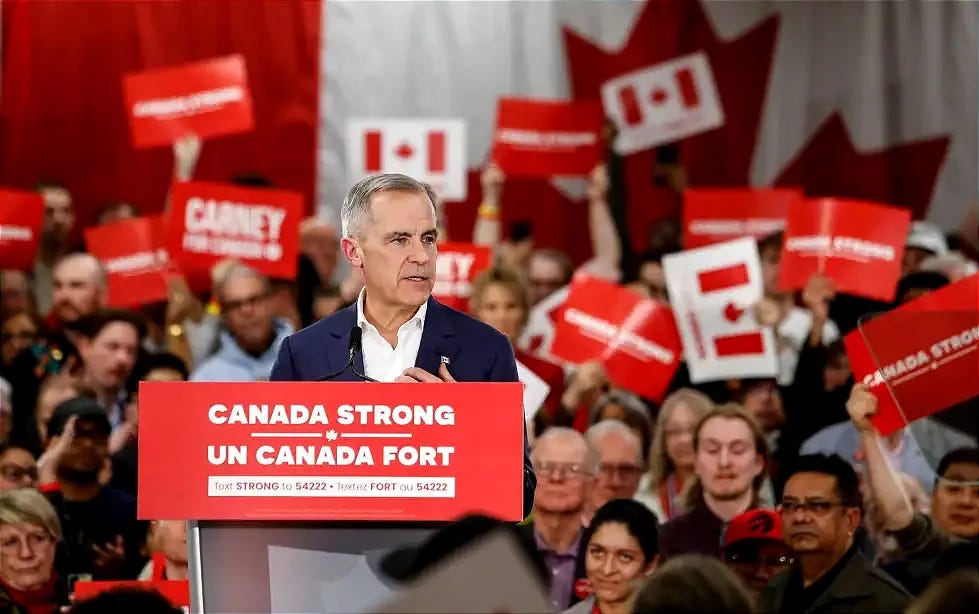
Liberal House Leader Steven MacKinnon says Prime Minister Mark Carney’s minority government currently lacks the votes to pass its upcoming federal budget, warning that failure to secure opposition support could trigger a Christmas election. The Liberals hold 169 seats—three short of a majority—and will need backing from another party when the budget is tabled on Nov. 4.
Conservative Leader Pierre Poilievre has set strict conditions for his party’s support, including keeping the deficit below $42 billion, cutting taxes on food, housing, and energy, and scrapping the carbon tax. MacKinnon dismissed those demands as “unattainable.” The Bloc Québécois has rejected the budget outright, while the NDP under interim leader Don Davies remains undecided but “constructive.”
Despite opposition pressure, MacKinnon said the government will not change its overall spending plan or “negotiate on principles.” Budget projections from the Parliamentary Budget Officer estimate the deficit could reach $68.5 billion, with the C.D. Howe Institute projecting as high as $92 billion. More
US Warship Arrives in Trinidad and Tobago Amid Heightened Tensions With Venezuela
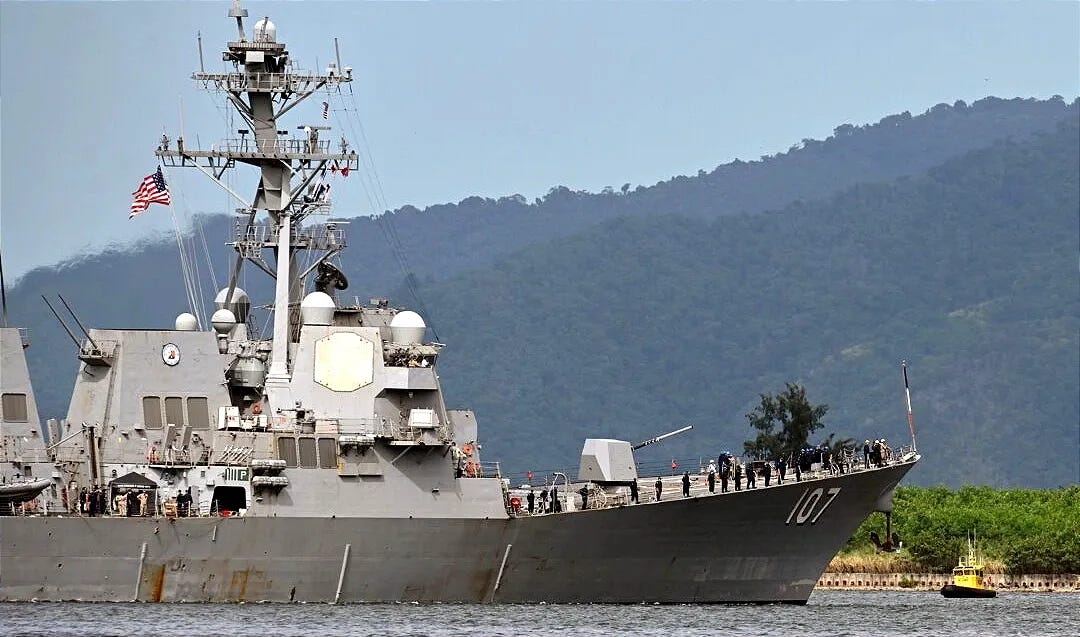
A US Navy destroyer, the USS Gravely, arrived in Trinidad and Tobago yesterday for joint military exercises with the country’s Defense Force amid growing tensions with Venezuela. The visit follows the Pentagon’s recent deployment of the USS Gerald R. Ford aircraft carrier to the Caribbean and Latin America to support counter-narcotics operations.
US officials described the exercises as part of efforts to combat transnational crime and strengthen regional security, while Venezuela denounced the drills as a “military provocation” allegedly coordinated with the CIA, even claiming—without evidence—that a false flag attack was being planned to justify a confrontation.
President Donald Trump has previously authorized covert CIA operations in Venezuela, citing the regime’s role in drug trafficking and reports that Venezuela intentionally sent prisoners into the US. The US military has also stepped up anti-drug strikes in the Caribbean, recently carrying out its 10th strike against suspected narcotics vessels linked to transnational gangs. More
72% of Canadians Say Pipelines Vital to Economy, Plurality Back Alberta’s Plan
Trump Rules Out Running for Vice President in 2028, Says Vance and Rubio Would Make a Dynamic Duo - More
Ten People to Stand Trial Over Online Harassment of Brigitte Macron - Eight men and two women, aged 41 to 60, will be tried in a Paris criminal court, accused of cyber-harassment targeting Brigitte Macron. If convicted, they face up to two years in prison. More
Soaring Cocaine Shipments Continue to Weigh on US-Colombia Alliance - Cocaine production now significantly impacts Colombia’s economy, with its estimated value surpassing that of petroleum exports. More
Labour Loses Century-Old Welsh Stronghold as Farage’s Reform Party Upends Voter Loyalties - More
World’s Oldest Ruler Biya Wins Reelection in Cameroon at 92 - More

Amazon Targets as Many as 30,000 Corporate Job Cuts
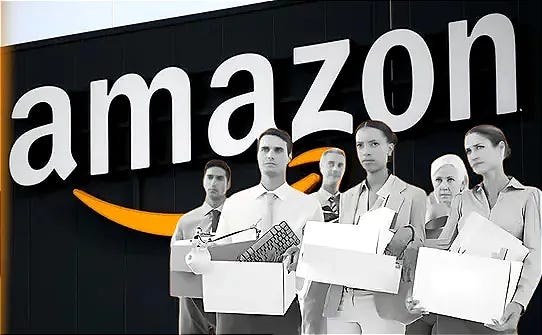
Amazon plans to cut up to 30,000 corporate jobs, starting Tuesday, as part of efforts to trim costs and adjust for pandemic-era overhiring. The cuts would affect roughly 10% of its 350,000 corporate employees, making it the largest reduction since late 2022. Divisions impacted may include HR, devices, operations, and services.
CEO Andy Jassy is targeting excess bureaucracy and leveraging AI tools to automate repetitive tasks, which has contributed to the layoffs. The full scope could shift as financial priorities evolve. Despite the cuts, Amazon expects a strong holiday season, planning to hire 250,000 seasonal workers, while its cloud unit AWS shows slower growth compared to rivals. More
Tesla ‘May Lose’ Elon Musk if Shareholders Don’t Approve $1 Trillion Pay Package, Chairman Warns - More
Union Members Reject Latest Contract Offer From Boeing After Nearly 3 Months on Strike - More

Why “Dimming the Sun” Might Be the Most Dangerous Climate Fix Yet
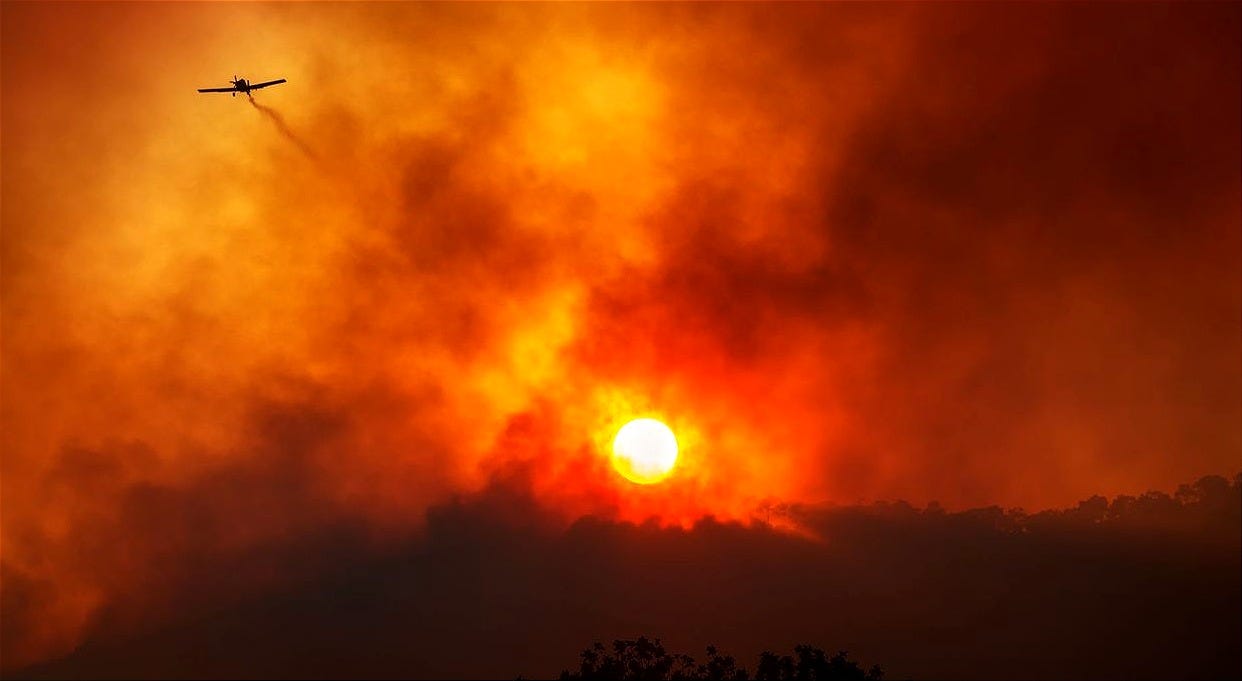
A new Columbia University study highlights major risks and uncertainties with stratospheric aerosol injection (SAI), a form of solar geoengineering that aims to cool the planet by spraying sunlight-reflecting particles into the upper atmosphere. While previous models suggest SAI could mimic volcanic cooling, the researchers warn that real-world deployment is far more complex.
Factors such as injection location, timing, altitude, and particle type could dramatically alter outcomes, from monsoon disruptions to jet stream changes. Sulfates, often modeled for SAI, pose risks like ozone depletion, acid rain, and soil pollution, while alternative minerals face supply, cost, and technical challenges, including clumping that reduces effectiveness.
The study concludes that every practical obstacle adds uncertainty, and real-world results are likely to differ significantly from idealized simulations, making SAI a high-risk, unpredictable strategy that demands careful consideration before any deployment. More
A Chinese Researcher Could Cost His Home Country a $108 Billion Market With This Invention: The Rare-Earth-Free Super Magnet - Jian-Ping Wang’s iron-nitride based magnets represent more than just scientific advancement—they embody a strategic pivot that could reshape global supply chains. More

Taylor Sheridan Exits Paramount to Sign $1 Billion Deal with NBCUniversal
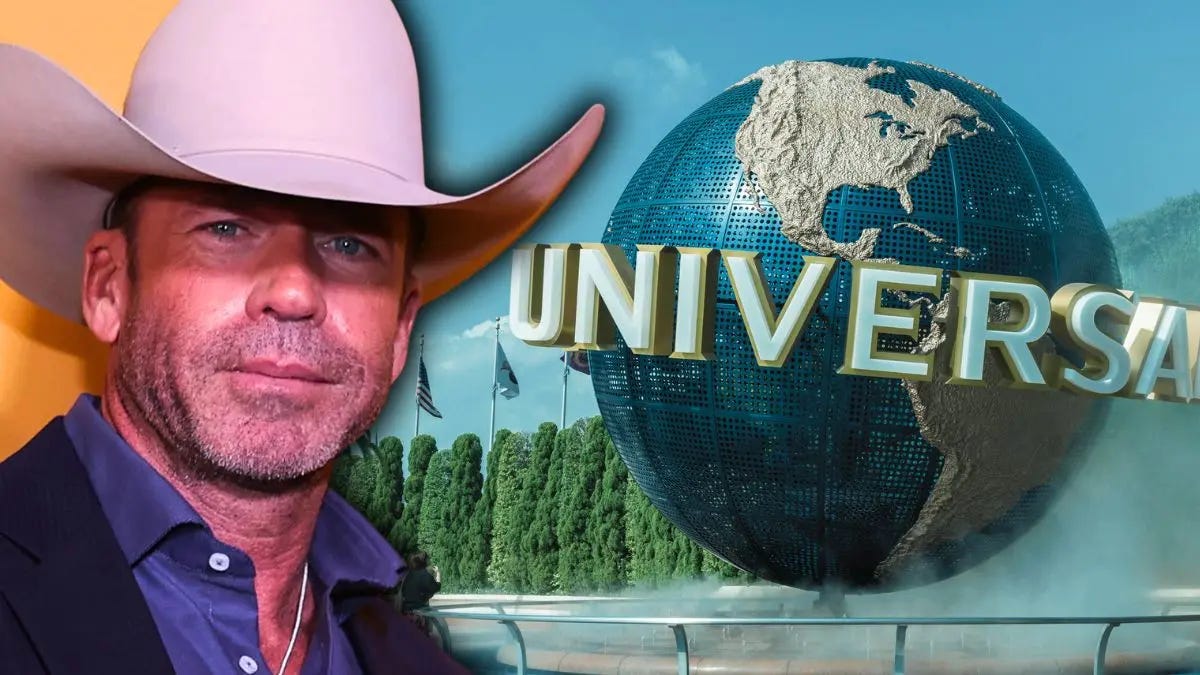
Taylor Sheridan, the creator of Yellowstone, 1923, and many others, has signed a massive five-year, $1 billion+ deal with NBCUniversal covering film, TV, and streaming projects. While Sheridan’s film deal begins next year, his TV contract with Paramount runs through the end of 2028, meaning his existing shows—including Yellowstone, Mayor of Kingstown, Tulsa King, and several upcoming spinoffs—will continue on Paramount+ and CBS for now. Sheridan and producing partner David Glasser will both transition to NBCUniversal after fulfilling their Paramount commitments. The move follows the recent Paramount–Skydance merger, signalling a major creative shake-up in Hollywood. More
Ex-NFL Star Adrian Peterson In Jail After Being Arrested for DWI and Unlawfully Carrying a Weapon - More
Former NHLer Ryan Kesler Charged with Criminal Sexual Conduct in Michigan - More
Dodgers Star Mookie Betts Wins 2025 Roberto Clemente Award - More

Corrupt Politicians Named Top National Fear for 10th Year in a Row, 69% Express Deep Concern
Skateboarding Pig Sets Guinness World Record with 33-Foot Ride in 11 Seconds
On This Day in 1919, Congress Overrides President Wilson’s Veto to Pass the Volstead Act, Enforcing Nationwide Alcohol Prohibition.
Although President Woodrow Wilson vetoed the Act, calling it too extreme, Congress overrode his veto with a two-thirds majority in both the House and Senate. This launched national Prohibition, banning the manufacture, sale, and transportation of alcoholic beverages across the United States—an era that would ultimately give rise to widespread organized crime as bootlegging and illegal speakeasies flourished.
This was the goal all along Elbows was just a smoke screen to not get a deal
Ok, I agree to take over Canada.